ANC is entrenched in power, yet vulnerable
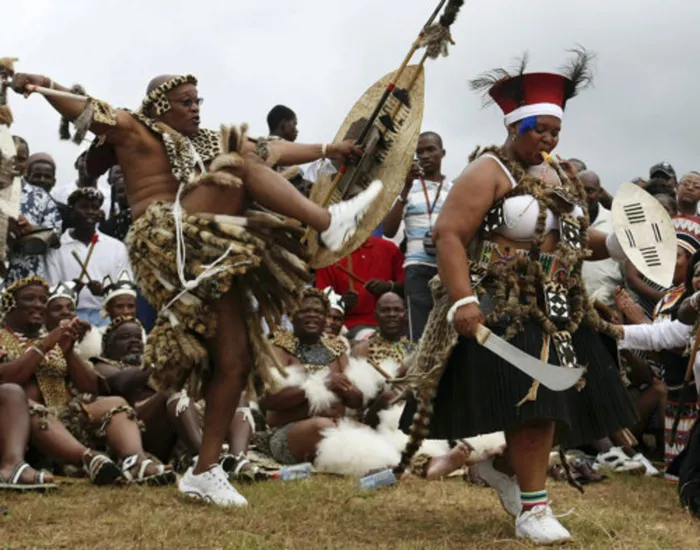
To many, President Jacob Zuma has been seen as the reassuring president, one who is 'strong on culture'. Picture: Reuters To many, President Jacob Zuma has been seen as the reassuring president, one who is 'strong on culture'. Picture: Reuters
It has been seven lean years of policy and governance since the ANC’s 2005 national general council, and South Africa is not about to enter a time of abundance. This analysis identifies the markers that shaped the present. It assesses how they are likely to persist into the seven-year future.
l What will another seven years mean for South Africa – the country and its citizens?
For some, Jacob Zuma has been the reassuring president – “strong on culture”, whose determination helped him to overcome personal odds. Loyalists see his achievement as maintaining ANC unity in difficult times. Yet they run out of citations when pushed for more accolades, and turn to “he needs more time” to complete the hard-to-define (except for the safe long-term infrastructure and health) work he started.
Zuma is set to remain an inward-directed ANC president who fades on leading national responses to new and persisting problems. The Zuma ANC’s approach appears to be one of treading water, with words, symbolic responses and piecemeal “solutions” too often thrown at massive, protracted problems.
While Zuma’s re-election bid has confirmed that he wields huge power within the ANC and is a master of strategy, these strengths are not being transferred into the presidency of SA.
l What will it mean for the ANC?
At Polokwane Zuma promised a reconnected-with-the-people, demonstrably caring ANC. There are few signs that he’s succeeded. The gradual decline in national ANC electoral fortunes continues. It is improbable that with Zuma, or perhaps any other eminent top leader, the ANC will reclaim voters beyond KwaZulu-Natal, stem community protests and draw discontented labour back into the fold. The ANC’s formal and informal partnerships are under strain, with no reversals in sight.
In its centenary year, under Zuma, the ANC has become its own worst enemy. Its massively expanded membership numbers built centenary esteem and Mangaung candidacies, yet point to a future where control over members is virtually impossible. ANC membership spikes came on the back of acknowledged problems with tenderistas clamouring for black, green and gold entrance tickets to the money-making game. Too often, public service and delivery is a coincidental by-product.
There is a potential backlash against the Zumafication and Zulufication of the ANC – its scope will hinge on the extent of post-Mangaung purges against those who pushed for leadership change.
A second-term Zuma ANC is also an organisation that has smelt the blood of the battles it cannot win through persuasion or in the courts – for resolution by force and intimidation. This ANC has few fingers it can point at Marikana’s wildcat strikers.
l What will the impact on the economy be?
The clientelist and patronage-based South African state will have to spread its wings even more widely, fly even higher and balance trough politics even better. Seven years down the line, a Zuma-led ANC is likely still to be firmly in power – but with less pretence of being the pre-eminent former liberation movement walking the straight and narrow to correct the past and bring social justice to all.
The prime juggling act will be to ensure that the ANC-in-government remains the proverbial caring parent that brings food home at night. The fiscus could well be taking strain, but the social wage will be the ANC’s non-negotiable lifeline.
Economic policy coherence will remain a mirage. Currently the aim is to keep all sides relatively happy, to talk left and right and balance policy practice with talking up hope for a shift to the left – loosely associated with caring and people-centredness. Eruptions over poverty, unemployment and inequality will be managed rather than resolved.
The ANC will embody the contradiction of being entrenched in power, yet fragile and vulnerable. More Marikana- style meltdowns, with non-workers and disaffected communities joining the revolt, would rupture the ANC’s world of control. Such are the real “challenges” the ANC faces – and the DA and the neo-socialists look equally out of their league.
l What are the implications for South Africa on the global stage and the continent?
Brics is the story of the ANC as contemporary player on the global stage. Compared with the time of Thabo Mbeki’s inflated international ambitions, South Africa has a diminished international stature, politically and economically. The die for the next seven years has probably been cast. In Brics South Africa is a minnow; on the African continent it is likely to be on the defensive. At stake is remaining the continental powerhouse; Nigeria might overtake SA economically. Its problematic neighbours of Zimbabwe and Swaziland are the next frontier. Unless Zuma, guided by a wiser ANC, steps up, the ANC’s international credibility will be terminally on the wane.
l Susan Booysen is a Wits University professor and an author.