Women are again mere 'add-ons' for the ANC
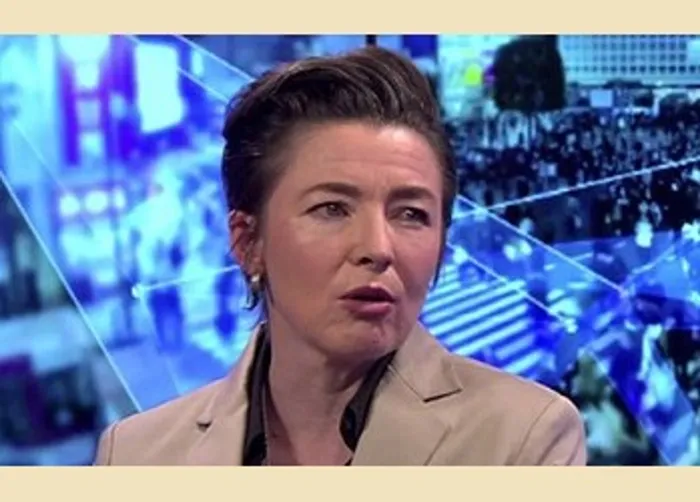
Christi van der Westhuizen is associate professor in sociology, University of Pretoria. Christi van der Westhuizen is associate professor in sociology, University of Pretoria.
The ANC Women’s League has come full circle. Before the 1940s, women could only be “auxiliary” members of the ANC, and only if they were married to a male ANC member.
Fast forward to today, and women are again mere add-ons, members whose positions depend on whether they stand by “their men”.
The latest is the attack on Human Settlements Minister Lindiwe Sisulu for daring to stand as ANC presidential candidate. This strange controversy, which started in 2012 when the league declared that “we” are not ready for a female ANC president, reveals its predilection for patriarchal thinking.
The league threw women leaders under the bus in a transparent attempt to remove competition in Jacob Zuma’s way, as he was gunning for re-election at the ANC’s elective conference that year.
Its sweeping statement assumes that women have to wait for permission, presumably male, before they assume the mantle of leadership.
On the eve of another elective ANC conference the league has reversed its position, deciding that “we” are now ready for a woman president - as long as her name is Dr Nkosazana Dlamini Zuma.
It is well-known that Zuma hand-picked Dlamini Zuma, his former wife, to be his successor. Little evidence exists of the league’s choice being based on its own strategic thinking.
Rather, their volte face remains true to their apparent belief that women need men’s permission to lead. This also explains league president Bathabile Dlamini’s sexist justification for sending six men to the ANC policy conference.
Women get “too emotional” and need “experts” to speak on their behalf. No wonder the league can’t imagine women being presidents.
In 2012 the treasurer, Hlengiwe Mkhize, explained their renunciation of women’s leadership as wanting to be supportive.
Being the help-mates to men is typically the only active role that men in nationalist parties permit women to have. Women are also expected to reproduce the nation, and to be contend to serve as symbols of the nation’s morals, usually as the “mothers of the nation”.
ANC men’s historical attitude towards women’s activism is exemplified by Dr AB Xuma, a president of the ANC who patronisingly described Charlotte Maxeke in 1935 as being “like a loving mother who patiently rekindled the flame of liberation”.
In fact, Maxeke was the first African woman to be awarded a BSc degree, graduating in the US in 1901. She led the campaign of burning passes and battling with the police to stop the extension of passes to black women in the 1910s.
They beat the colonial state back for another 40 years, when this law was finally enacted.
Decades later, in 2010, then League president Angie Motshekga described ANC women in relation to ANC men as “your gentle and loving sisters, your caring and selfless mothers and your dearest wives and partners”. It is one of many ironies that she was delivering the Charlotte Maxeke Memorial Lecture at the University of the Free State.
This reiteration of a meek womanhood keeps the league confined in anti-women politics.
In contrast, Maxeke’s generation waited for no man: as they could only be “auxiliaries” in the male-dominated ANC, they founded the Bantu Women’s League (BWL) in 1918 as a vehicle for women’s activism. This is also ironic, because the BWL is the frontrunner of the ANC Women’s League.
Motshekga’s statement echoes the ANC’s devaluation of women during its first three decades when women could only access the party through heterosexual relations with men - and only as “auxiliaries” and not full members.
Today, women seem to be full members of the ANC only in name, as their relationship with the party remains predicated on their gender relationship with men in the party.
* Christi van der Westhuizen is associate professor in sociology, University of Pretoria. This article is part of a series in the Pretoria News to celebrate women’s views. The views expressed here are her own.