

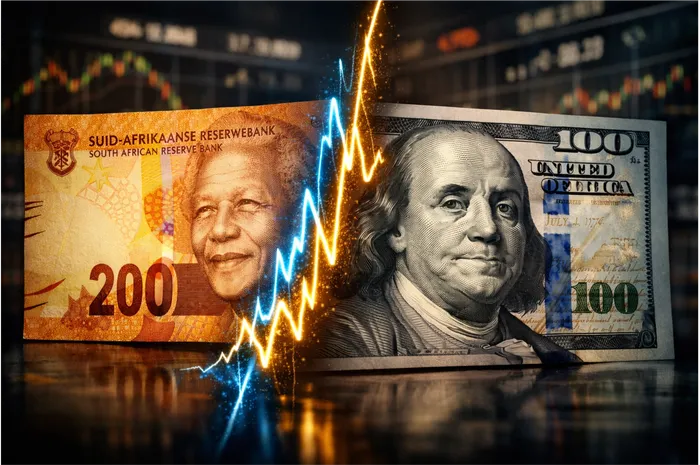
The rand weakened slightly on Monday as oil prices again moved above $100 a barrel following the collapse of talks between the United States and Iran.
Image: Manus
South Africa faces renewed inflation risks as oil prices climb above $100 a barrel, weakening the rand and pushing up the cost of imports and fuel. This came after the collapse of talks between the United States and Iran.
For South Africa, the transmission is direct. Higher oil prices push up fuel costs, which feed into transport, food and broader inflation, while a weaker rand makes imports more expensive.
“The implications extend beyond energy. Fertiliser markets – heavily dependent on natural gas – are tightening. That feeds directly into agricultural production, and ultimately into food prices,” Kristof Kruger, head of Fixed Income Trading at Prescient Securities, said.
Kruger added that “the transmission is slow. But it is predictable. This is where inflation becomes embedded – not in the initial shock, but in the lagged consequences.”
Data from Trading Economics shows oil futures jumped more than 8% this morning, with Brent crude futures trading above $100 a barrel after the US signalled plans for a naval blockade of the Strait of Hormuz – a key global shipping route.
“Talks held in Pakistan failed to produce an agreement, with the US accusing Tehran of refusing to curb its nuclear ambitions, while Iran reportedly sought control of the strait, war reparations, a broader regional ceasefire (including Lebanon), and access to frozen overseas assets,” said Trading Economics.
Bianca Botes, MD at Citadel Global, said markets had initially expected constructive negotiations, but talks failed to produce an agreement, leaving investors on edge.
“The US and Iran will continue to drive market volatility, with markets now looking for clarity on the ceasefire, given the collapsed negotiations,” said Botes.
The Strait of Hormuz is one of the world’s most important oil transit routes, meaning any disruption quickly feeds into global energy prices. That, in turn, raises the risk of higher inflation in South Africa, where fuel is a key input cost across the economy.
“This is not normalisation. It is stabilisation at a more expensive equilibrium,” Kruger said.
ETM Analytics, quoted by Reuters, said the crisis could raise import costs, disrupt tanker routes and intensify inflationary pressures, while also weighing on the rand.
The firm added that geopolitical tensions and South Africa’s global positioning could further complicate the outlook for the currency.
Andre Cilliers, currency strategist at TreasuryONE, said the rand had come under pressure due to higher oil prices, a stronger dollar and geopolitical concerns, adding that the local currency would continue to take its cues from global developments.
The local currency was about 0.9% weaker against the dollar in morning trade, hovering around R16.55, as markets reacted to rising geopolitical tensions and a stronger greenback.
Trading Economics data shows the rand has strengthened 0.75% over the past month and 12.38% over the past year, despite the latest volatility.
Cilliers said failed peace talks, higher oil prices, and a stronger dollar are also weighing on gold prices, which currently is at $4,724.
Markets will be keeping a close eye on how the situation in the Strait of Hormuz plays out later today, said Cilliers.
IOL BUSINESS