

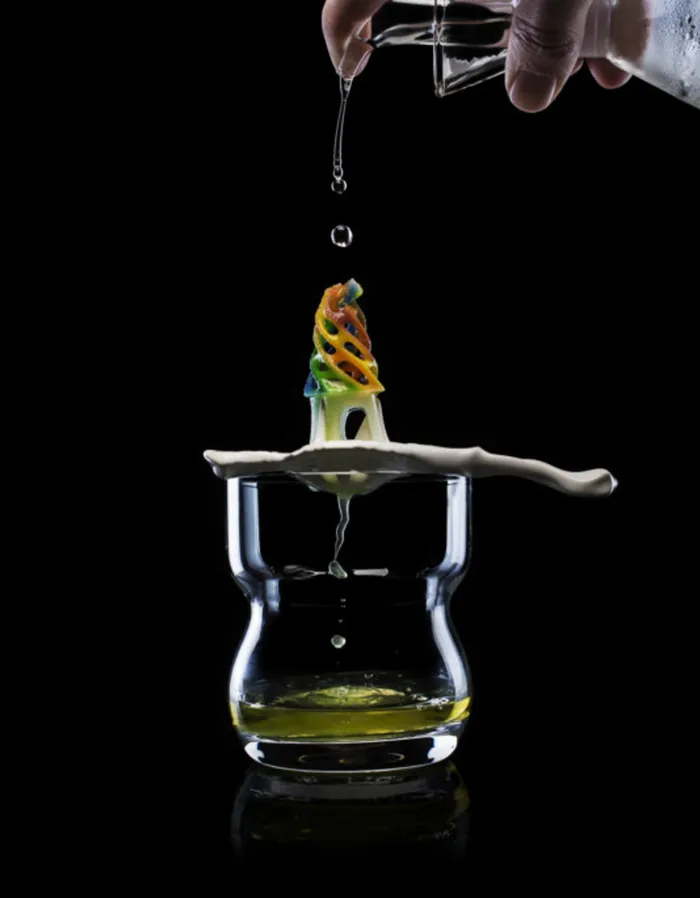
While younger consumers are influenced by social dynamics, older consumers prioritise health and safety when forming opinions on this emerging food innovation.
Image: The Washington Post
A recent study by the University of Johannesburg (UJ) has revealed that consumer attitudes, rather than technological advancements, will shape the future of 3D-printed food. According to the research, attitudes are the single most significant factor driving the intention to consume 3D-printed food, with the technology itself taking a backseat.
The study, led by the Centre for Innovative Food Research in collaboration with the Department of Marketing Management, surveyed 355 South Africans aged 30 to 59. The group, largely composed of working professionals with tertiary qualifications, was questioned about their perceptions of 3D-printed food. Despite their awareness of the technology, the study found that consumer willingness to try 3D-printed food depended heavily on their personal attitudes, perceived benefits, and overall comfort with the concept.
Professor Nicole Cunningham, who led the research, explained, “What consumers believe about 3D-printed food, whether it benefits them or aligns with their values, matters more than how familiar or convenient it seems.” The findings also indicated that traditional food-choice factors, such as convenience and familiarity, did not significantly influence attitudes toward 3D-printed food, suggesting that consumers are evaluating the technology on a different scale than regular food choices.
Despite an overall cautious openness to the idea of 3D-printed food, the study highlighted food neophobia - reluctance to try unfamiliar foods - as a significant barrier. This hesitation was especially apparent among older consumers, with the study’s authors noting that the more people understand about 3D-printed food, the more likely they are to develop positive attitudes toward it. Dr Adeyemi Adeyanju, one of the researchers, stated, “Unfamiliarity creates uncertainty, and uncertainty slows intention.”
The study also found that perceptions shifted positively when respondents recognised the practical benefits of 3D-printed food, such as personalised nutrition, improved health outcomes, and reduced food waste. Professor Oluwafemi Adebo remarked, “3D food printing is not just about novelty. It has practical applications that can address nutrition, sustainability, and food system challenges.”
The research also uncovered generational differences in attitudes toward 3D-printed food. Younger consumers were more influenced by social dynamics and peer opinions, while older individuals emphasised health considerations and nutritional value. "These differences matter," said Professor Cunningham. "Younger consumers respond to shared experiences and social signals, while older consumers want reassurance around health and safety."
Despite these variations, traditional drivers of food choices like convenience and ease of preparation had minimal impact on attitudes toward 3D-printed food. The study concluded that South African consumers are curious but cautious, with a desire for trust and transparency before fully embracing the technology.
In conclusion, the study’s authors emphasised that positive attitudes toward 3D-printed food would be driven by understanding its benefits rather than simply technological progress. “Technology alone will not drive intention,” said Professor Adebo. “That is where the real opportunity lies - for innovators, the industry, and policymakers looking to bring 3D-printed food into the mainstream.”