

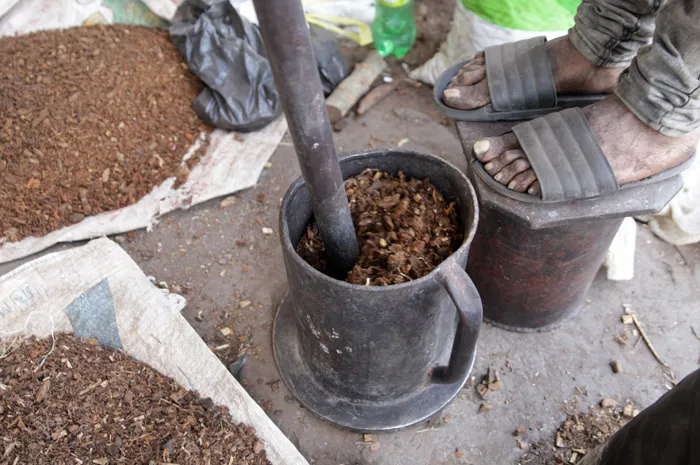
UJ researchers are developing a compound from the African pepperbark tree into a complementary diabetes treatment, while conservation efforts aim to protect this vulnerable species from overharvesting.
Image: Supplied
A chemical compound derived from a tree widely used in traditional African medicine is being developed as a complementary treatment for diabetes at the University of Johannesburg (UJ).
The tree, Warburgia salutaris, is highly vulnerable to poaching across Southern Africa, and has become the focus of a large-scale conservation initiative.
Leaves, roots, and bark of Warburgia salutaris contain several active chemical compounds, some of which have already been developed into commercial products. UJ’s Professor Mthokozisi Simelane, a researcher in the Department of Biochemistry, Faculty of Science, and his team first isolated a promising compound, iso-mukaadial acetate, from the bark of these trees.
“We are exploring the plant's many medicinal properties in collaboration with experts in complementary medicine. Our primary goal is to ensure the continued existence of this plant for future generations, while also harnessing its potential for the advancement of complementary medicine,” Simelane said.
Traditionally, the bark of Warburgia salutaris has been used across Southern Africa, from South Africa to Malawi, to treat ailments ranging from colds and blocked sinuses to coughs and malaria. The tree is known by many names, including amazwecehlabayo, isibhaha, manaka, molaka, mulanga, shibaha, muranga, and pepperbark.
While traditional healers generally harvested the tree sustainably, urbanization and commercial poaching have left mature trees barkless, causing their deaths. At one stage, the species was listed as Endangered by the International Union for Conservation of Nature (IUCN). Conservation and cultivation projects have since helped the tree recover to a Vulnerable status.
Since isolating the compound, Simelane published a follow-up study using iso-mukaadial acetate to treat rats with induced diabetes. The study found that some blood cell issues associated with diabetes improved, while the compound also aided blood sugar control and insulin levels at lower doses.
“Diabetes can cause either weight loss or weight gain, depending on blood sugar control and treatment. At diagnosis, some patients may experience weight loss due to insufficient insulin. When insulin is lacking or not working effectively, glucose cannot enter cells properly, so the body compensates by breaking down fat and muscle for energy, leading to weight loss. In contrast, improved blood sugar control or the use of insulin therapy may sometimes lead to weight gain as the body is able to utilise glucose more effectively and reduce energy loss through urine,” Simelane explained.
Currently, Simelane and his team are working on developing iso-mukaadial acetate as a complementary diabetes medicine in South Africa. They have a licensing partnership with a pharmaceutical company and are negotiating licensing terms.
Sustainable sourcing remains a priority, as bark from mature trees - while traditionally preferred - is also the most threatened. A commercial grower in South Africa is supplying Warburgia plants to Simelane’s team under a bioprospecting permit, which allows the commercial development of products from indigenous plants.
In rural KwaZulu-Natal, Warburgia salutaris still grows naturally. Traditional healers there have harvested the bark for centuries, and some of Simelane’s postgraduate students come from these areas.
The research highlights the dual importance of preserving traditional African medicine and developing scientifically backed complementary treatments for diabetes.