Scientists concerned as fewer swallows are migrating to SA to escape the brutal British winter
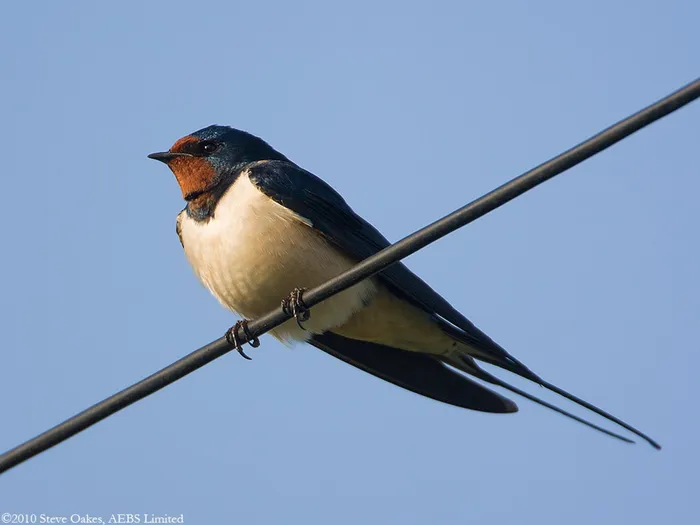
The Barn Swallow (Hirundo rustica). Supplied image.
Johannesburg - Barn swallows spend most of their lives on the wing trekking between the UK and South Africa in annual migrations.
But this year some of the swallows that were meant to have made the journey south opted to stay behind and this has scientists worried.
In the month of January there were nearly a hundred sightings of Barn swallows in the south and south east of England, and Ireland.
Usually at this time of the year barn swallows can be seen wheeling high in South Africa’s sunny skies, a long way away from the harsh winters of the north.
“It is indeed remarkable,” said the British Trust for Ornithology's (BTO) chief executive, Professor Juliet Vickery, in a statement. “We haven’t got to go back too far to remember winters when it would have been impossible for swallows to survive the freezing temperatures, but as our winters get milder it is something we may see more and more.”
The BTO is a research organisation staffed mainly by volunteers that studies birds in the UK and they reported the sightings.
Swallows head south at the end of summer to escape European winters that are too cold to support flying insects.
Now suspected climate change has caused milder temperatures that has allowed a small group of Barn swallows to winter over and survive.
“To suggest that our winters would be warm enough for swallows to survive would have been unthinkable a few decades ago.” said Professor James Pearce-Higgins, the BTO’s Director of Science. “But the evidence that our climate is changing is building year by year.”
In South Africa a warming climate has had an apparent long term effect on barn swallows migration patterns.
A decade ago researchers discovered that these small birds were beginning their migration north from Gauteng on average eight days earlier than they did 20 decades ago.
Scientists came to the conclusion after they analysed data collected by thousands of “citizen scientists” who took part in two Southern African Bird Atlas projects.
The first bird atlas, recorded between 1987 and 1991, and the second, from 2007-2011.
Joburg based ornithologist Geoff Lockwood said that barn swallows aren’t wintering over in South Africa although there might have been two exceptions that were observed in Namibia.
“We had one or two barn swallows overstaying or they were extremely early arrivals that were seen on the edge of Swakopmund in 2019,” he explained.
“This was probably around the second week of August, which is really early. It could be that they were young birds that had decided not to head back for some reason. But it wasn’t a lot of birds and we are not seeing this as normal behaviour this end.”
In the UK it isn’t just the swallow that is being affected by global warming. A recent report by the BTO on British birds and climate change suggests that a quarter of British breeding species might be negatively affected. The fear is that the famed puffin is heading for extinction.
But the advantage scientists do have is that technology is allowing them to take a peek into these long journeys that birds undertake. GPS enabled trackers are being placed on smaller and smaller bird species.
By understanding these migrations researchers can assess the true cost of climate change.
But there is a definite change happening in the air, says Lockwood.
“With this business of migration, timing has changed and it is definitely because of climate change.”