
In a shocking turn of events, the National Prosecuting Authority's (NPA) Investigative Directorate (ID) is embroiled in serious allegations of prosecutorial misconduct concerning businessman, Kishene Chetty and his co-accused.
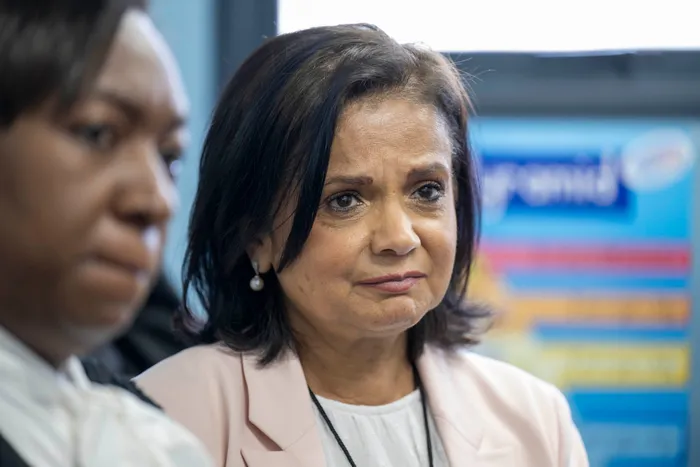
National Director of Public Prosecutions, Advocate Shamila Batohi. Picture Henk Kruger / Independent Newspapers
Image: File picture
The weighty accusations emerged as discrepancies in the prosecution’s approach raised deeper questions about its methods, integrity, and overall efficacy in delivering justice. Chetty’s legal troubles commenced on August 4, 2022, a date now marred by inconsistency.
Court records reveal that the prosecution had not officially registered the case at the Pretoria High Court until a whole year later, prompting significant questions.
Upon review, it appears that the court register (J546) does not show any entry for Chetty’s case on that day, despite a summons issued to the alleged individuals citing a court case number (A16/351/2020) that, strikingly, was also absent from the register.
The narrative becomes even more convoluted with the mention of a previous docket, Silverton CAS 335/05/2020, which had been struck from the roll, necessitating a complete restart that seemed to have eluded the NPA.
Examination of court transcripts from August 4, 2020 revealed yet another layer of confusion, as they referred back to case A16/351/2020.
Critics of the NPA have questioned how allegations led to Mr O’Neil Perumal, one of the accused in the Chetty case, who arrested for a separate matter, being charged and granted bail of r R5000 without a clear and registered case.
Further entanglements arose on November 15, 2022, when Chetty’s case finally made its way into the official court documents.
However, instead of clarity, confusion reigned as Chetty’s case was registered under the same number previously linked to the struck case.
Compounding these anomalies, simultaneous hearings for Chetty and his co-accused were conducted at the Pretoria Magistrate Court, a situation that raised eyebrows as it appeared implausible for two cases to be heard at different courts at exactly the same time.
Describing the ordeal, Chetty expressed bewilderment and frustration.
“The system is broken, we don’t even know where to run to.”
The duplicity of charges brought against him and his co-accused added to their mounting legal woes.
“We wrote letters to the NPA’s head with no luck regarding this case. Now we find ourselves appearing in two different courts at the same time. How is that possible?”
Of notable concern are alarming claims that the NPA's alleged deficiencies might stem from directives issued by the agency's head, Andrea Johnson.
Reports suggest that Johnson encouraged her team to adopt a “fake it till you make it” mentality during an internal meeting, instructing them to appear professional even when they lacked substantial documentation.
“I asked that everybody go to court, because you are a team, but I also instructed everyone to dress to the nines and carry marked file boxes, even if there’s nothing in the files,” she reportedly said amid laughter, casting a long shadow over the credibility of the NPA’s mission.
The implications of these allegations cut deep, especially as they surface against a backdrop of ongoing criticism regarding the NPA’s credibility.
Chetty's case now stands as a litmus test for the organisation's integrity, with concern that the “fake it till you make it” mentality might compromise the pursuit of justice.
In the face of mounting pressure, ID spokesperson Henry Mamothame attempted to clarify the situation by asserting that it is technically feasible for the accused to appear in two different courts on the same day if they face multiple charges.
However, he shockingly claimed not to know Advocate Nembulunge, who presided over Chetty’s case. As the drama unfolds, the NPA finds itself at a crossroads, grappling with potential far-reaching ramifications as the public watches closely.
With each revelation, Chetty's case compounds the urgent need for transparency and accountability in a system designed to protect the fundamental rights of citizens against injustice.