
When Christian Kaembe started Bwangu Delivery, he wasn’t trying to copy big courier companies. He was solving a problem that nobody else was paying attention to. In underserved towns in Angola, food delivery wasn’t just slow, it was almost impossible. Christian saw an opportunity to build something meaningful, not by following the playbook of global delivery giants, but by creating a local solution that truly served his community.
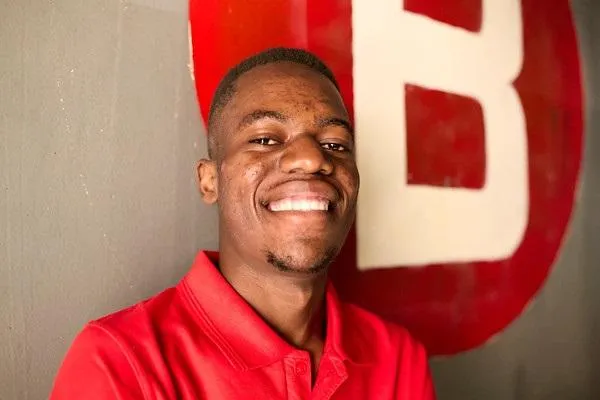
Christian Kaembe’s journey with Bwangu Delivery is a powerful example of what’s possible when you start where you are, stay close to your customers, and build systems that support growth.
Image: Supplied
With limited resources, little personal savings, and the support of family, friends, and one incredibly supportive customer, Christian grew Bwangu Delivery into a fast-rising logistics business. Along the way, he has navigated tough hiring decisions, the growing pains of entrepreneurship, and the power of truly listening to his customers.
For young entrepreneurs ready to start but unsure where to begin, Christian’s story is a reminder that you don’t need perfection to build something valuable. You just need to start, stay focused, and keep learning.
Q: Christian, what inspired you to start Bwangu Delivery?
It began with seeing a clear gap. People struggled to get food delivered quickly and reliably. I had some savings from a compliance business I used to run, so I used that to get Bwangu off the ground. But what really motivated me was seeing how excited people were about the idea. In fact, a doctor I’ve never met in person, just a loyal customer, once sent me money to buy our first two bicycles. That’s when I knew this
business mattered.
Q: Tell us about your early team-building experience.
My first hire was a young guy who was genuinely excited about what we were building. The energy was great at first. Unfortunately, we later had to fire one of our first employees for theft. That was one of the toughest moments. It’s hard to let someone go, especially when you hope they’ll change. After that, I realised I needed to hire people with more responsibility, such as people with families, school fees, and
real commitments. They tend to take the job more seriously.
Q: How did you shape your business strategy?
Initially, I relied on what I had seen from existing courier services and what I learned in university. But everything levelled up when I joined the Anzisha Fellowship. That experience taught me how to build proper systems, manage people effectively, and really analyse opportunities before making decisions. I also made it a point to listen to customers. If they tell us to add a particular restaurant, we go out and
make that partnership happen. That’s been key to our growth.
Q: How do you view competition?
I honestly don’t see competition as a threat. We’re all offering something unique, and I believe there’s space for all of us to succeed. In fact, I see competition as an opportunity to collaborate, share ideas, and even expand beyond Angola together. If we think bigger, we can all win.
Q: Where do you want Bwangu Delivery to go next?
Our goal is to become Africa’s most trusted and preferred delivery service. Right now, we’re focusing on expanding to underserved towns, and within the next two to three years, we aim to cover the entire country. After that, we’re looking at international growth. But the priority is always keeping our current customers happy. Acquiring new customers is important, but retaining them is how you build a
sustainable business.
Q: What’s the biggest hurdle you’re facing?
Our biggest challenge is the limited number of delivery bikes. We simply don’t have enough to meet the growing demand. More bikes would help us serve more customers faster. That’s why we’re actively working on securing funding to scale up.
Q: How have you funded the business so far?
We’ve mostly relied on personal savings, family and friends, and support from customers like that doctor I mentioned. We haven’t raised formal investment yet, but we’re now pursuing funding opportunities. One of the most important lessons I’ve learned is to separate personal finances from the business. The company’s money is not my money. That shift in mindset has been essential for our growth.
Q: Do you remember how you spent your first paycheck?
(Laughs) I do. It wasn’t much, but I bought a pair of shoes and some mobile data bundles. That was a small win, but it felt incredible because it was money I earned from something I built.
Q: You’ve emphasised building systems. Why is that so critical?
Systems are everything. I can now step away from the business for weeks, even months, and things will still run smoothly. Every transaction is tracked, every process is documented. Without solid systems, you can’t scale. If the business can’t operate without you being there every day, you’re not really building a sustainable company.
Q: What’s your top advice for young entrepreneurs?
Start now. Don’t wait for perfect timing or perfect conditions, they don’t exist. Learn fast, and most importantly, listen to your customers. Build for them, not for your ego. Without your customers, your business can’t survive.
Q: How would you sum up your entrepreneurial journey so far?
It’s been exciting, challenging, and extremely rewarding. I’ve learned so much about managing people, sales, marketing, finances, and delivery systems. Thanks to these lessons, we’ve seen real growth in both revenue and operational efficiency. I wouldn’t trade this journey for anything.
Christian’s key lessons for entrepreneurs
His story shows that you don’t need big capital to make a big impact. You just need to solve real problems and be willing to grow through the process. For young entrepreneurs, this is your reminder: the perfect time is now.