

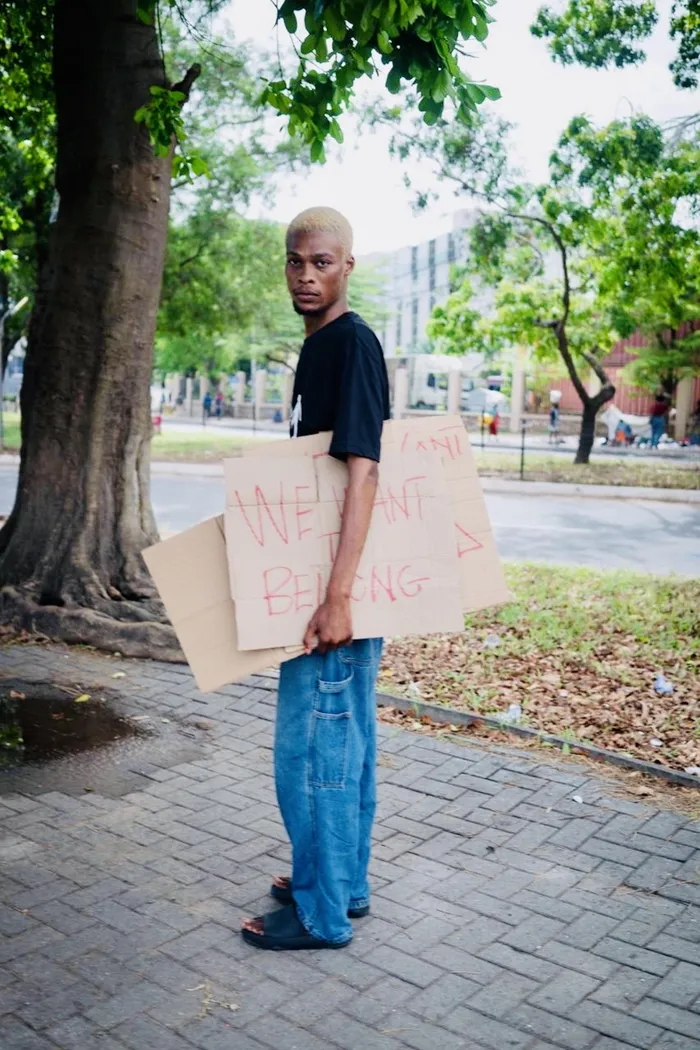
Ghanaian queer rights activist, Prince Frimpong, is one of the creators of the anthology film, Map Your Love. For Frimpong, filmmaking offers them the opportunity to “continue telling Ghanaian queer stories and using these tools to Africanise and reshape our narrative”.
Image: Prince Frimpong
It took four years, from conception to completion, to put together the anthology film, Map Your Love. Shot entirely on smartphones, by activists in countries such as Burkina Faso, Tunisia, Tanzania, Zimbabwe, Ghana, Ethiopia, Kenya, Jamaica, Peru and Canada, the four films that make up the anthology “showcase deeply personal stories that explore the complexities of queer love, identity, and resilience in nations where homosexuality is criminalised”.
In 2024, screenings of the anthology were held in various countries across Africa.
Karin Hazé is the founder and director of 75 Shots, the Canada-based organisation which spearheaded the project. Hazé says: “Every screening in Africa was conducted underground, ranging from private gatherings in homes where traditional coffee ceremonies and food were shared, to full-scale festivals at undisclosed locations for safety reasons. Some were also held in community centres run by feminist activists. Each screening was unique, courageous, and extraordinary.”
For Beyond the Margins, Carl Collison spoke to three queer rights activists - Ghana’s Prince Frimpong, Tanzania’s Mwamba T Nyanda and Zimbabwe-based Kudzai Kay-Dee - all of whom participated in the creation of this anthology and also put together a screening of the four-part film in their respective countries.
In this conversation, the activists discuss what drew them to film as an advocacy tool, how the medium is shaping their activism, and how, especially in repressive contexts, there is great power in telling one’s story.
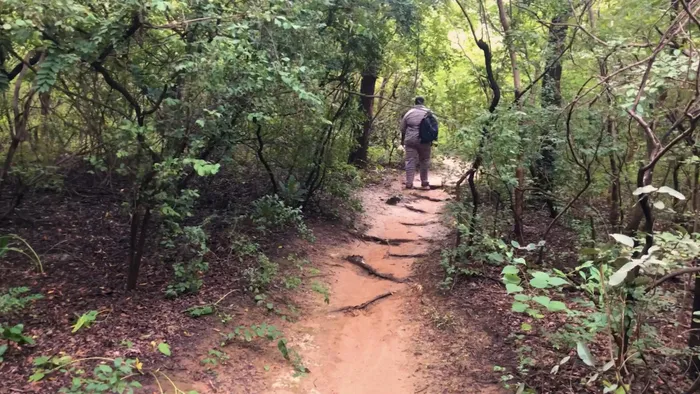
Kayuure (Nameless): The short documentary, Kayuure (Nameless), looks into the life of a transgender man from Burkina Faso, offering a glimpse into their journey of resilience, love, and self-discovery.
Image: Supplied
Carl Collison (CC): So, tell us about the screenings. How did it go? What stood out for you? Kudzai Kay-Dee (KK): So, I engaged an LBQ organisation. They were having a meeting…So, I took that opportunity to go there and screen our films. What stood out for me the most in terms of the people who were watching is that they realised that we're using really simple gadgets to come up with something so beautiful; something so moving…We also had conversations around privilege… and how we can be more supportive in our communities; how we can support each other, encourage each other to, you know, live our lives to the fullest.
Prince Frimpong (PF): I collaborated with a youth-led organisation, called Let It Shine, in Lagos, and we did the screening together. They were doing a couple of activities for Pride in Lagos…So, yeah, we did a screening, and (about 25) LGBTQI youth (attended). It was very amazing, you know, to witness this community coming together to watch Map Your Love. How it resonated with them was powerful to watch. And I think what really struck me was how people decode the Map Your Love film in their own ways; in their own understanding…It felt so surreal. And it felt like, you know, people are really getting into the film that we've made. People are really, you know, resonating with it in their own ways…and how they see themselves in the film that we made.
And they were surprised that the film was even made (on) a mobile phone. You know, when the film started, I told them, ‘Don't have any expectations. It is not the traditional way of making films. Just watch with an open-mindedness, and just like, you know, let yourself flow in what you're about to watch.’ They did, and they were stunned.
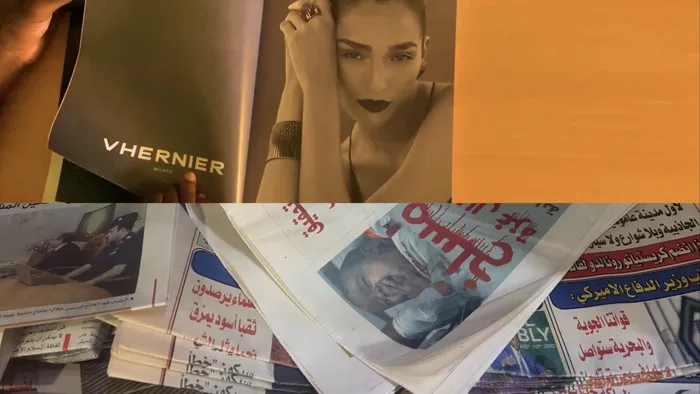
In Wildly Authentic, 'a young soul' raised by two loving mothers, ponders 'the enigma of belonging'.
Image: Supplied
Mwamba T Nyanda (MN): The movie screening we did was done on 30th of June. We wanted to share these narrative stories of our lives on the African continent. And also to tell people that it is possible to narrate a story through the use of a phone, for example an iPhone or Samsung. And that, as an activist, a smartphone can be a tool for advocacy. Luckily, the turnout was good. A lot of members showed up (and) a lot were intrigued and also interested in learning how to create movies through mobile phones. Because most of the queer people in our society are very shy, but they are willing to tell the stories (from)( behind the camera. So, that was a good take-away for me.
CC: None of you are filmmakers, right? All of you are queer activists in your respective countries. What made you decide to use film as a tool for your advocacy?
KK: I think the first thing is accessibility… So, (with traditional filmmaking,) by the time you get to the camera, and you know, all that editing, it kind of takes away from the rawness of the story. So, the phone is the one thing that's in your pocket that you can randomly take out and start creating something.
PF: Mobile filmmaking is a powerful tool. And in my advocacy work, I feel like it is a way to establish the visibility of the LGBT community in Ghana and also across Africa. I've always been someone who loves employing creative elements when it comes to…just putting our work online and utilising digital tools to drive positive change. So, to me, using mobile filmmaking or even arriving to do Map Your Love…it's a way for me to, you know, tell stories that have been overlooked and tell it my own way. And utilise these mechanisms, or these tools, to tell these stories with no restrictions, with no boundaries and tell it unapologetically.
MN: I've always been interested in knowing about films and how to create (them), because I knew that at one point in my life this could be a good tool to sustain myself. I am also very interested in telling our stories. Because, as Africans, we have a lot of untold stories which we hide under the rugs due to the country contexts. I think narrating stories through film is a great way to reach people. So, I thought that being equipped myself with film skills can also help me to run my advocacy well.
CC: How has this experience with film shaped your activism?
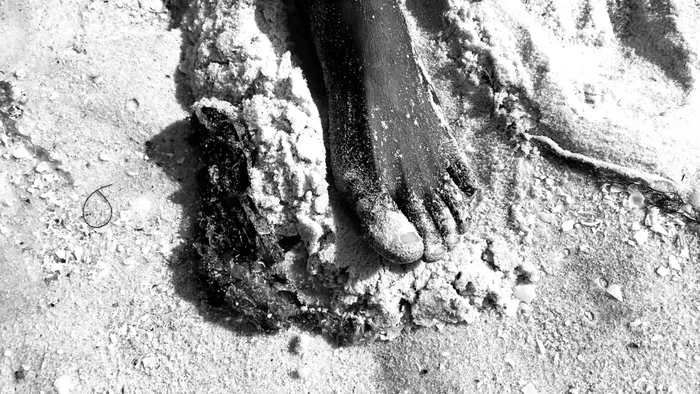
In The Source a trans man in Tanzania spends a day at the beach with his Rastafarian father, who shares life lessons with him and teaches him to swim.
Image: Supplied
MN: Filming has definitely shaped my activism because, number one, I have evolved from the strategies that I (employ) in the organisation. Because for many years we have been giving people capacity. We have been providing emergency support. We have been providing entrepreneurship skills. But we never have dealt with art or arti-vism; using art - music, dancing and filming - in advocating for our rights, visibility and freedom. So, this category of art, which is filming, has given me power. To me, it's like a superpower because I get to narrate the stories, and create them however I want (in order) to pass on messages to the community at large.
KK: I think, going forward, I'll definitely continue to use film and maybe not just film, but even pictures… (created with) my mobile phone. Because it's the one thing that is always in my pocket - other than my wallet. And I can always use that to tell different stories. Like you were saying, these are stories that are not told. These are stories that we're telling in repressive countries. We don't stop telling the stories because of the nature of the environment. (So,) this is actually a very innovative and creative way to continue telling these stories in otherwise unsafe environment(s).
CC: And for you, Prince?
PF: You know, as part of my advocacy, I'm always preaching about queer joy, queer liberation, queer freedom, and living our authentic self, unapologetically. You know, we are living in a homophobic country. And that is how it's going to be. I feel like how does it all end when we are being killed and discriminated (against)? But when we take ownership of our own stories and tell them authentically, I feel like that is a way for us to mobilise more support networks, gain more resources, and invite people to the table to (discuss) critical issues that we face as a queer community. And these (things) can be done through filmmaking. So, it has really shaped my activism in so many ways. I mean, you know, it's a new wave of activism. It’s a new way of telling queer stories and giving us that kind of visibility or recognition that we need as a queer community. So, for me, it is something that I'm always going to adopt in my advocacy: continue telling queer stories, continue telling Ghanaian queer stories and using these tools to Africanise and reshape our narrative. Also, as a side, teaching people the ways of using mobile (phones) …to tell their own stories. And, you know, keep the movement going, and create positive change in this way.