

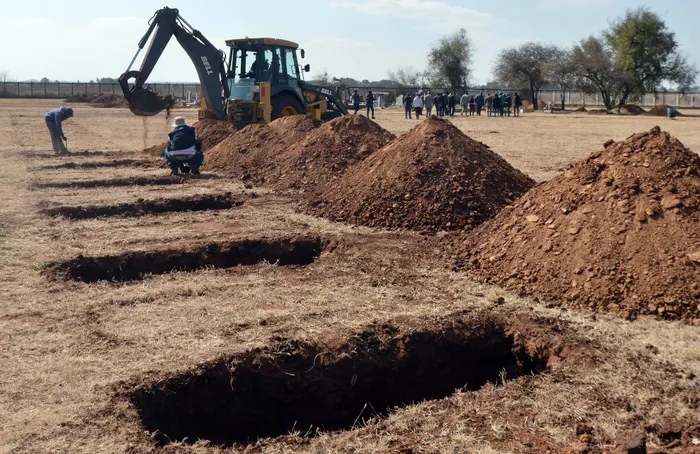
Families in South Africa are confronting a hard reality: cemeteries are reaching capacity, and traditional burials may no longer be viable.
Image: Independent Newspapers Archives
South Africa is running out of space to bury the dead, and industry leaders warn urgent action is needed before families are forced to turn away from cemeteries. The South African Funeral Parlour Association (SAFPA) says urban land shortages are creating a national crisis that threatens both cultural traditions and human dignity.
“We cannot afford to wait until families are turned away from cemeteries,” says Nomfundo Mcoyi, President of SAFPA and CEO of Icebolethu Group. “Burial is a sacred tradition for many communities, but we must begin to explore dignified alternatives such as cremation and green burials whilst working together to find sustainable solutions. The dignity of our final farewells must be preserved, even as our cities grow.”
For many African families, burial is not just a ritual, it is a deeply spiritual and cultural practice. Cremation, while more space-efficient, remains unfamiliar and emotionally distant for many. Yet, as urban land becomes scarcer and cemeteries fill up, the need to rethink the country’s approach becomes more urgent.
According to reports from the City of Johannesburg, 90% of its cemeteries are full, with only four out of 42 still accepting new burials.
“Private cemetery plots, which now cost between R10 000 to R15 000 per grave, plus monthly rates for 10 years (paid upfront), price out many families. In Ekurhuleni, the demand for burial plots is 9 000 annually, requiring over 19 000m² of land each year. These figures reflect a national crisis that touches on cultural identity, urban planning, and human dignity,” explains Mcoyi.
As urban migration and development continue, the pressure on land intensifies. Cemeteries are being vandalised, graves reused, and families forced to bury loved ones in distant or unsuitable locations, including wetlands and unstable soil.
To address the crisis, SAFPA is advocating a multi-pronged approach:
Public Education: Launch awareness campaigns to promote cremation and green burials as dignified, sustainable alternatives.
Land Allocation: Urge municipalities to release unused land for both public and private cemetery development.
Partnerships: Collaborate with human rights organisations to ensure burial practices uphold cultural and spiritual dignity.
Innovation: Encourage exploration of vertical cemeteries, memorial walls, and eco-friendly burial options.
“Unused land can be transformed into sacred spaces. But we need political will, community dialogue, and a shift in mindset. The cemetery crisis is not just about space, it’s about how we honour life. SAFPA’s message is clear: we must act now to preserve the dignity of our dead and the rights of our living,” says Mcoyi.