
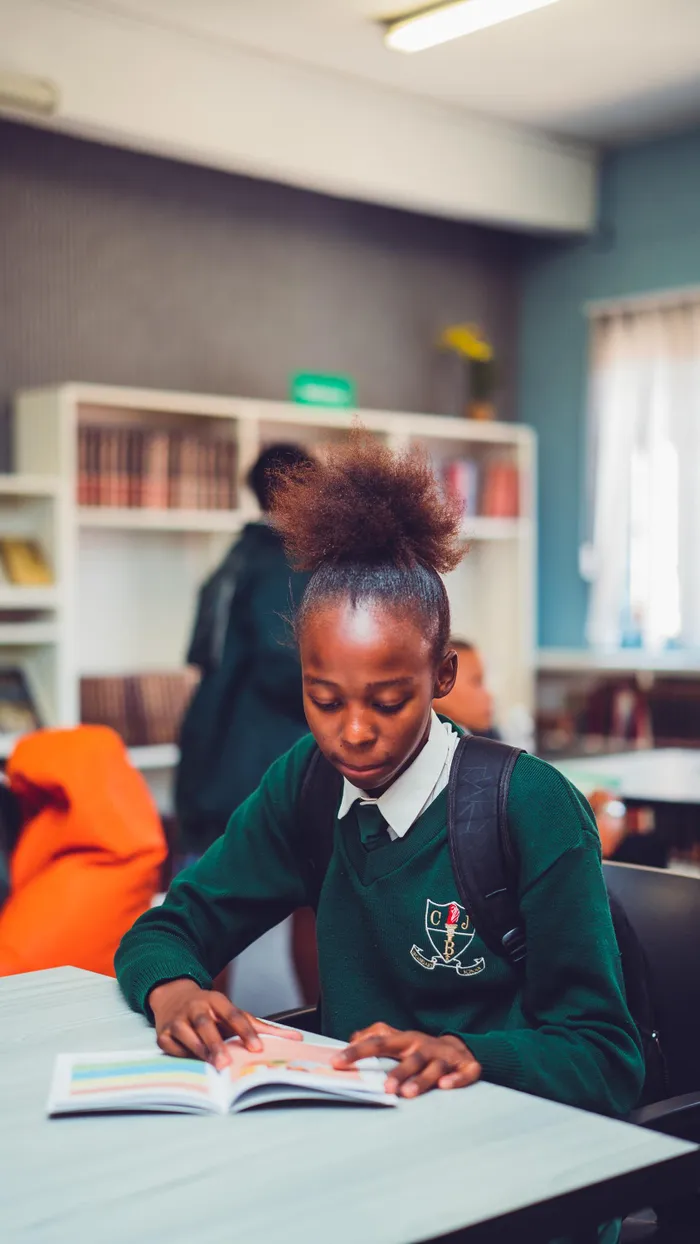
BIC team members joined learners and teachers at CJ Botha Secondary School to mark Global Education Week.
Image: Supplied
For millions of South African children, crowded classrooms and limited resources continue to hold back a generation of learners. Despite efforts from educators and communities, access to quality learning remains unequal, especially in under-resourced schools.
Data from the Department of Basic Education shows that of the Grade 10 boys who started school in 2022, fewer than half made it to Grade 12 in 2024 without repeating a year. Girls fared only slightly better and roughly 172 000 pupils dropped out entirely.
Leaving school before matric does not just end a child’s education, it cuts off their chances of finding work, building a future and breaking the cycle of poverty.
Amid these challenges, small interventions continue to make a difference. Writing tools, for instance, remain essential for participation and learning in classrooms across the country.
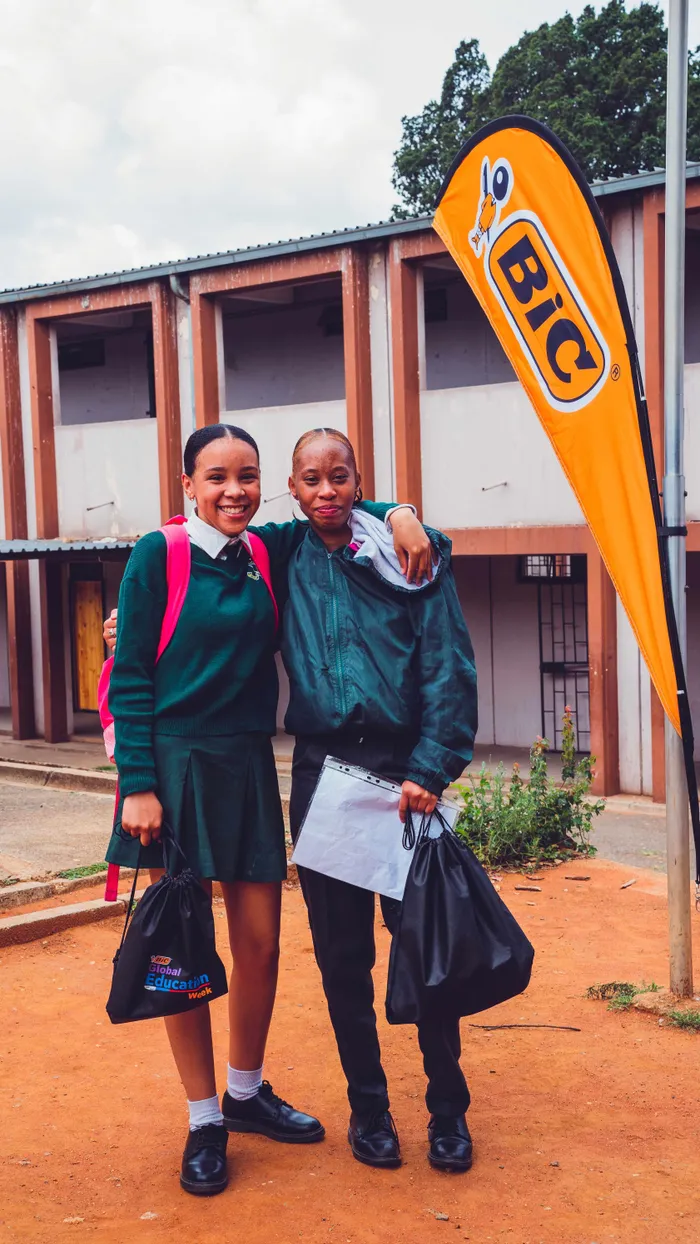
BIC team members joined learners and teachers at CJ Botha Secondary School to mark Global Education Week.
Image: Supplied
“Writing tools play an important role in cognitive development,” says Marc D’Oliveira, general manager of BIC Southern and East Africa. “They help learners think more clearly, capture what they learn and build confidence in expressing themselves. That’s why access to writing tools is a necessity.”
This November, BIC South Africa joined team members around the world for the sixth Global Education Week (GEW), part of the company’s global Writing the Future, Together sustainability program launched in 2018. The initiative aims to improve learning conditions for 250 million students globally by 2025.
Since 2012, BIC has donated more than 17 million pens to South African schools. In 2025 alone, its programs reached more than 500 000 students and 16 000 teachers, visiting hundreds of schools to motivate learners and help reduce dropout rates.
This year’s GEW focused on CJ Botha Secondary School in Industria, Johannesburg, where team members helped refresh and reorganise the school library and provided teachers and learners with essential writing tools.
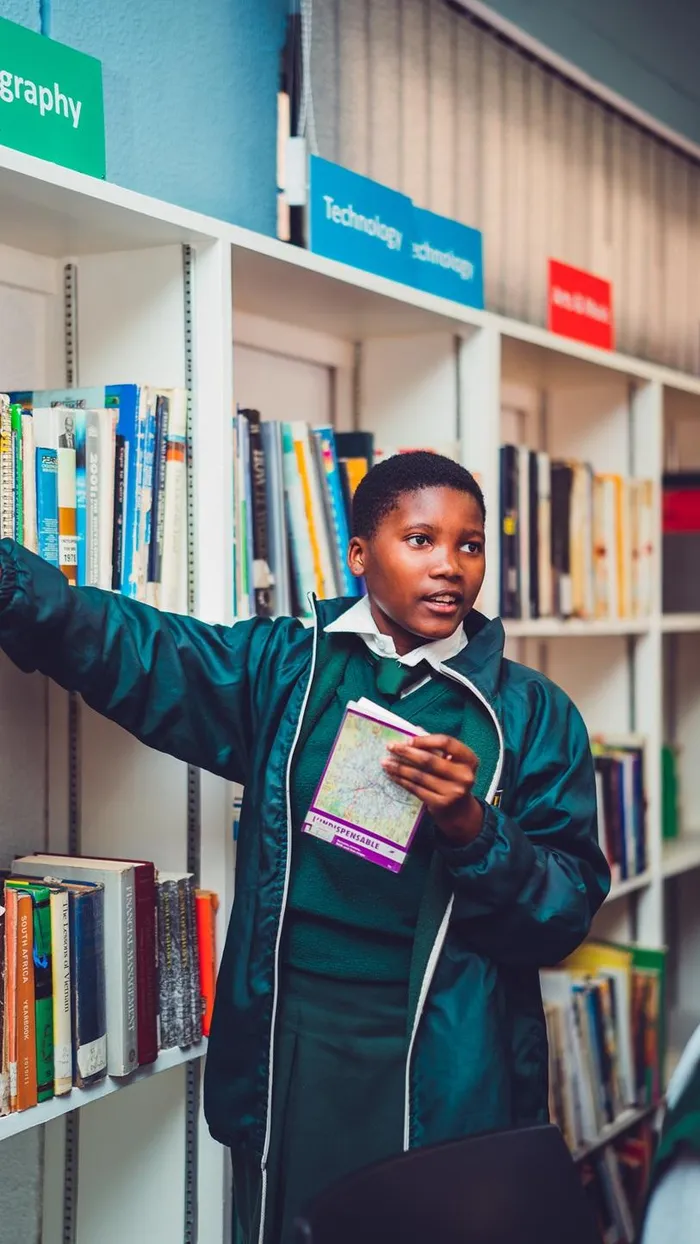
A refreshed library and new writing tools are helping learners rediscover the power of reading and writing.
Image: Supplied
“Every child deserves the dignity of a fair start in life,” says D’Oliveira. “Through GEW and our ongoing outreach, we want to ensure that students not only stay in school but also enjoy learning. Change happens one classroom, one teacher and one student at a time.”
The story of education in South Africa is one of resilience, of pupils and teachers who continue to strive for progress despite obstacles. Writing, after all, remains one of the most fundamental skills in education. For many learners, something as simple as having a reliable pen can mean the difference between participation and silence in the classroom.
As 2025 draws to a close, initiatives like GEW remind us that improving education is a shared responsibility, one that requires collaboration between government, educators, businesses and communities to ensure that every child has the chance to learn, express themselves and succeed.