

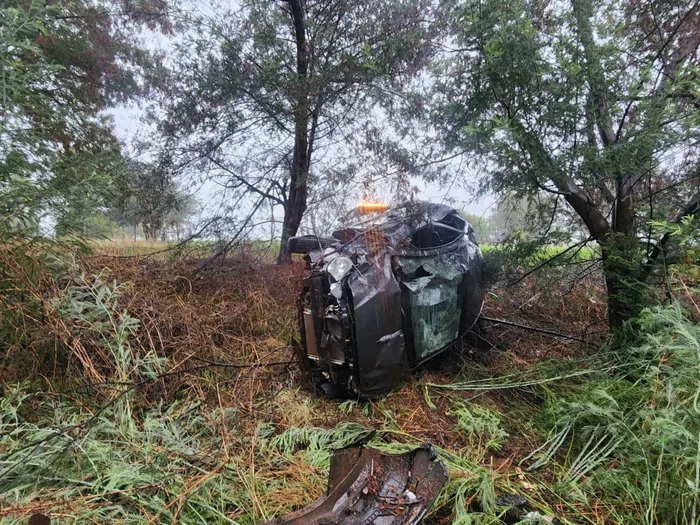
The SUV that left the road after reportedly aquaplaning on Joan Avenue in De Deur early on Sunday.
Image: Arrive Alive
Two vehicles left the road in separate aquaplaning incidents on the corner of Joan Avenue and Randvaal Road in De Deur early on Sunday morning.
According to Arrive Alive, the first crash occurred shortly after 5am on November 16, when a single SUV veered off the roadway after reportedly aquaplaning. No injuries were recorded.
Soon afterwards, a light motor vehicle experienced the same problem at the exact location and also left the road. One person sustained moderate injuries and was transported to a local hospital for further medical treatment.
Emergency and support services responded to both scenes.
Authorities have urged motorists to exercise extreme caution as heavy rain continues to create hazardous conditions across Gauteng.
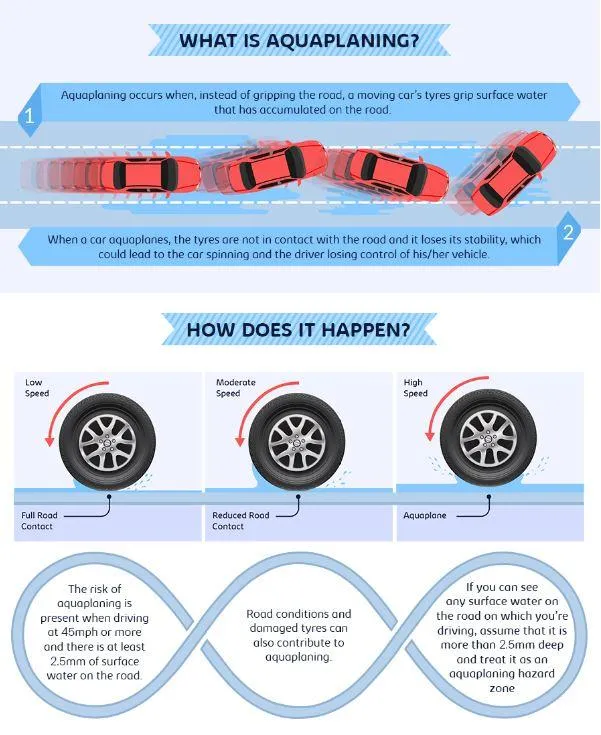
Arrive Alive has issued guidance on aquaplaning, explaining how tyres lose grip on surface water and why drivers must slow down in heavy rain. An infographic from First Aid Wheels outlines the danger and offers practical steps to stay in control.
Image: Supplied
The Arrive Alive website has shared advice on how drivers can stay safe in heavy rain and bad weather, where many crashes are blamed on aquaplaning.
Aquaplaning, also known as hydroplaning, happens when a car’s tyres ride on top of surface water instead of gripping the road. This causes drivers to lose control of their vehicles.
An infographic from First Aid Wheels describes it as follows: “Aquaplaning (aka hydroplaning) occurs when a car’s tyres grip surface water instead of the road. This could badly affect the control that a driver would have over their vehicle and, if it does happen, it’s crucial to slow down gently and steer in the direction of the road.”
*The infographic notes that 45 miles per hour is roughly 70km/h.