
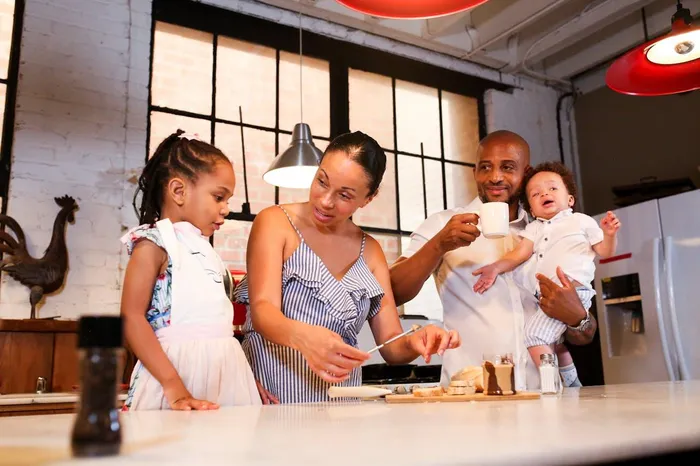
Children aren’t naturally rude, they’re often simply never taught basic manners. Teaching 'please', 'thank you', and simple courtesies is less about old-fashioned rules and more about empathy, social skills and future success.
Image: RDNE Stock project / Pexels
There was a time when a raised eyebrow from an adult was enough to straighten a spine, close a mouth mid-chew, or prompt a mumbled but sincere “thank you.” No shouting. No lecturing. Just a shared understanding that manners mattered.
Somewhere along the way, we lost that understanding.
Today, we live in a world where children interrupt adults mid-sentence, barge through doors without a glance behind them, chew with their mouths open in public, and scroll their phones while someone speaks to them face-to-face. And while it’s easy to blame “kids these days,” the uncomfortable truth is this: this is not their failure – it’s ours.
As parents and teachers, we have quietly stopped teaching basic manners. Not because we don’t care, but because life is busy, classrooms are overwhelmed, and we’ve convinced ourselves that saying “please” and “thank you” is less important than maths, coding, or academic performance.
We are wrong.
Manners are not outdated rules designed to control children. They are social tools and without them, children are being sent into the world underprepared, misunderstood, and often unfairly judged.
Holding a door open teaches awareness of others.Chewing with your mouth closed teaches respect for shared space.Standing when someone enters a room teaches acknowledgement and presence.Saying “please” and “thank you” teaches gratitude.
These aren’t arbitrary rules from a bygone era. They are the earliest ways children learn empathy, self-control, and social awareness, skills that no app, syllabus, or life-orientation worksheet can replace.
When we don’t teach these things early, children don’t magically learn them later. Instead, they grow into teenagers who struggle in group settings and adults who are labelled rude, entitled, or disengaged often without understanding why doors keep closing for them.
Teachers are under immense pressure. Overcrowded classrooms, administrative overload, and behavioural challenges mean that many simply don’t have the capacity to correct manners alongside curriculum demands. And yet, when basic courtesy is absent, teaching becomes harder for everyone.
At the same time, many parents hesitate to correct behaviour, worried about being seen as “too strict” or damaging self-esteem. But structure and kindness are not opposites. Children feel safer when expectations are clear and respectful behaviour is one of those expectations.
Teaching manners does not require shouting, punishment, or humiliation. It requires consistency, example, and gentle correction.
Children don’t learn manners from posters on the wall. They learn them by watching how adults speak to waiters, greet neighbours, thank bus drivers, and listen without interrupting.
I have to add that recently we sent out promotional gifts to 20 schools, private and government. Do you want to know how many thank you we got – NOT ONE!!
In an increasingly digital world, face-to-face interaction is becoming a skill rather than a given. Employers frequently report that young people struggle not with technical ability, but with basic workplace etiquette: greeting colleagues, listening respectfully, responding politely, and showing appreciation.
Manners are not about being old-fashioned. They are about being employable, likeable, and capable of navigating human relationships.
Working closely with young people in service environments, we see this daily. A teenager who says “thank you” to a shelter coordinator stands out immediately. A learner who listens attentively to instructions earns trust faster. These small behaviours open doors to opportunities, mentorship, and growth.
This is not a call to return to rigid, joyless rule-books or silent dining tables. It is a call to re-centre courtesy as a life skill, not an optional extra.
We can start small:
Manners don’t limit children, they equip them.
In a society struggling with division, impatience, and disconnection, teaching basic courtesy is one of the simplest, most powerful acts of social repair we have left.
It starts at the table.It continues in the classroom.And it shapes the adults our children become.
Maybe it’s time we stopped asking, “Is this still relevant?”And started asking, “Why did we ever stop?”
Volunteer Now is an online platform that connects passionate volunteers with meaningful causes.