

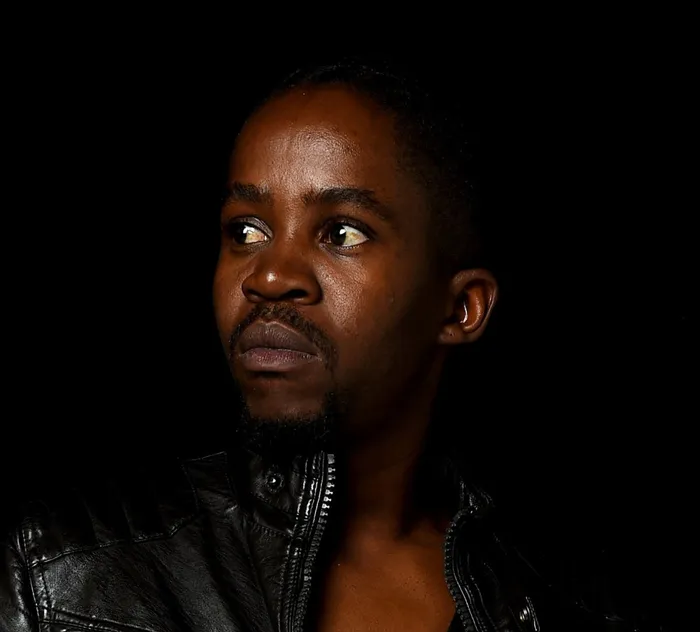
Rabbie Serumula, author, award-winning poet, journalist.
Image: File
South Africa no longer hides the truth. The state parades it. It puts it on record. It swears to it under oath. And then it does nothing.
This week, the state once again demonstrated that transparency has become an alibi, a way to appear accountable while ensuring that accountability never actually arrives.
In Tshwane, the metro moves to blacklist Edwin Sodi, who has long been synonymous with public failure and private enrichment. The evidence is uncontested. Still, the system pauses to locate him, notify him, and extend the full courtesies of a process designed to protect its own. The system bends over backwards to protect the procedural rights of those accused of bleeding it dry, while communities in Hammanskraal continue to live with the consequences of collapsed governance.
Here, legality becomes a shield, not a sword.
Then comes the president. Cyril Ramaphosa announces a task team to investigate senior police officials, a move designed to signal seriousness. But seriousness, it turns out, has boundaries. The suspended police minister, Senzo Mchunu, remains untouched, untroubled, spared. His name is present in the rot, yet political convenience still outranks moral clarity. Accountability is summoned, but only for those without proximity to power.
We should not overlook the uneasy comparison the state would rather we not make. When cash is discovered at the home of the Johannesburg Development Agency CEO, Themba Mathibe, the Joburg ANC Youth League’s pride and joy is arrested. Calls for investigation are immediate and loud, the language urgent, the suspicion automatic. Yet when foreign currency was found concealed at President Ramaphosa’s Phala Phala farm, explanations multiplied, processes slowed, and accountability dissolved into legal nuance. In both cases, money was found where it should not have been. For some, unexplained money triggers scrutiny. For others, it triggers protection.
It is within this culture of selective outrage and managed accountability that the Madlanga Commission must be understood. At the Commission, the farce becomes unbearable. A senior police officer, KZN Hawks head, Maj-Gen. Lesetja Senona calmly admits that R200 million worth of cocaine vanished on his watch. He speaks of moving drugs across provinces as though recounting a logistical mishap. He laughs about polygraph tests. He says he would comply if asked. In any functional state, that sentence would end a career. Here, it barely raises an eyebrow.This is not failure by accident. It is failure by design.
We have built institutions that know everything and do nothing. Commissions that expose rot but lack teeth. Investigations that are announced loudly and concluded quietly, if at all. Processes that move with agonising slowness only when the powerful are involved.
For the rest of the country, the message is clear: justice is not delayed because it is difficult, but because it is inconvenient. The system is not broken. It is working exactly as intended, protecting itself, insulating its own, exhausting the public into silence.
Transparency without consequence is not reform.It is mockery.
And South Africans are expected to keep applauding while the state explains, again, why nothing can yet be done.