

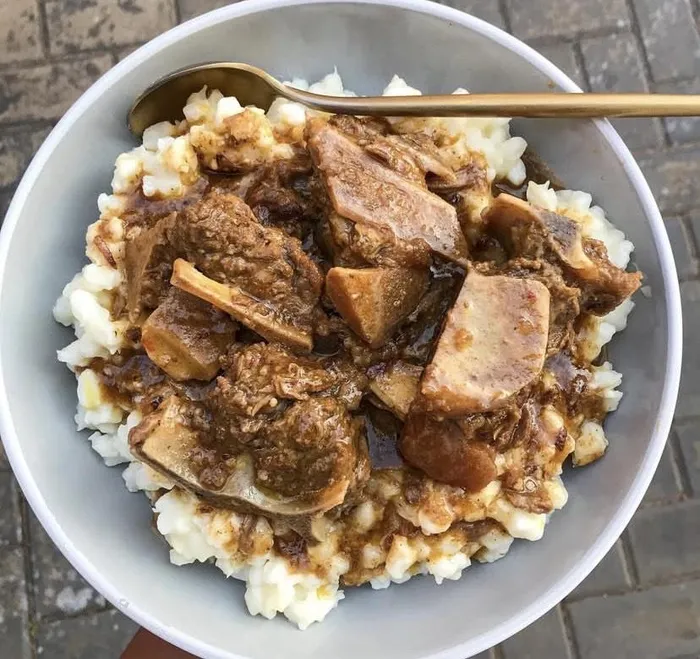
Experts say traditional staples such as pap, samp and beans can play a key role in improving nutrition and reducing lifestyle-related diseases.
Image: Instagram
As South Africa marks Healthy Lifestyle Awareness Month this February, with its focal point on National Healthy Lifestyle Day, the nation faces a familiar paradox: our profound love for communal, indulgent cuisine set against the stark reality of a growing non-communicable disease burden. Recent data reveal that almost 50% of adult South Africans are overweight or obese, with women disproportionately affected at around 68%, compared with 38% of men. Adults aged 35–64 years are most at risk, and rising childhood obesity rates, about 13% of children aged 6–14, signal that the challenge spans generations.
The burden is not limited to body weight. Obesity is a leading driver of lifestyle-related diseases, including type 2 diabetes, hypertension, and cardiovascular disease, now contributing more to mortality than HIV, tuberculosis, or AIDS (WHO). Alarmingly, studies show that many adults affected by obesity live in food-insecure households, highlighting how economic inequality and limited access to nutritious food exacerbate the epidemic.
For Omy Naidoo, founder and managing director of Newtricion Wellness Dietitians, the solution lies not in abandoning cultural staples but in optimising them.
“Our challenge and our opportunity lie in our diversity. We must craft health messages that resonate from Sandton to Soweto, that celebrate our pap and samp, and empower every family to make choices that are both culturally sound and nutritionally dense,” Naidoo states.
He advocates for a return to affordable, nutrient-dense foundations. “Look to the staples that have sustained generations - maize, samp, beans, and lentils. These are affordable, versatile, and packed with the nutrients we need,” he advises. This approach is critical in a context where research suggests that a significant portion of the population struggles with food affordability.
The ethos of the month, Naidoo emphasises, is sustainable community change. “Health is not a solitary pursuit. Cook and eat with family. Share healthier recipes,” he says. This February, the goal is to embed small, conscious shifts like prioritising water, reading labels, and moving naturally into the fabric of daily life, proving that wellness and tradition can coexist.