

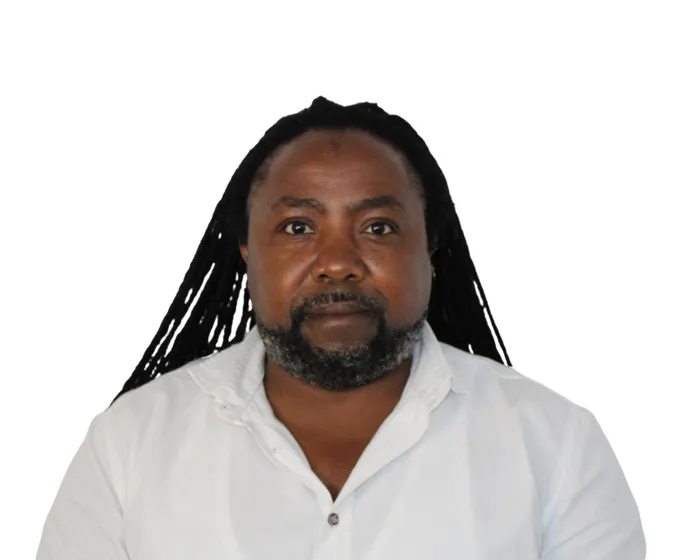
Zama Mgwatyu, Programme Manager at Development Action Group.
Image: Supplied
When President Cyril Ramaphosa delivered the 2026 State of the Nation Address, he moved beyond general acknowledgement of the housing crisis and outlined a series of more concrete interventions. These included accelerating the release of well-located public land, expanding social and affordable housing, unblocking stalled housing projects, reforming infrastructure financing, and strengthening coordination through the human settlements framework. These commitments signal an awareness that housing lies at the heart of South Africa’s inequality crisis. The question now is whether they will shift the structural conditions that continue to reproduce spatial exclusion.
South Africa’s housing crisis is not simply about the number of units delivered. It is about where housing is located, who it serves, and how it connects people to opportunity. For decades, well-located land has remained underutilised or locked up, while low-income households have been pushed to the urban periphery, far from jobs, schools and essential services. The President’s renewed commitment to public land release is therefore significant. Public land is one of the most powerful levers the state has to reverse apartheid geography. Yet land release has been promised before, often without meaningful follow-through. If this intervention is to be transformative, it must be accompanied by transparent identification of land parcels, clear development timelines, enforceable affordability conditions, and safeguards against speculative capture. Without these protections, land reform risks entrenching exclusion rather than dismantling it.
The emphasis on expanding social and affordable housing, particularly for households in the “missing middle”, is equally important. Millions of working families earn too much to qualify for subsidised housing but too little to access the formal property market. Blended finance models and greater support for micro-developers and social housing institutions offer a pathway to serve this group. However, financing reform alone will not unlock delivery. Municipal approval processes, predictable subsidy flows, institutional capacity within social housing entities, and strong rental governance systems are all essential. Without administrative reform and municipal efficiency, even well-designed financial instruments will struggle to translate into completed homes.
The President also committed to unblocking stalled housing projects, many of which represent frozen public investment and broken promises to communities. Across the country, partially built or abandoned developments stand as visible reminders of mismanagement, contractor failure and weak oversight. Resolving these projects is not only about accelerating construction; it is about restoring credibility. A credible unblocking strategy must include transparent audits of stalled developments, public disclosure of the reasons for failure, consequences where corruption or negligence is identified, and dedicated technical capacity to complete viable projects. Acceleration without accountability will deepen mistrust rather than rebuild it.
While SONA acknowledged the growth of informal settlements, upgrading must be treated not as a peripheral programme but as a central pillar of housing policy. Informal settlements are home to millions and will remain so for the foreseeable future. Upgrading in situ is often more cost-effective and socially just than relocation to distant sites. It enables incremental improvements to water, sanitation, electricity and safety while preserving social networks and livelihoods. Yet this approach requires ring-fenced funding, flexible procurement frameworks that enable community participation, and protection against extortion and criminal interference that increasingly disrupt local delivery. Recognising informal settlements as permanent parts of the urban fabric demands institutional commitment, not temporary language.
Infrastructure reform, another key theme in SONA 2026, is inseparable from housing delivery. Homes cannot be built or upgraded without reliable water, sanitation, electricity and transport systems. The President’s emphasis on new infrastructure financing mechanisms is welcome, but financing must be paired with municipal stabilisation. The widening gap between functional and distressed municipalities threatens to undermine even well-funded national programmes. Technical assistance, performance-linked grants and strengthened intergovernmental accountability systems must follow the commitments made in SONA. Without capable municipalities, housing policy remains aspirational.
Perhaps the most promising shift in tone was the framing of housing as part of a broader economic strategy. Housing development is not only a social obligation; it is a driver of employment, enterprise development and economic inclusion. Well-located housing reduces transport costs and improves labour market access. Upgrading programmes can create local jobs and support small-scale contractors. Integrating youth skills development and livelihood opportunities into housing initiatives would help ensure that delivery contributes directly to tackling unemployment and poverty.
SONA 2026 has placed tangible housing interventions on the national agenda. That is progress. But the true measure of this moment will lie in measurable benchmarks and transparent reporting. How much well-located land will be released within the next year? How many affordable rental units will break ground? How many stalled projects will be completed? How many informal settlements will receive full service upgrading? How will different metros and secondary cities be equipped and supported in order to assist micro developers to scale up the delivery of affordable rental accommodation? How will different spheres of government enter into effective partnerships with civil society organisations towards the delivery of human settlements at scale? Without publicly tracked timelines and consequences for persistent non-performance, even the most concrete commitments risk becoming familiar promises.
South Africa does not lack policy frameworks or pilot projects. It does not lack capable partners in civil society, communities and the private sector. What it has lacked is consistent implementation, coordination and consequence. If the housing commitments outlined in SONA 2026 are pursued with urgency, transparency and accountability, they could begin to shift the structural foundations of inequality. If not, they will join a long history of well-articulated plans that failed to alter lived reality.
The country knows what must change. The real test now is whether government will match concrete proposals with equally concrete delivery - and whether it is prepared to be held accountable for the results.