

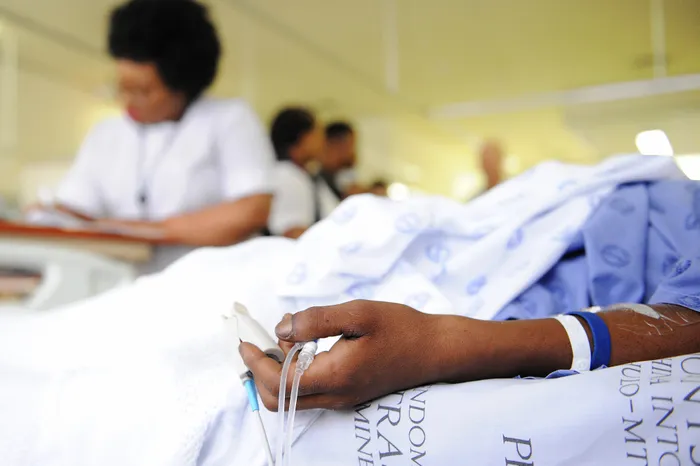
Rare Disease Day draws attention to the more than 7 000 known rare conditions affecting millions globally.
Image: Independent Newspapers Archives
Rare diseases each affect relatively small numbers of people, but collectively they impact more than 300 million individuals worldwide across over 7 000 known conditions, with 70% of these starting in childhood.
For many patients and families, the reality is often long diagnostic journeys, uncertainty and ongoing challenges in accessing treatment and support.
“More Than You Can Imagine,” the theme for this year’s global Rare Disease Day, observed globally on February 28, highlights the often unseen challenges faced by rare disease communities and the need for more equitable healthcare systems for people living with rare conditions worldwide.
According to Monique Nel, medical adviser for Rare Diseases at Sanofi South Africa, rare diseases demand a long-term mindset. "Patient populations may be small, but that makes every data point even more valuable. Building evidence takes time, yet each insight brings us closer to understanding these conditions and the unique needs of patients – enabling us to deliver better care."
Research remains essential in rare diseases, where evidence is often limited and every patient experience matters. Global disease registries, such as the Global Gaucher Registry, allow clinicians and researchers to collect real-world data that deepens understanding of how conditions present across different regions and healthcare settings. Participation from South African patients helps ensure local experiences are reflected in global research.
"For me, equity starts with representation," says Nel. "Patients are not the same everywhere. Genetics, environment, and healthcare systems all shape how a disease presents and progresses. If our research doesn't reflect the diversity of the populations we serve, we risk missing a critical part of the picture."
Innovation can transform outcomes for people living with rare diseases, but scientific progress only matters if patients can actually reach and stay on treatment.
Rare disease therapies are often complex and highly specialised, which means access depends on collaboration across clinicians, funders, policymakers and industry. The focus is increasingly on sustainable solutions that support affordability, continuity of care and long-term patient support.
“Access isn’t only about availability,” says Nel. “It’s also about what happens after treatment starts - whether patients can continue therapy, feel supported, and navigate their care with confidence.”
Policy and legislative frameworks play an important role in shaping diagnosis, treatment pathways and long-term patient support. Ongoing engagement between stakeholders is essential to strengthen South Africa’s rare disease landscape and ensure decisions reflect real patient needs.
Patient voices are becoming increasingly important in policy and reimbursement discussions, offering insights that clinical data alone cannot provide.
"Patients and caregivers become experts through their own lived experiences," says Nel. "Listening to their voices is what enables us to design better systems and ultimately deliver better care."
"When we say rare diseases impact lives more than you can imagine, we're talking about the invisible barriers patients face before they ever receive care," says Nel. "Healthcare systems matter because they determine how quickly families find answers, how care is funded, and whether patients are truly included."
She notes that South Africa’s constitutional commitment to healthcare, together with opportunities created through National Health Insurance, presents an important moment to strengthen support for rare disease communities.
South Africa’s support for the May 2025 rare diseases resolution at the World Health Assembly followed advocacy by Rare Diseases South Africa, which engaged the Department of Health and Health Minister Aaron Motsoaledi, calling for rare diseases to be recognised as a national health priority.
“Progress comes from sustained advocacy, partnership and action. Strong policy needs partners who understand that acting for patients means helping build systems that work for them,” says Nel.
As part of Rare Disease Day 2026, Sanofi South Africa is once again partnering with Rare Diseases South Africa (RDSA) to raise awareness around rare disease equity and amplify the lived experiences of patients and families. The collaboration focuses on education, awareness and encouraging meaningful dialogue around patient needs.
“Healthcare is a constitutional right in South Africa,” says Kelly du Plessis, CEO & Founder of Rare Diseases South Africa. “The opportunity now is to ensure rare disease patients are fully included in that promise. Equity means policies that don’t simply acknowledge rare diseases but actively prioritise them.”
RDSA remains an independent patient advocacy organisation, while the partnership supports awareness initiatives and responsible collaboration that strengthens patient-centred advocacy.
"We remain committed to working for patients, but we've learned to do that more effectively by collaborating with patient societies," says Nel. "That partnership approach is essential. Equity means ensuring every patient is heard, every voice contributes, and every partnership has the opportunity to drive better care."
The partnership with RDSA aims to:
Both organisations agree that meaningful progress in rare diseases depends on collective action across patients, healthcare professionals, policymakers and industry partners.