

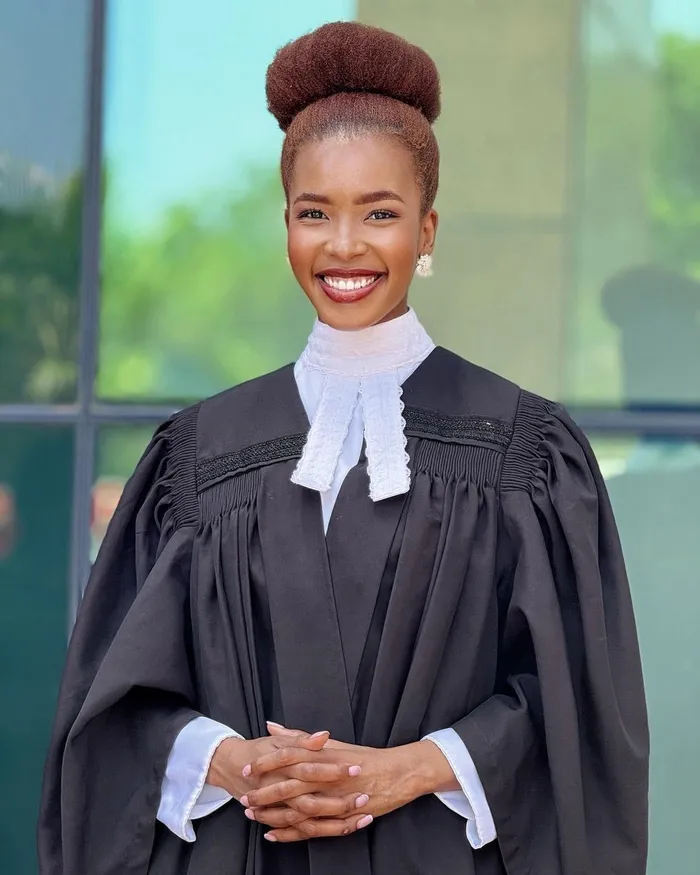
Lesego Chombo, Botswana’s youngest cabinet minister, is championing a Gender-Based Violence Bill focused on prevention and stronger support for victims.
Image: Supplied
When Lesego Chombo was crowned Miss Botswana in 2022, she immediately set up a foundation to support disadvantaged youngsters and their parents in rural areas.
After ending her term as Miss World Africa in November 2024, the 26-year-old became the youngest cabinet minister in Botswana’s history when she was appointed as Minister of Youth and Gender Affairs. She is now leading the charge on a Gender-Based Violence Bill focusing on protection, care and support of victims, as well as prevention.
In Côte d’Ivoire, Raïssa Banhoro identified literacy, numeracy and limited access to digital tools as barriers to women’s digital inclusion. She developed Lucie, the country’s first mobile literacy app with local-language vocal assistance addressing those challenges. She later pioneered a model of free, intensive digital training for youth not in employment, education or training, achieving a 100% employment rate for graduates.
Chombo and Banhoro are among 55 women across Africa being recognised ahead of International Women’s Day, observed on Sunday March 8, under the global theme “Give to Gain”. The initiative, led by KFC Africa, highlights women whose work focuses on expanding access, opportunity and support in their communities.
“These are not just stories of individual achievement,” says Akhona Qengqe, general manager of KFC Africa. “These are stories of women who give Africa more.
“They give access where there was exclusion. They give opportunity where prospects were limited. They give hope where there was none.”
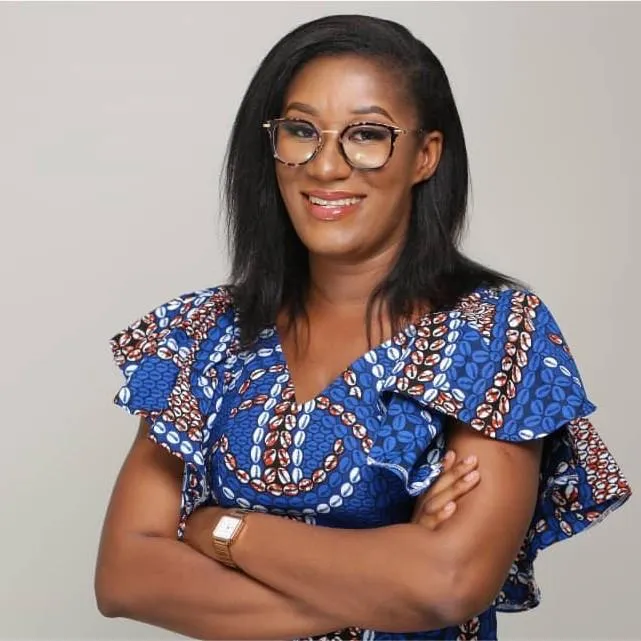
Ivorian tech entrepreneur Raïssa Banhoro developed Lucie, Côte d’Ivoire’s first mobile literacy app with local-language voice assistance to help women access digital opportunities.
Image: Supplied
The 55 women honoured - one for each year the brand has operated in Africa - include Nice Leng’ete from Kenya, who in 2014 persuaded Maasai elders to formally abandon female genital mutilation. Working with Amref Health Africa and her own foundation, she has helped over 21 000 girls escape the practice.
Dr Germaine Retofa from Madagascar has transformed maternal care in one of the country’s most impoverished regions into a system aimed at ensuring a woman’s location or income does not affect her chances of survival.
In Mozambique, Alexandra Machado is pioneering a circular mentorship model that has impacted 25 000 Mozambican women, tripling school transition rates and promoting investment in female leadership.
“For this year’s list of Africa’s female firsts we deliberately sought out women whose influence may not fill stadiums but whose impact fills hearts,” says Qengqe.
“They include women who have built tech networks for their female peers, expanded access to healthcare, made menstrual care a national priority, targeted girls for improved education access and tackled the gender pay gap.
“These are women from diverse backgrounds – lawyers, politicians, healthcare workers, entrepreneurs, authors, technologists and community organisers. Some are well-known figures. Many are not.
“What unites them is what they give: mentorship, protection, access, knowledge, visibility, opportunity, resources and time.”
Chief People, Culture and Purpose Officer Nolo Thobejane says the “Give to Gain” theme reflects the broader principle that investing in communities produces wider benefits.
“For years, we’ve seen how giving creates exponential returns,” she says. “When KFC Add Hope gives meals to vulnerable children through women-led feeding centres, communities gain nutrition and dignity.
“When Women on the Move provides leadership development for women in our business, the entire organisation gains stronger, more diverse leadership. When our Streetwise Academy gives young women accredited qualifications, families gain economic mobility.”
Thobejane says many women within the organisation are also active in their communities. “We have restaurant managers who mentor young women entering the workforce. We have team members who run after-school programmes in their communities. We have franchisees who create pathways for other women to access business ownership. Their giving happens quietly, consistently, and with deep purpose.”
The recognition comes amid broader concerns about gender equality in the region. According to the World Economic Forum Global Gender Gap Report 2025, gender parity in sub-Saharan Africa is projected to be 107 years away.
“These 55 women are not prepared to wait more than a century,” says Qengqe. “They are giving now so their communities can gain now. And when communities gain, Africa rises.”