

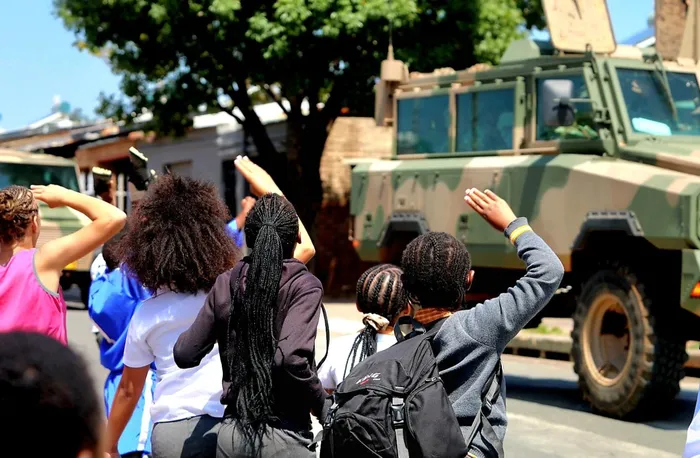
School children scream in the streets and salute the army convoy as they drive through the streets of Westbury.
Image: Timothy Bernard / Independent Neswpaperss
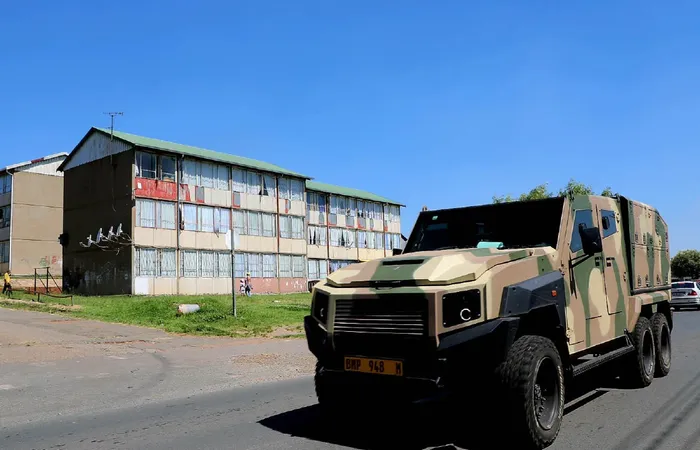
As SANDF soldiers move through Gauteng, questions remain over the effectiveness of military deployments against gang violence. Experts warn that without structural reforms, the army may only temporarily suppress crime.
Image: Timothy Bernard / Independent Newspapers
Convoys of the South African National Defence Force (SANDF) rolled through Gauteng streets this week, with children climbing into armoured vehicles for photos and adults clapping and waving at soldiers patrolling Eldorado Park and Westbury. On Friday, March 13, the troops moved through Springs.
“It’s a good thing! Now we can sleep in peace,” said 50-year-old Cecil Witbooi in Westbury. Mother-of-three Shai-Anne Fisher, 31, added: “There's lots of crime, shootings… Children are getting massacred. This is uplifting us.”
But while the army’s multi-billion-rand presence offered temporary relief, analysts warn it may do little to change the long-term crime landscape.
Political analyst Sandile Swana said: “Let us start off by saying that the science and research behind deploying the South African National Defence Force to combat illegal mining and crime in South Africa generally is not in view… So I must say up front that I think this is a mistake. It should not be done. It should not be started at all.”
Swana highlighted previous deployments that failed to reduce crime and raised concerns about working with compromised police: “This has already been done before. It has not been successful… Our policing… are fully infiltrated even by foreign agents and compromised, totally compromised. So when you are a team of soldiers working with these compromised police, they can even lead you to an ambush… I cannot immediately think of any positive long-term impact. The soldiers are irrelevant to this problem.”
Residents, who did not want to be named, echoed this sentiment, saying that social issues must be tackled alongside crime. “If they can give people jobs, it will help,” said one community member, noting that roughly 90 percent of the block’s residents are unemployed. Another highlighted police complicity, with children as young as 12 recruited into gangs and courts often releasing arrested suspects.
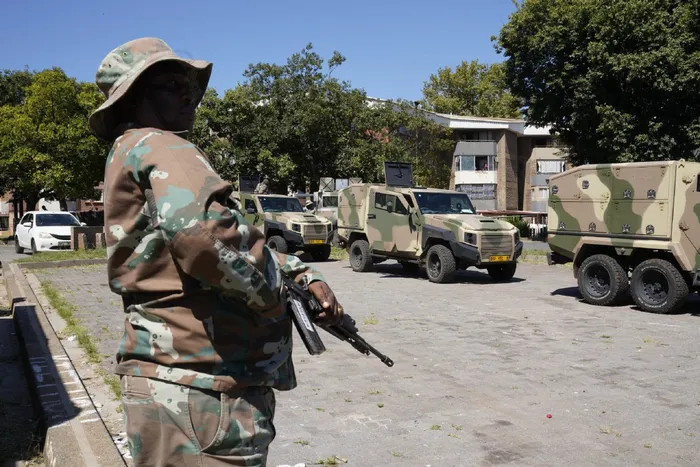
In Gauteng, residents have cheered the army’s presence on their streets, but behind the applause, concerns persist over long-term crime prevention and coordination with already compromised police structures.
Image: Timothy Bernard / Independent Newspapers
President Cyril Ramaphosa officially informed Parliament that 2 200 soldiers would be deployed across Gauteng, the Western Cape, Eastern Cape, Free State, and North West to support police in tackling illegal mining and gang violence.
The deployment, which was officially announced during the State of the Nation Address last month, will cost an estimated R823 million, and will run until the end of March 2027.
Ramaphosa said permanent deployment is not feasible due to high costs and urged communities to work closely with the SANDF and police to identify criminals.
This week’s operations in Westbury and Eldorado Park, followed a recent shooting that claimed the life of a 19-year-old and injured several others, including a 15-month-old baby.
Meanwhile, the deployment in Springs on Friday, March 13, was part of the originally planned operation targeting illegal mining in the province.
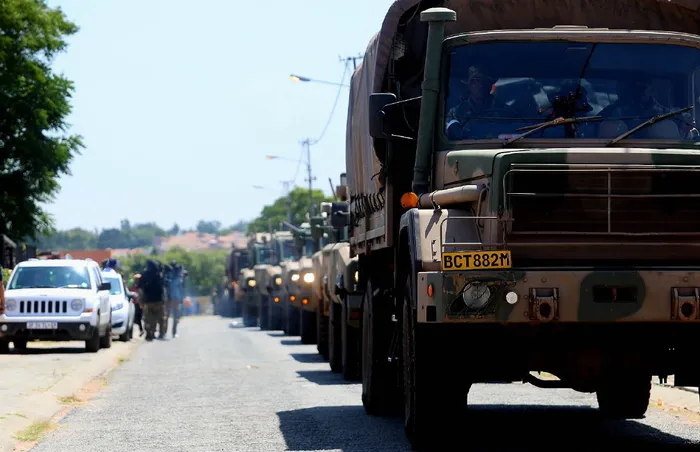
Gauteng’s temporary military patrols cost an estimated R823 million and run until March 2027. Analysts and community leaders question whether the SANDF presence will deliver lasting crime reduction or simply a short-term show of force.
Image: Timothy Bernard / Independent Newspapers
Community leader Shadrack Mkhonto said: “It is helpful in terms of scaring criminals away, but the question remains. Soldiers are not trained to arrest; they are trained to kill… Once they leave, crime returns. It will be the same this time. Criminals will celebrate and start their activities again. My take is that it is a waste of money and resources.
"Even though it is helpful temporarily, because it is not permanent, it will not stop crime, only suppress it for a while.”
The SANDF deployment comes as Gauteng ramps up efforts to tackle organised crime.Earlier this month, the South African Police Service established two specialised units in the province, including a replication of the Political Killings Task Team, aimed at investigating political assassinations and killings of government officials. A second unit will focus on crimes linked to kidnapping, extortion, and attacks on infrastructure projects.
Before President Ramaphosa’s announcement to Parliament, DA’s Ian Cameron expressed concerns about planning and legality: “Footage and reports emerging today from Eldorado Park and Riverlea raise serious questions about the current SANDF deployment in parts of Gauteng… Parliament has not approved any new SANDF deployment specifically aimed at combating gang-related crime following the State of the Nation Address.
"If such a deployment has now taken place, it must be properly explained.”
Xolani Khumalo, an ActionSA mayoral candidate, said: “The establishment of these specialised units marks a significant step forward, demonstrating that law enforcement is responsive to the concerns of Gauteng’s residents. While it’s premature to assess their effectiveness, it’s essential to allow them a three-month operational period to gauge their impact.”
Crime activist Yusuf Abramjee welcomed the establishment of specialised SAPS units in Gauteng but warned that structural issues must also be addressed: “Specialised units on their own will not solve the problem. What is critical is strong leadership, experienced investigators, proper intelligence support and adequate resources…
"There must also be accountability and measurable outcomes. We have seen task teams created before, but without sustained support and oversight, their impact has been limited.”
The Gauteng Provincial Legislature’s Portfolio Committee on Community Safety, Bandile Masuku, welcomed the initiative, calling it a decisive step in confronting increasingly sophisticated criminal threats. “These crimes have become sophisticated and coordinated, posing a serious threat not only to public safety but also to economic stability and service delivery in the province,” he said.
Additional reporting by AFP