

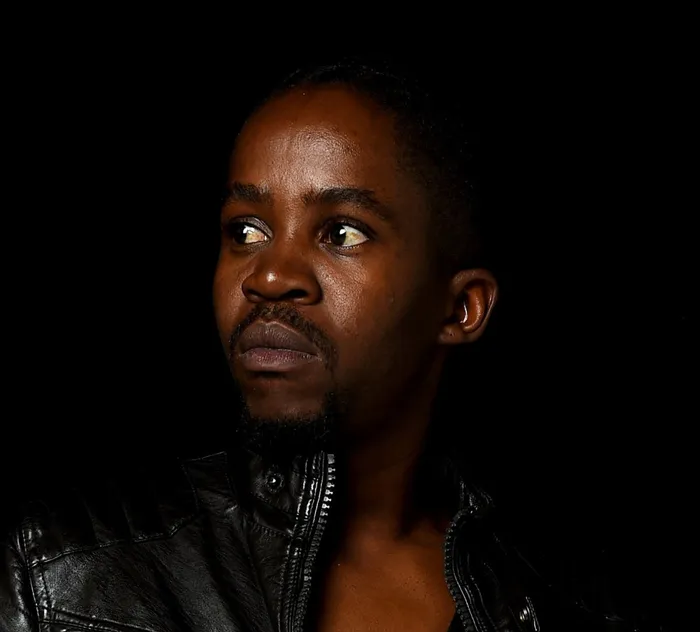
Rabbie Serumula, author, award-winning poet, journalist. Picture: Nokuthula Mbatha
Image: File Picture
There’s a saying in politics: the higher you climb, the thinner the air, and the fewer the friends who’ll catch you when you fall.
This week, the police themselves felt that chill. Sirens wailed; not for the hunted alone, but for the hunters as well.
At dawn, blue lights flickered outside the homes of men who once commanded them.
Minister Senzo Mchunu. Deputy Commissioner Shadrack Sibiya. Chief of Staff Cedrick Nkabinde. And, in Sandton, Hangwani Maumela, whose name is no stranger to controversy.
Their gates swung open to the same force they once directed. Devices seized. Doors kicked in. Pride punctured.
The symbolism was too rich to ignore: the state raiding its own conscience.
South Africans woke to a scene straight out of a political thriller, but instead of fiction, the script was written in betrayal.
Each of the four represents a different face of power: Mchunu, the statesman; Sibiya, the cop’s cop; Nkabinde, the loyal Chief of Staff; Maumela, the tenderpreneur nephew of President Cyril Ramaphosa.
Together, they form a constellation of influence that once seemed untouchable, until the dawn came knocking.
The official story speaks of corruption probes, procurement scandals, and the endless pursuit of justice. But the whispers tell of something deeper, a purge, a reshuffling of loyalties within the blue ranks, and the invisible hand of political calculus.
The raids came while both President Cyril Ramaphosa and his deputy were abroad.
That timing alone fuels suspicion that this is less about justice and more about positioning.Still, beneath the politics lies something heavier, the erosion of trust.
When the police turn on themselves, when the line between the enforcer and the accused blurs, the whole nation feels the tremor.
South Africans have seen this movie before: the spectacle of accountability, followed by silence, followed by amnesia. But this feels different.
Maybe it’s the brazenness of it all. Maybe it’s the sense that power is devouring itself again, a snake chewing its own tail.
Or maybe it’s because ordinary people are watching, no longer impressed by the theatre of clean hands. Sibiya says he feels like Joseph, “thrown into a pit by his brothers.”
Nkabinde says he was targeted. Mchunu, for now, stays quiet. But history has a cruel habit of echoing.
Today’s victims of the raid might be tomorrow’s villains of the affidavit. In the end, whether these men are guilty or framed, this much is true: the age of untouchables is ending.
The walls that once insulated power are thinning. The state is beginning to turn inward; and when it does, it is never clean, never quick, and never without blood on the floor.
The question is not who will fall next, but who is holding the ladder.
For more analysis and commentary in vernacular, join the conversation on Rabbie’s YouTube Channel: www.youtube.com/c/RabbieWrote?sub_confirmation=1