

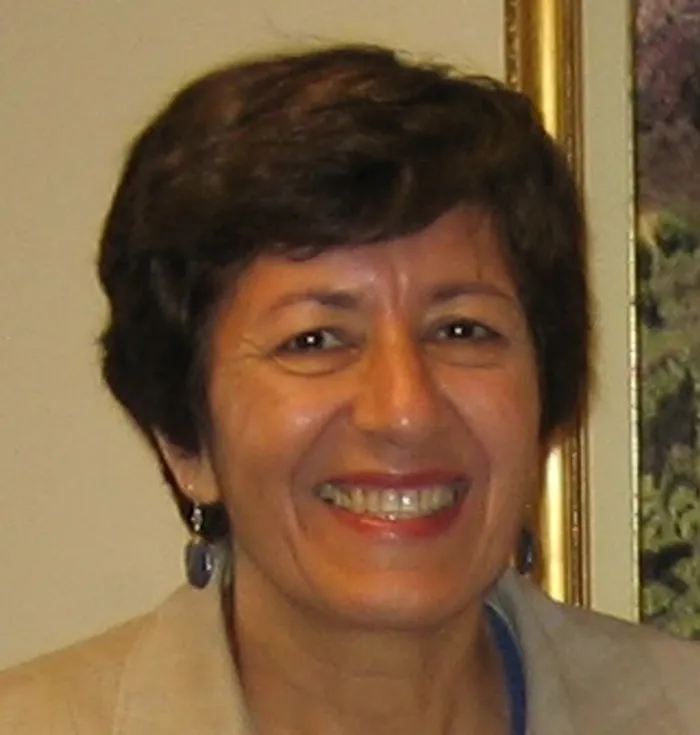
Flora Teckie is a professional architect, a Bahá’í Faith follower, and spiritual columnist.
Image: Supplied
World Teachers' Day, October 5, was a reminder of the valuable services that those who undertake the education and training of young minds render to society, and their contribution to individual growth as well as to the transformation of our communities.
Teaching is a great responsibility, and at the same time a privilege – as it is instrumental in shaping the minds and character of future mothers, fathers, teachers, lawyers, engineers, doctors… of all of us.
Those who undertake the education and training of young minds must see themselves as rendering a most valuable service to their communities, and to society as a whole. Their task is no less than regarding each student as one full of potential and talent, and must be able to help each one to discover this potential and to develop it.
According to the Bahá'í Writings: “The education and training of children is among the most meritorious acts of humankind and draweth down the grace and favour of the All-Merciful, for education is the indispensable foundation of all human excellence and alloweth man to work his way to the heights of abiding glory”.
Thus, teaching must release the inherent capacities of our children and youth. As Bahá'u'lláh, the founder of the Bahá’í Faith, says: "Regard man as a mine rich in gems of inestimable value. Education can, alone, cause it to reveal its treasures, and enable mankind to benefit therefrom”.
The role of a teacher should go beyond teaching children sciences, arts and languages, as important as these may be. An education that enriches both mind and spirit would try to develop, in addition to intellectual faculties, moral attributes such as truthfulness, courtesy, love, compassion, justice, generosity, and trustworthiness.
“The minimum requirements of education”, according to a statement of the Bahá’í International Community, “are the basic knowledge, qualities, skills, attitudes, and capacities that enable individuals to become conscious subjects of their own growth, and active, responsible participants in a systematic process of building a new world order”.
Education should be relevant to the true needs of a community and contribute to the unification of humanity. The prejudices that divide us, often causing conflicts and wars, are not always the result of ignorance, but at times the product of a biased education.
Teachers must become role models and the transmitters of morality and builders of character. They must give up all prejudices – be it racial, religious, gender or occupational – and treat all children as equals. They should instil in our children the awareness of the oneness of humanity and prepare them to live in peace in an atmosphere of understanding, dialogue, and respect for others.
Service to humanity, including to one's family, neighbours, community, and nation, should be considered an essential component of education, and there should be practical means for its expression in the education process through service-oriented programmes and projects.
Teachers should have a full understanding of the role that a child’s self-esteem plays in determining school success and should create an environment of encouragement in the classroom.
Teachers are normally well equipped to teach, but there is a great deal to learn during the process of conducting their important responsibility.
According to a statement of the Bahá’í International Community, “they [teachers] should form a partnership with their students in a shared learning process, demonstrating by their example that they, too, are learners. This can have a liberating effect on students in that it helps them see themselves as directors of their own learning and as individuals who can determine the course their lives will take”.
For feedback please contact: [email protected] or (011) 801 3100
Websites: www.bahai.org, www.bahai.org.za