
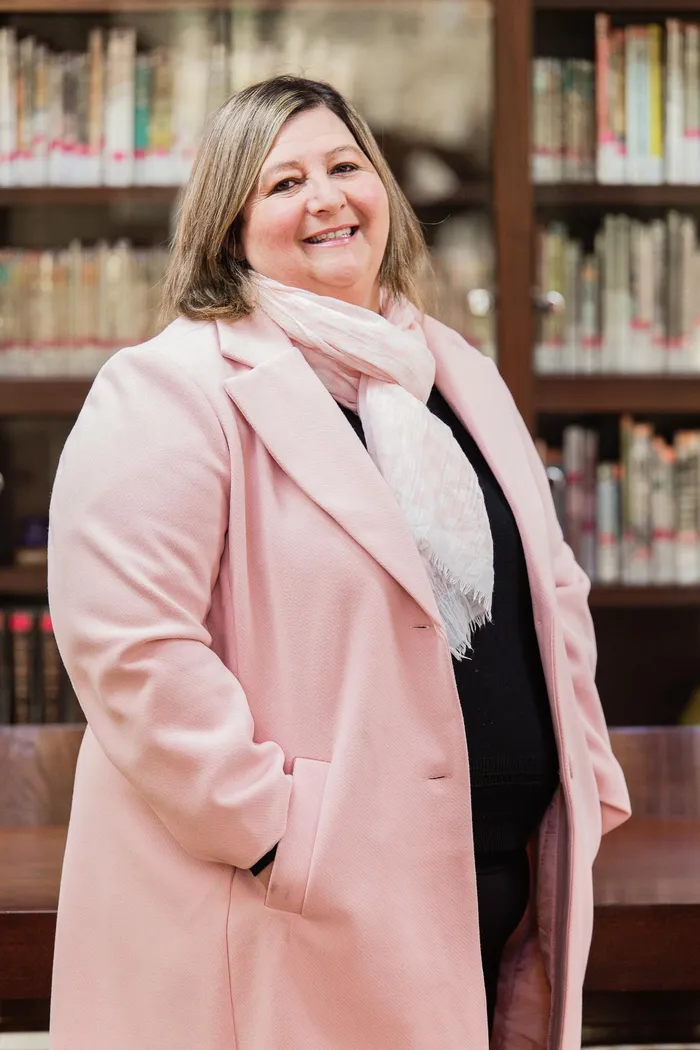
Michelle Williams is Head of Academics at the Oprah Winfrey Leadership Academy for Girls.
Image: Supplied
The classroom should never be reduced to four walls and a timetable. It ought to be a mirror of the society we dream of, a place where leadership is nurtured, respect is non-negotiable, and values are lived rather than recited. To stand before a class in 2025 is to carry a quiet awareness that a child’s day may have begun with burdens we cannot always see. The teacher’s task is not to soften standards, but to humanise them.
Despite the gains of the past three decades, with modern learning spaces, freer expression, and technology that connects rather than confines, we are confronted by an unsettling truth: many young men still struggle to regard their female peers as equals. Programmes aimed at the “boy child” abound, yet we must ask whether they are shifting entrenched attitudes or merely scratching the surface. Too many young women continue to encounter discrimination, intimidation, or casual dismissal of their worth. In the most tragic instances, this imbalance escalates into violence.
The Department of Basic Education has introduced policies designed to create safer, more equitable schools. These are important steps, but policies alone cannot change a culture. Their success depends on daily classroom practice, where teachers have the power to disrupt harmful norms and to model fairness that learners can see and believe.
At the Oprah Winfrey Leadership Academy for Girls (OWLAG), we see the transformative potential when young women are empowered to claim their voice and their place. But we also know that such empowerment is fragile if the wider society continues to teach boys that leadership is their natural birthright while girls must prove themselves twice over. Equality cannot be achieved in enclaves. It must be cultivated in every classroom, every playground, and every subject discussion where voices are weighed.
As educators, we cannot sidestep this. Each day we influence what learners come to accept as normal. When we confront stereotypes directly, when we make fairness visible in our choices and language, we sow the seeds of a different future. The classroom, after all, is a rehearsal space for society itself.
The promise of education lies in its ripple effect. When learners experience equity, respect, and dignity as their daily standard at school, they are more likely to carry those values into the communities they will one day lead. The opposite is also true: when bias is tolerated in classrooms, it multiplies outside of them.
Kofi Annan once reminded us: “Education is the single most vital element in combating poverty, empowering women, protecting children from hazardous and exploitative labour and sexual exploitation, promoting human rights and democracy, protecting the environment, and influencing population growth.” His words still ring with urgency.
Having moved from chalkboards to Chromebooks over the past thirty years, I know this much: the real breakthroughs in education are not found in policy statements or new gadgets, but in the daily choices teachers make about fairness, voice, and dignity. If we want a society that honours equality, then the work begins where it always has, in the classroom, with the courage to teach differently.
Williams is Head of Academics at the Oprah Winfrey Leadership Academy for Girls.