

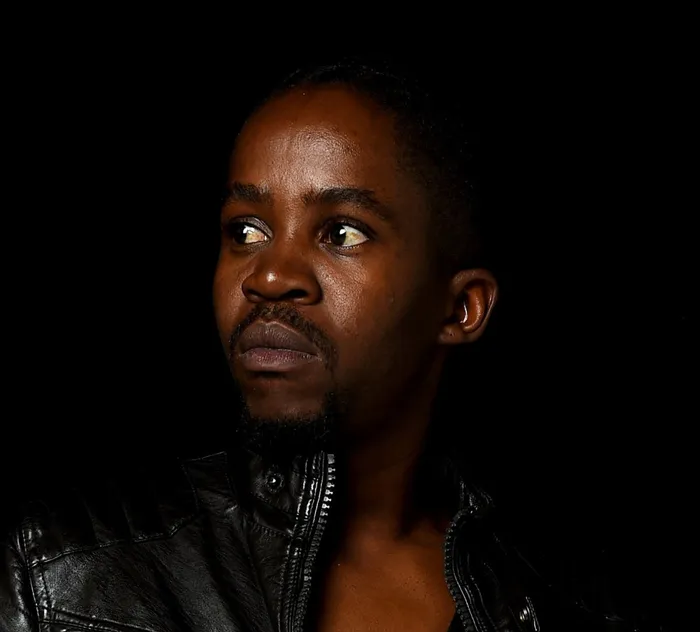
Rabbie Serumula, author, award-winning poet, journalist.
Image: File Picture
Bheki Cele is in no mood to take the fall for South Africa’s failing police service. In front of Parliament’s ad hoc committee, the former police minister turned his testimony into a firing range, taking aim at his successor, Senzo Mchunu, for disbanding the Political Killings Task Team, and insisting he had nothing to do with the mess that followed.
But the bullets didn’t stop there. Cele dropped a bombshell: that Vusimuzi “Cat” Matlala had recruited 23 of his own security personnel from the South African National Defence Force's (SANDF) Special Forces, and that 56 members of that elite unit have been lost to the taxi industry.
Cele didn’t come to defend himself. He came armed. He arrived with files, with names, with numbers, and with the kind of institutional memory that makes Parliament’s walls lean in. Every answer came loaded, every revelation aimed at someone higher or lower in the chain. Mchunu, he said, had no power to disband a task team investigating political killings without consulting the national commissioner or the presidency. He made it clear that the work of the Political Killings Task Team was far from complete, that councillors were still being targeted, and that disbanding the unit was a mistake.
By the time Cele was done, the committee chamber had turned into a crime scene of its own, fingerprints everywhere, everyone a suspect. His claim that dozens of trained soldiers had crossed over to the taxi industry raised deeper questions about how the state loses control of its own muscle. How do elite operatives, trained with public money to defend the republic, end up driving, guarding, or enforcing for private taxi bosses? Calling that a security crisis is an understatement; it’s a portrait of a country where discipline bleeds into hustle, and loyalty is up for hire.
If Cele’s goal was to shift the spotlight, he did so with precision. In one sitting, he painted himself as the last man standing in a collapsing system, a teacher-turned-politician with the mentality of a soldier who still speaks in missions and operations.
But while Cele arrived with weapons drawn, his successor, the suspended minister Senzo Mchunu, fumbled the charge. In his submission to the committee, he listed Nkompela among councillors “shot dead”, only for the former speaker of the OR Tambo District Municipality to emerge alive, accusing Mchunu of insensitivity and error in his account. It was a moment that crystallised the wider failure: when the minister tasked with policing flounders in facts, can we expect the force at large to do better? South Africa’s police service is running out of both soldiers and saints.
As the hearing room cleared, one thing stood out: Cele wasn’t there to apologise. He was there to set a message. But between his grenade-reveals and the minister’s missteps, there is the larger question: in a policing system so fragile, does accountability begin when someone takes the fall, or when someone owns the mission? In this country, too many missions end unfinished, and too many handovers last just two hours.