

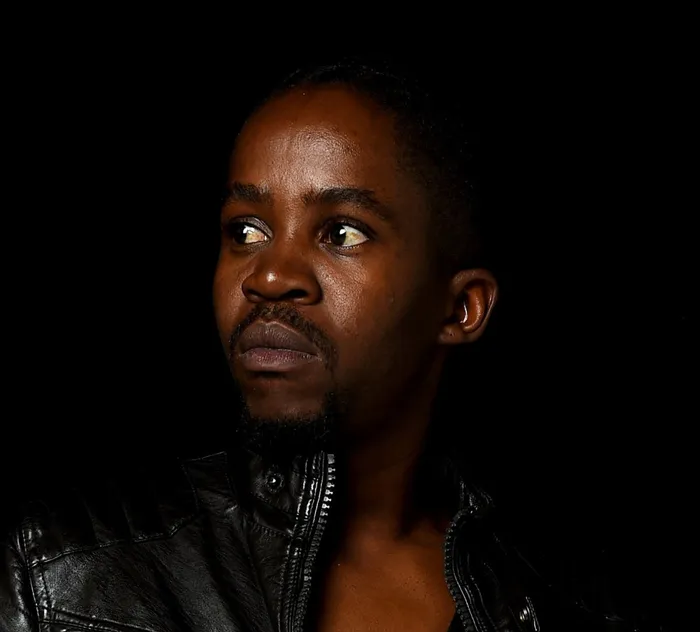
Rabbie Serumula, author, award-winning poet, journalist.
Image: File Picture
Some revolutions die quietly; others talk themselves to death.
Umkhonto weSizwe (MK) Party seems intent on the latter. It preaches transformation but practises rotation, leaders in, leaders out, loyalty tested, then discarded.
What remains is not a movement of purpose, it's a mirror of one man’s will disguised as collective vision.
The chaos inside the MKP isn’t administrative, it’s existential. A movement that promised to rescue the country from moral decay now finds itself drowning in its own contradictions. “Discipline” has become a sword swung selectively, loyalty a shield for the favoured few. While members fight for position, the founder’s hand hovers above them all, steady and unquestioned, redrawing the rules each time his legacy feels threatened.
What was meant to be a new chapter of struggle politics now reads like a footnote in a long autobiography of control.
In less than a year, the party has burnt through four Chief Whips, four different faces meant to keep the parliamentary ranks in line.
Each one exits under the same cloud of “discipline” or “realignment,” leaving behind a trail of confusion and unfulfilled promises. If stability is the first test of leadership, the MKP is failing it spectacularly.
The revolution that had an explosive debut now whispers instructions through recall letters and “precautionary suspensions,” while Parliament becomes a revolving door for the disillusioned.
Dr John Hlophe’s suspension for axing Coleen Makhubele was followed by a brief and confusing episode: Des van Rooyen was appointed Chief Whip, only to be replaced within 24 hours. The MKP called it a correction, but it looked more like confusion.
And still, Jacob Zuma’s shadow stretches across every decision. His word remains law, even when it contradicts the party constitution. He doesn’t lead meetings; he rewrites outcomes. For all the talk of collective leadership, it is his silence that decides who survives.
The MKP may have a president and secretaries, but power, as ever, resides in Nkandla’s echo, not in the conference hall.
Selective enforcement has become the MKP’s new ideology. When contracts are questioned, investigations bloom overnight; when loyalty wavers, discipline becomes divine intervention.
Yet when proximity to power is the problem, the system mysteriously forgets how to hold itself accountable. The party’s code of conduct seems to depend less on ethics and more on which way the political wind is blowing.
This is not governance, it’s a performance of order for an audience that has stopped clapping. What the MKP forgets is that instability, once normalised, becomes identity. You cannot promise the nation justice when you cannot even guarantee internal fairness.
You cannot demand trust while practising selective morality.
The voters who once saw hope in the MKP’s defiance are now watching a different drama, one where revolutionaries chase titles instead of transformation.
Power, when hoarded too long, begins to rot. And in that decay, the MKP’s true tragedy emerges: it has mistaken motion for progress, noise for purpose, and loyalty for virtue.
The ship may still sail under Zuma’s flag, but it is taking on water fast, and the lifeboats, as always, are reserved for the loyal.
For more analysis and commentary in vernacular, join the conversation on Rabbie’s YouTube Channel: www.youtube.com/c/RabbieWrote?sub_confirmation=1