

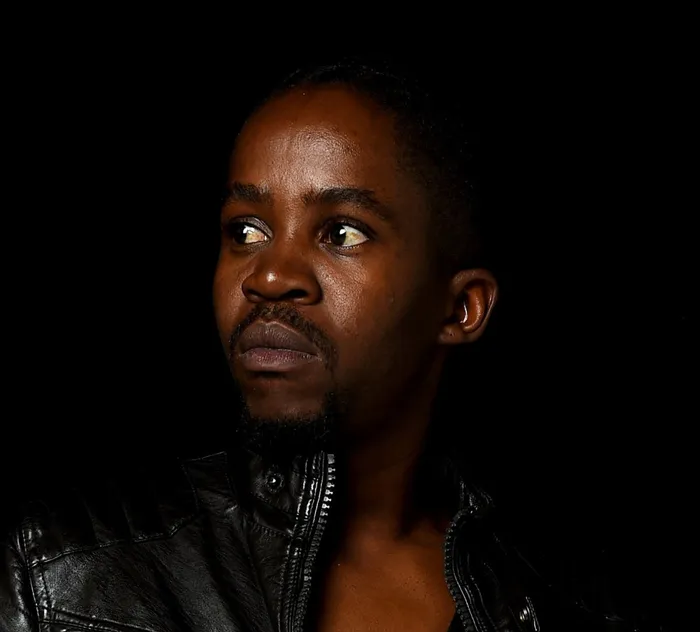
Rabbie Serumula, author, award-winning poet, journalist.
Image: File
There is a particular cruelty in the world of syndicates, especially when they aren’t stealing money, but stealing moments of hope.
They take that fragile breath a desperate family clings to, wrap it in paperwork and promises, and sell it back at a price no human soul should ever have to pay.
So when a plane full of Palestinians lands in South Africa after hours of circling, waiting and pleading, the debate about immigration stamps or missing documents misses a deeper question, the question of moral responsibility.
What do governments owe to people who arrive already wounded by war, carrying the weight of loss, and stripped of the ordinary protections the rest of us take for granted?
Paperwork can tell you where someone has been, but it can’t tell you what they have survived. A missing stamp is not the same as a missing conscience. And when people arrive from a place where even the sky has turned against them, the first duty of any government, sending or receiving, is to guard them from those who would turn their desperation into a business model.
This is not theory, we have seen it unfold in real time. The travel of the 153 Palestinians was arranged by an unregistered and misleading organisation that exploited the tragic humanitarian conditions of Palestinians in Gaza, deceived families, collected money from them,and facilitated their travel in an irregular and irresponsible manner.
But here’s the truth: when people are drowning, the world becomes full of lifeboats painted by thieves.
And governments have a duty to make sure those boats are real. It is not enough for any authority to simply process the aftermath. Not when syndicates masquerade as saviours, charging desperate families for escape routes that crumble under the slightest scrutiny.
Not when flights are chartered with illusion instead of integrity.
Not when vulnerable people become commodities shuttled between airports and loopholes.
A government must be both a gatekeeper and a protector, the kind that names the predators, warns the public, shuts the door on exploiters,and refuses to let the vulnerable be trafficked behind the language of “assistance.”
And the sending governments, the ones watching their citizens scatter under bombardment, also carry a responsibility to warn, to guide, to certify who is legitimate and who is preying on the wounded.
But too often, systems only react after the damage is done. After the plane has landed. After the families have paid. After the vulnerable have been left to fend for themselves in a foreign airport, confused, exhausted, and afraid. And then there was midnight on the tarmac, a twelve-hour purgatory that turned the plane into a waiting room of limbo.
Not quite home, not free, not safe. Just suspended between two worlds, held hostage by paperwork and uncertainty.
But this week’s story is about far more than a plane stuck on the tarmac. It’s about everything that led to that tarmac: the syndicates that profit from pain, the families forced to gamble their futures, and the systems that must do better.