
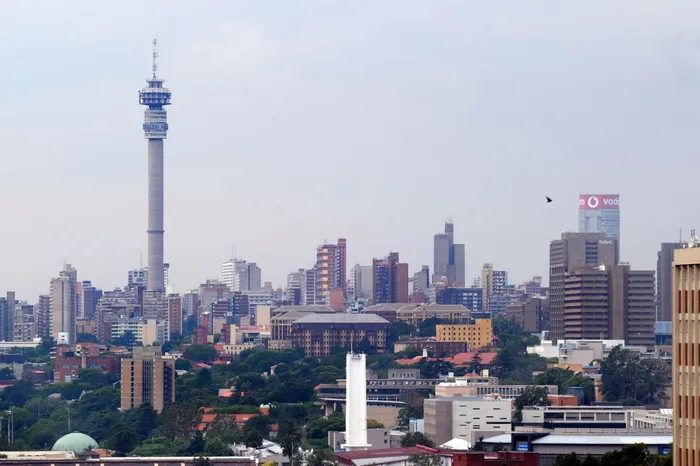
Community-based organisations in all seven Johannesburg regions are participating in an air quality programme, equipping residents with knowledge and tools to reduce pollution and protect public health.
Image: Karen Sandison / Independent Newspapers Archives
Across all seven regions in the City of Johannesburg Metropolitan Municipality, residents are uniting around a shared vision for cleaner, healthier air.
Community-based organisations (CBOs) throughout the city have come together and embarked on a coordinated rollout of air quality awareness campaign as part of Seriti Institute’s Air Quality Capacity-Building Programme, implemented in partnership with Breathe Cities and the City of Johannesburg. This collaboration represents more than the start of programme activities - it marks the rise of a community-driven movement determined to reclaim the basic right to breathe safe air.
In a city where millions wake up each day to pollution from waste burning, household energy challenges, traffic congestion and industrial emissions, air quality is not merely a technical concern. It is a lived experience that shapes health, wellbeing and human dignity.
The urgency becomes even clearer when looking at the national landscape. According to the Centre for Research on Energy and Clean Air (CREA) report, Unmasking the Toll of Fine Particle Pollution in South Africa, South Africa recorded an estimated 42 000 deaths from PM2.5 exposure in 2023, including more than 1 200 children under the age of five. The report further links air pollution to chronic diseases, preterm births, cognitive decline and significant economic losses due to reduced productivity. These numbers reflect the lived experiences of communities across South Africa who face the daily consequences of unsafe air.
The Air Quality Capacity Building Programme begins where meaningful change takes root, within communities. By equipping community-based organisations with essential knowledge, tools and confidence, Seriti ensures that environmental information is communicated in ways that are accessible, practical and relevant to everyday life. These organisations, long trusted in their neighbourhoods, are becoming catalysts of cleaner air and are translating scientific concepts into relatable and actionable steps.
Across all seven regions, programme activities are already in motion. CBOs are hosting community dialogues, running workshops, conducting neighbourhood outreach and facilitating youth-led sessions. These engagements create inclusive spaces where residents can ask questions, raise concerns and collectively unpack environmental challenges. Conversations on waste burning, household energy use, the health implications of pollution and community-driven alternatives are becoming more common - and more urgent.
A diverse collective of organisations is driving this momentum. Groups such as Green Hope Foundation, Atlegang Bana Foundation, Azania Afrika, New Pathways, The Empire Bus and Nhlalala Nature Conservation Project have mobilised households and young people through events and door-to-door campaigns. Their efforts are sparking important shifts in understanding, behaviour and community ownership.
Innovation is also shaping the programme’s rollout. Sankofa Solutions (Pty) Ltd, led by Simphiwe Zakwe, is introducing Virtual Reality (VR) as an educational tool - allowing residents, especially youth, to visualise environmental challenges in immersive and impactful ways. This creative approach is broadening environmental learning and strengthening climate-conscious thinking among young community leaders.
Other participating organisations, including SALSO, Itsoseng Women’s Project, Shomang Sebenzani, Exotically Divine Pulse, Tshepang Programme for OVCs and Urban Space Management ,report strong interest from resident's eager to understand how daily choices influence environmental health. In communities such as Diepsloot, dialogues hosted by Green Hope Foundation have opened meaningful conversations on waste disposal, energy usage and practical neighbourhood led solutions.
Partners have warmly welcomed the programme’s early progress.
“What we see across Johannesburg is inspiring,” said Nokuthula Dubazane, Portfolio Manager: Breathe Cities.
“These CBOs are taking ownership of air quality challenges and turning awareness into real action. Their leadership is essential in empowering every resident, from children to elders, to understand the importance of clean air and to participate in solutions.”
Community based organisations themselves echo this sense of purpose, noting that the programme has deepened their understanding, sharpened their messaging and strengthened their confidence to guide communities toward healthier and safer living environments.
As the programme expands, CBOs across Regions A–G will continue engaging households, youth groups, schools, faith-based organisations, informal traders and local leadership structures. Seriti Institute, together with the City of Johannesburg and Breathe Cities, will continue to provide guidance, educational tools and capacity-building support to strengthen this growing movement.
Johannesburg is divided into seven regions (originally named A through G) to manage municipal services, community engagement, and local development more effectively. Each region covers a cluster of suburbs, townships, or municipal wards. For example:
Region A: Includes parts of Diepsloot, Midrand, and surrounding areas.
Region B: Covers Randburg, parts of Roodepoort, and surrounding suburbs.
…and so on, through Region G, which generally covers more southern and southwestern areas.
This initiative reflects Seriti Institute’s broader mission to build stronger communities, advance public wellbeing and ensure that development and environmental justice are grounded in people’s lived realities.
As awareness deepens and collective action grows, Johannesburg is moving closer to a future where every resident can breathe cleaner, safer air. Environmental change begins with people and through this movement, communities are rising to protect their own health and the health of generations to come.
Getrude Mamabolo, communications and content officer at Seriti Institute