

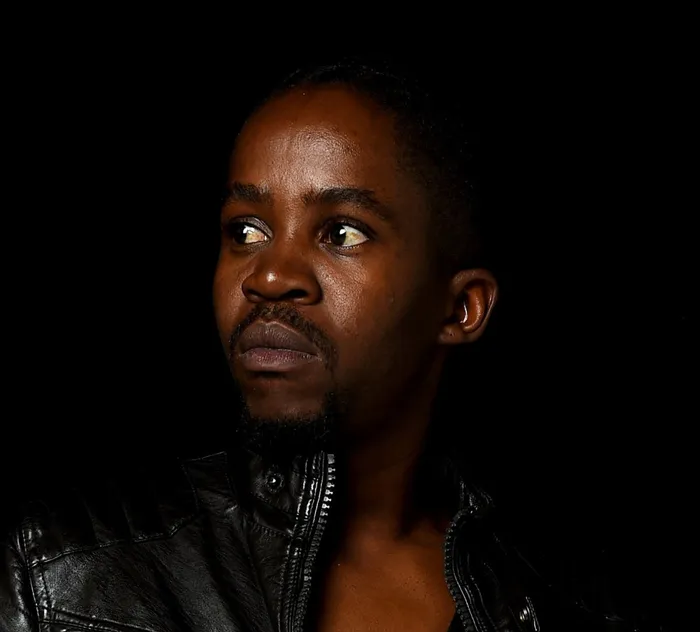
Rabbie Serumula, author, award-winning poet, journalist.
Image: File
Fridays always remind me that South Africa is a country living between pages, some stamped, some smudged, some torn clean out when the plot becomes too embarrassing to keep.
This week’s chapters arrived with the smell of jet fuel and political sweat.
At OR Tambo, thirty bodies were intercepted before they disappeared into the machinery of visa fraud and trafficking. Thirty. Not numbers on a press release; people who almost vanished at the doorway of our most decorated airport. OR Tambo is supposed to be where journeys begin, not where human beings are reduced to paperwork with a pulse. But that is the new frontier: the border between desperation and opportunity shrinking until it becomes the thin line of a forged entry permit.
And if that wasn’t enough, Mpumalanga gave us its own parable of decay: a Zimbabwean man driving around with 582 passports, each stuffed with cash like bribes, wearing jackets. It was more of a mirror than a crime scene. A reflection of how days in South Africa have become a commodity: bought, sold, traded like airtime. You don’t just cross into this country anymore; you negotiate your stay like someone bargaining for more hours in a dying summer.
While we are busy chasing forged documents on our roads and terminals, across the ocean, a US senator stood up and declared, with the confidence of someone who has never queued at Home Affairs, that “South Africa is our enemy.”
Enemy. As though our entire identity can be summarised into a single military noun.
The real insult wasn’t the word, it was the arrogance. A man thousands of miles away deciding that our sovereignty is a threat because Pretoria refuses to be a vase on someone else’s table. Suddenly, AGOA is a weapon, tariffs are threats, and diplomacy sounds more like a sheriff warning a town to behave.
And while America tries to write us into its list of villains, back home Julius Malema is warning that Fikile Mbalula is “going for the kill” in the ANC succession race. Politics here is never a marathon, it’s a hunt. Everyone runs, but someone always bleeds. Leadership is not contested; it is stalked. And in a year when the country should be searching for stability, our political class is sharpening knives for contests scheduled two years away.
All four stories, the trafficking at OR Tambo, the passport graveyard in Mpumalanga, the senator’s villain monologue, and Mbalula’s rise, carry one theme: movement.
Who moves freely.
Who is stopped.
Who gets to speak for us.
Who wants to rule us.
And who benefits from the chaos in between.
South Africa is once again a country negotiating its place in the world with a passport that feels heavier every year. We are being defined by borders; not the physical fences of airports and land crossings, but the political borders people abroad are trying to draw around us. And as always, our internal politics is busy rearranging the furniture while the house itself shudders.
But that is the story of this week: a nation in motion, limping, bargaining, arguing with itself, yet somehow refusing to drown.
Because even when the headlines read like a script written by someone who dislikes us, South Africans still find a way to turn the page.