

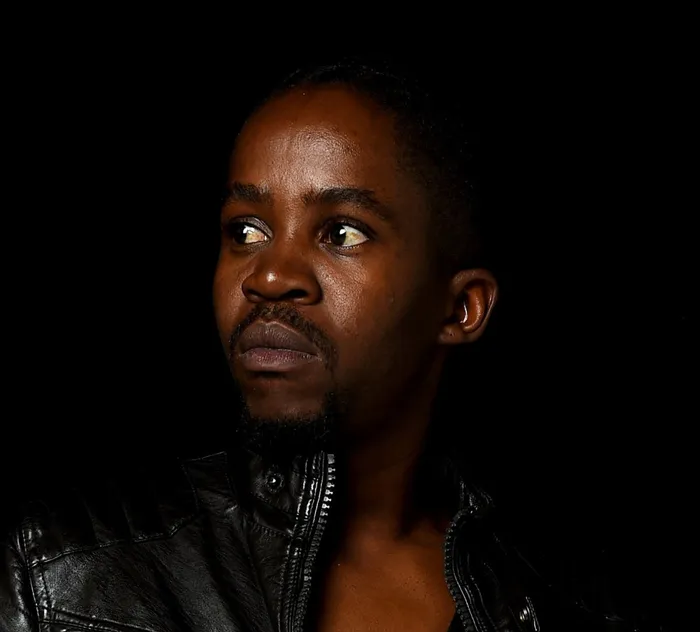
Rabbie Serumula, author, award-winning poet, journalist.
Image: File
When something burns bright enough on the timeline, government responds. When the heat dies down, so does the urgency. When the trend fades, so do they.
Today, grief is trending. Tomorrow, outrage. Next week, silence again.
The youth in between, buffering, loading, apparently busking under the sun, waiting for life to stop spinning.
Too many applicants for limited university spaces. Too many young people chasing too few jobs. Too much demand, not enough capacity. We are told there is pressure, as if pressure is weather, as if it simply happens, as if it was not engineered and ignored long before it became inconvenient.
Fourteen learners are dead in Vanderbijlpark. Fourteen. Say the number slowly, because the news cycle won’t.
Now, scholar transport must be checked. Now, vehicles must be roadworthy. Now, overloading is a concern. Now. As if gravity was invented this week. As if tyres have only just learned how to burst. As if children only recently became fragile.
This was not the first crash. It will not be the last. And that is the most violent sentence in this country.
We do not prevent. We react. We mop floors after the flood, never fixing the leak.
Operations were intensified after zama zamas forced more than 500 residents of Sporong informal settlement from their homes through violence and threats.
Johannesburg learned how to be clean once. Briefly. For guests. Streets swept, pavements polished, law suddenly alert for the G20 gaze. For guests, the city remembered how order works. Law enforcement grew a spine. The inner city behaved, or else.
Which tells us everything we need to know. That chaos is not inevitable. That decay is not natural. That neglect is a choice, made daily, until cameras arrive.
Billions are found for protection, VIP protection, blue-light protection, ego protection. R37 billion wrapped around the powerful like bubble wrap, while the rest of us ride unsecured, uninsured, unimportant, until we burn bright enough on the timeline. When the trend fades, so do they. We are governed loudly when it suits power, and quietly when it serves no one.
Somewhere in East London, a name waited. Hovering. Unsentenced, yet already spoken. A country refreshes its feed, anticipating justice like a trailer before a movie. The verdict was pending. The spectacle was live. We will argue about it all weekend, how East London was painted red by the Fighters. Panels will shout. Timelines will choose sides. Another trending seat will be occupied.
And the learners? They will fade into memory. The students without space? Still without space. The unemployed youth? Still counting data bundles and rejection emails.
This is how it works here. Pain trends. Governance responds. Then attention moves on, and so does accountability. Until the next crash. The next court appearance. The next summit. The next hashtag.
We are tired of policy written in reaction ink. We are tired of being visible only when we are bleeding. We want norms, not crackdowns. Prevention, not press conferences. A South Africa that cares before it trends. But for now, we wait like a pending headline, like a sentence still loading, like a generation refreshing a future that refuses to appear. And the timeline scrolls on.