

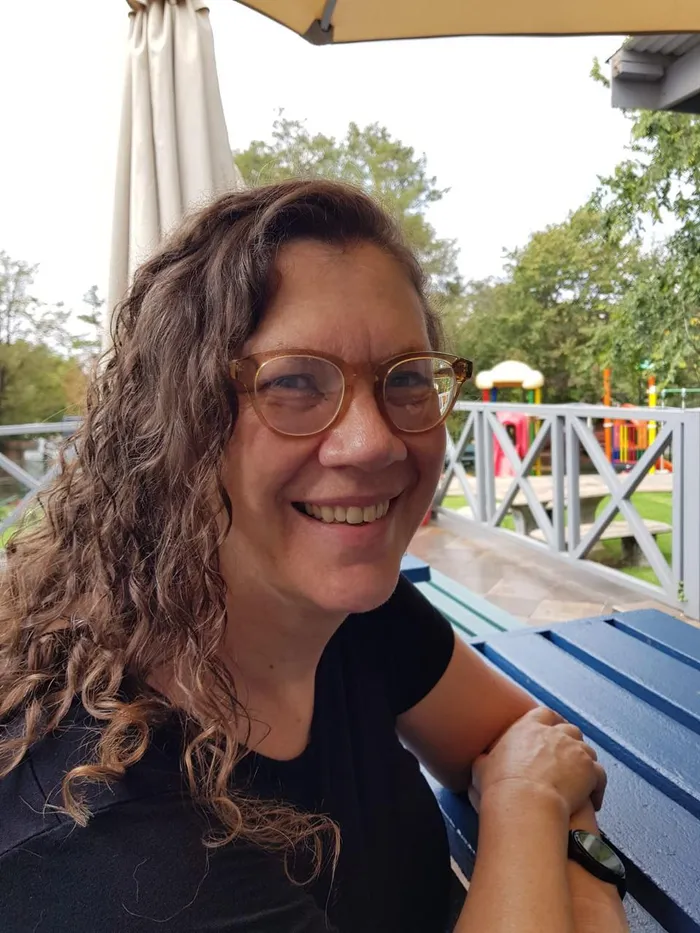
Peggie Mars is the founder of Wheel Well, a South African NGO dedicated to road safety for children.
Image: Supplied
As we approach the Easter season and a cluster of three long weekends, the national conversation will inevitably turn to road safety. We will hear the familiar calls for increased roadblocks, more speed traps, and harsher penalties for drunk driving. While these measures are essential, they ignore a glaring reality: nearly half of the people dying on our roads are not in cars. They are on foot.
In 2025, pedestrian fatalities accounted for almost 47% of all road deaths in South Africa. We are talking about nearly 5 000 lives lost in a single year. Among the most vulnerable are children aged five to nine, often struck while walking to or from school.
At Wheel Well, we see the aftermath of these statistics daily. I recently attended a session with the Department of Transport where the focus remained on the traditional strategies of enforcement and education. While these have their place, they are slow to implement and expensive to maintain. We are missing a much simpler, faster, and cheaper solution: visibility.
The physics of a roadside collision is a matter of seconds. At 100km/h, a vehicle travels roughly 28m every second. Under standard low-beam headlights, a driver might only detect a pedestrian in dark clothing at a distance of 30m. By the time the driver’s brain processes the image and hits the brakes, the impact has already occurred. In darkness, wearing dark clothing is often a death sentence.
Compare this to a pedestrian wearing reflective gear. Detection distance jumps from 30m to over 150m. This gives a driver a six-second window to react, decelerate, or swerve. It is the difference between a tragic headline and a non-event.
This is the "visibility gap" that our current national safety strategy fails to address. We cannot wait decades for every rural road to have sidewalks or every highway to have overhead lighting. We need a "Visibility First" approach that puts lifesaving gear directly on the people who need it most.
Our initiative for the Halo Beanie supported by Supa Quick is a response to this gap. Traditionally, the solution has been high-visibility vests. However, vests are often bulky, unpopular with children, and easily hidden by backpacks. The Halo Beanie moves the reflective element to the highest visible point: the head. It provides 360-degree visibility that sits above the "clutter" of parked cars and roadside bushes. It is a practical, all-day solution that children actually want to wear.
As we head into the high-traffic Easter period, we need more than just roadblocks. We need a national mandate for visibility. We need reflective materials integrated into school uniforms and workwear.
If we can bridge the visibility gap, we can save thousands of lives without laying a single brick of new infrastructure. It is time we stopped blaming pedestrians for being invisible and started giving them the tools to be seen.
Peggie Mars is the founder of Wheel Well, a South African NGO dedicated to road safety for children.
SATURDAY STAR