

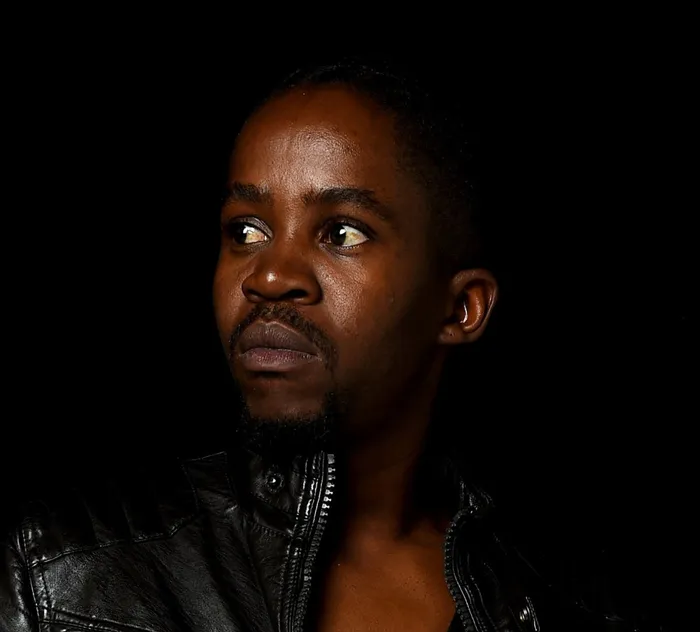
Rabbie Serumula, author, award-winning poet, journalist.
Image: File
South Africans have become accustomed to political departures. Ministers are removed. Deputy ministers are dismissed. Statements are issued from the Union Buildings in polished language about accountability, performance and the confidence of the President. Then the country moves on to the next scandal before the ink on the previous resignation letter has dried.
But lately, something else has begun to disturb the public imagination. It’s no longer about who falls. It’s about who survives.
Sisisi Tolashe was dismissed following allegations linked to misconduct and the controversial registration of vehicles reportedly donated to the ANC Women’s League. Nobuhle Nkabane was removed after allegations surrounding appointments to SETAs. Andrew Whitfield lost his position after travelling to the United States without presidential permission. Dion George reportedly exited the Cabinet amid concerns over performance.
And so the question hangs in the air like stubborn smoke: What is so special about Senzo Mchunu?
Perhaps that is the wrong question entirely. Perhaps the real question is this: How does accountability actually work in South African politics?
Because it increasingly appears that consequences are not determined by ethics alone. They are determined by political arithmetic. Who carries influence? Who balances factions? Who holds together fragile coalitions? Who knows too much? Who is too connected to fail?
In that equation, survival is not always proof of innocence. Sometimes it is proof of political value.
This is what unsettles the public. Accountability no longer feels principled. It feels selective. One politician is removed for a protocol breach. Another survives waves of criticism. One falls quickly while another appears wrapped in layers of invisible protection.
In South Africa, accountability often arrives wearing stage makeup.
There is a growing sense that political dismissals are sometimes performances designed to reassure the public that government is acting decisively, while deeper power structures remain untouched. Remove one minister. Sacrifice another. Issue a statement about ethical governance. Repeat.
But ordinary people are no longer responding with outrage alone. Increasingly, they respond with suspicion.
Because citizens have started noticing a painful pattern: not everyone is judged by the same scale.
And that realisation is dangerous for a democracy.
The greatest damage corruption causes is not only financial. It is psychological. It teaches citizens that institutions bend differently depending on the weight of the politician standing before them. It erodes the belief that leadership is governed by principle rather than usefulness.
South Africans are tired, yes. But more than that, they are becoming cynical. They no longer ask whether leaders are innocent or guilty. They ask who is protected. Who is connected? Who is too important to remove?
That may be the saddest indictment of all.
Once people believe accountability only applies to some, trust begins to rot from underneath. Quietly. Slowly. Like a house sinking into water. No protest anthem or breaking news banner will be needed when that collapse finally comes.
And in that drowning country, some politicians disappear in puddles while others walk untouched through floods.