

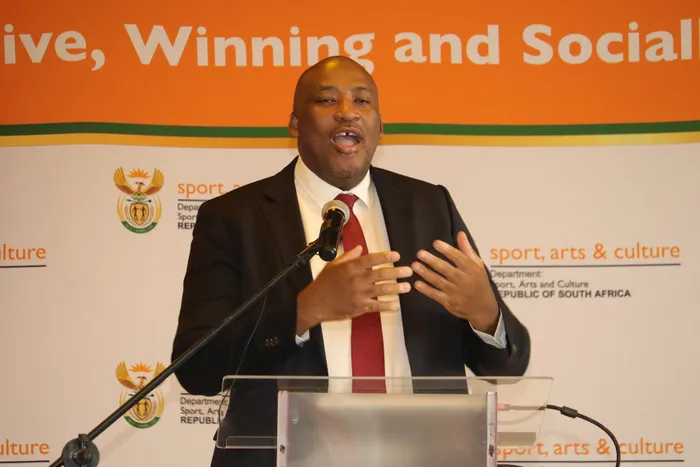
Minister of Sports, Arts and Culture, Gayton McKenzie
Image: Supplied
In the aftermath of the Bafana Bafana’s yellow card debacle, Sports Minister Gayton McKenzie’s promised investigation highlights a critical intersection of national pride and international protocol, raising questions about the limits of government oversight in sport.
He announced a comprehensive investigation into the South African Football Association (Safa), sparking both hope and scepticism within South Africa’s football community. The docking of log points in Bafana Bafana’s 2026 Fifa World Cup qualifying campaign has left fans and stakeholders frustrated and seeking accountability.
While many commend the initiative as a step towards rectifying the association’s accountability, it is essential to recognise the constraints imposed by Fifa’s stringent regulations. Fifa maintains an unequivocal policy against government interference in the governance of national football associations.
This poses a significant challenge to the government’s intentions, as its scope for action remains severely limited by the international football governing body.
In an apparent attempt to address the perceived incompetence within Safa, McKenzie’s investigation may uncover critical insights about operational failures that have led to Bafana’s unfortunate predicament.
However, irrespective of the findings that may materialise from the investigation, the Minister’s ability to implement changes or reprimands against Safa is practically non-existent. When the investigation report is completed, it may serve more as a document for reflection than as a catalyst for significant reform.
The ramifications of this government inquest are significant. Fifa’s steadfast stance against external interference means that any government-led actions regarding Safa could provoke severe backlash, including potential sanctions.
Such repercussions could further jeopardise the standing of South African football on the international stage, a prospect that both fans and officials, desperate to advance towards the 2026 World Cup, would dread.
McKenzie aims to hold Safa accountable while respecting the decorum that Fifa expects between government and sporting bodies. It is a challenging balancing act that tests his authority.
The complex reality is that while identifying failures is vital, real change may remain frustratingly out of reach due to the strict stipulations imposed by Fifa.
As South Africa seeks to enhance its football reputation and maintain its international fixtures, understanding the complexities of governance within the sport becomes increasingly crucial.
The prospect of government-led investigations might resonate with a public yearning for accountability, but the ultimate challenge lies in navigating the politics of football while keeping international relations intact.
As the investigation progresses, it will be crucial for the public and stakeholders in South African football to stay informed about these complex dynamics at play.
Ultimately, it is not just the points lost by Bafana that warrant scrutiny, but the very structure of governance that oversees the beautiful game in South Africa.