Forged in Fire: Eric Tinkler’s rough journey from pain to purpose
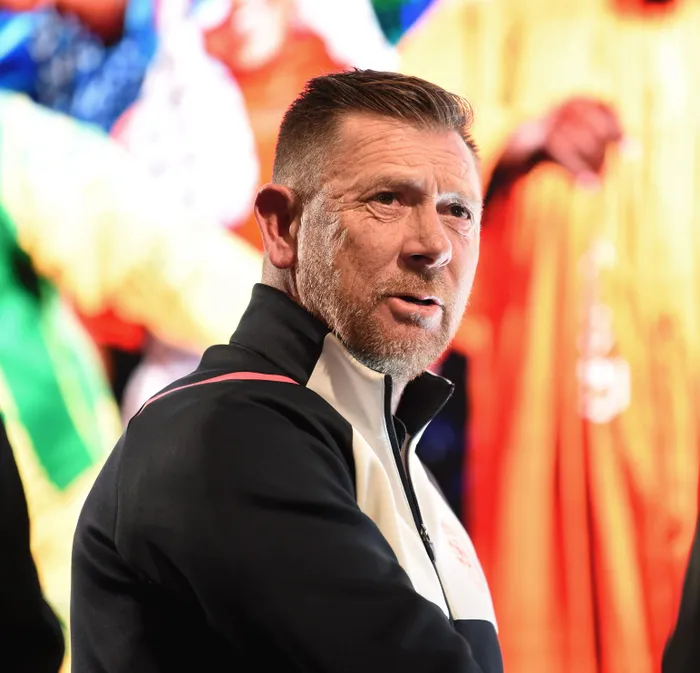
Eric Tinkler has overcome a lot on the difficult road to the top
Image: Backpagepix
Eric Tinkler is not an easy man to read. To many in the South African football fraternity, he appears cold, unapproachable—even difficult.
But dig a little deeper, and it becomes clear that the steely demeanour masking the Sekhukhune United head coach is less a matter of temperament and more a product of upbringing.
“I come across as a very, very cold person,” Tinkler admits. “But I think that’s just from my upbringing—the way I was brought up. I had a very, very hard life as a young boy.”
That hard life began in Florida, a suburb on the West Rand, in a household where love and encouragement weren’t exactly in abundance. Tinkler speaks openly about his strained relationship with his father, describing him as a “brutal man” who was far from supportive of his football aspirations. Despite Eric’s obvious talent and burning passion for the game, praise was rare, and belief in his dream even rarer.
“My father never really had any positive things to say about me as a player,” he reflects. “But I think that helped me, to a degree. It made me want to work harder and prove people wrong.”
And prove people wrong he did. From humble beginnings, Tinkler carved out a professional playing career that took him from Portugal’s third division via the tough Italian Serie A — where he played for Cagliari — to the heights of the English Premier League with Barnsley, and eventually to representing South Africa on the global stage. But it was never easy. In his early years abroad, he struggled — alone and sometimes unpaid — on a 10-month contract in Portugal, often missing salaries and cutting off communication with his family for three years out of shame and fear of being seen as a failure.
“There was a sense of pride. I didn’t want them to think I had failed,” he says. “Those years were incredibly tough.”
The hardship didn’t end there. Tinkler would go on to experience the isolating, high-pressure world of professional coaching — a role often as unstable as it is demanding. As a coach, he has learned to live for the next match, the next result, and not to expect job security in a league where patience from club owners is often thin.
“In South Africa, it’s probably one of the hardest countries to be a coach,” Tinkler says. “You can’t really plan long-term. Everything is about the next game. That next win is the most important one.”
Early in his coaching career, this brutal reality rattled him. The constant pressure, the criticism, and the short-lived nature of coaching stints were emotionally taxing. But over the years, he adapted. He grew a thicker skin, learned not to take things personally, and found solace in his work ethic.
“I come in every day, I plan, I work really hard. I try to be as professional as I possibly can,” he says with pride. “No one could ever point a finger at me for lack of work or lack of intent.”
It’s this consistency and drive — no doubt born from his desire to transcend the limitations of his youth — that have seen him thrive in South Africa’s top-flight football. He’s won trophies, turned struggling teams into competitors, and helped launch the careers of young players who, like him, just needed a chance.
“I enjoy seeing young players getting their opportunities and making their debuts,” he says. “Sometimes it’s not just about winning trophies — it’s about changing someone’s life.”
Yet the scars of his past linger. Tinkler admits he can come across as intimidating, even to his own players. “Some people are afraid of me,” he says with a chuckle. “I call a spade a spade. I’m not afraid to speak my mind.”
He recalls being nicknamed “Putin” by some due to his cold exterior. But those who get to know him see another side — one that’s deeply committed, intensely focused, and surprisingly nurturing.
“My relationship with players has always been good. They enjoy being coached by me. So I must be doing something right.”
Now a father of two boys, Tinkler is determined to be the kind of father he didn’t have. His children, like him, have had to live through the volatility of his profession — enduring media scrutiny, public firings, and long stretches without their dad. Still, he beams with pride when he talks about giving them a better life.
“I have a sense of pride that I’ve been able to provide for my children and give them opportunities I didn’t have,” he says. “It wasn’t always easy for them. It’s not nice to hear your father got fired, and then it’s in the newspapers, and people are asking why.”
His career has had its highs — leading Cape Town City to a cup final in their inaugural season, winning silverware, and finishing high up in the league. But there have been lows too: relegation battles, job uncertainty, and strained family life due to long-distance commitments.
“I was naïve early on, thinking I could travel with my family from job to job,” he says. “Eventually I realised kids need stability — friends, school. Now they live in Cape Town while I’m based in Joburg. It takes a massive toll on the family dynamic.”
Despite it all, Tinkler is not done. At Sekhukhune United, he is tasked with leading a club that has never won major silverware — one that dares to dream of top-three finishes and continental competition. He believes they can do it, even while acknowledging the financial and footballing gulf between his side and dominant forces like Mamelodi Sundowns.
“They’re just on another level,” he says bluntly. “But we try to compete the best we can. You don’t win the league by beating Sundowns — you win it by beating everyone else.”
As he enters another demanding season, one thing is clear: Eric Tinkler is a man forged in fire. His resilience, grit, and work ethic have made him a respected figure in South African football. He may not smile often, and he may never fully shake the “cold” label, but beneath the surface is a man shaped by adversity — someone who, against all odds, turned pain into purpose.
And in a world as brutal as professional football, perhaps that’s exactly the kind of man you want leading your team.