

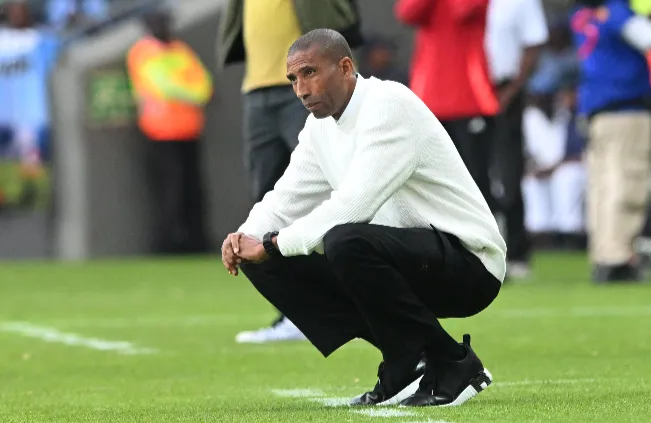
Orlando Pirates head coach Abdeslam Ouaddou.
Image: Backpagepix
Abdeslam Ouaddou has raised concerns over the level of physicality in South African football, suggesting it remains a key area for improvement following Orlando Pirates’ recent run of frustrating results.
The Buccaneers’ latest setback came in the form of a tense Soweto Derby against Kaizer Chiefs, a match defined as much by its physical battles as its football. That encounter, coupled with dropped points against Siwelele FC and Richards Bay FC, has highlighted a recurring theme in Pirates’ season.
Despite remaining firmly in the title race, Pirates now find themselves chasing Mamelodi Sundowns, who hold a narrow advantage at the summit after 26 matches.
For Ouaddou, the issue extends beyond isolated results. “In modern football, sometimes you have to adapt to physicality and the best examples for that are games that are played outside the country,” he explained.
Drawing from continental experience, the Moroccan tactician pointed to Pirates’ CAF Champions League encounters — including tough outings against sides such as St. Lupopo FC — as evidence of the demands placed on players beyond South Africa’s borders.
“The kind of football you have to play outside the country is different and you have to adapt. If you see the games where we were in trouble this season, it is the games where we were challenged with duels and physicality, like Richards Bay, Siwelele and today [in the Soweto Derby].”
His assessment speaks to a broader contrast in styles. While South African teams are often praised for their technical ability and fluid approach, Ouaddou believes the modern game increasingly demands a balance between skill and strength — particularly in high-stakes matches where space is limited and time on the ball is restricted.
That reality has also been evident at international level with Bafana Bafana. During the recent Africa Cup of Nations campaign, South Africa showed flashes of quality but were often second best in physical contests, particularly in key knockout moments where duels and transitions proved decisive.
For Pirates, the challenge is two-fold. “If you do not have the physicality, then you have to be very good at scanning, moving the ball and understanding what you need to do in high-pressure areas of the field before you even receive the ball,” Ouaddou noted.
That emphasis on awareness and quick decision-making reflects the adjustments required when physical dominance is not an option. It also underlines a broader conversation within South African football: whether the next step in evolution lies in maintaining a technical identity while matching the physical demands of the modern game.
As the season enters its decisive phase, Pirates’ ability to navigate these battles — both physically and tactically — could ultimately determine whether they remain genuine title contenders or fall short once again.