

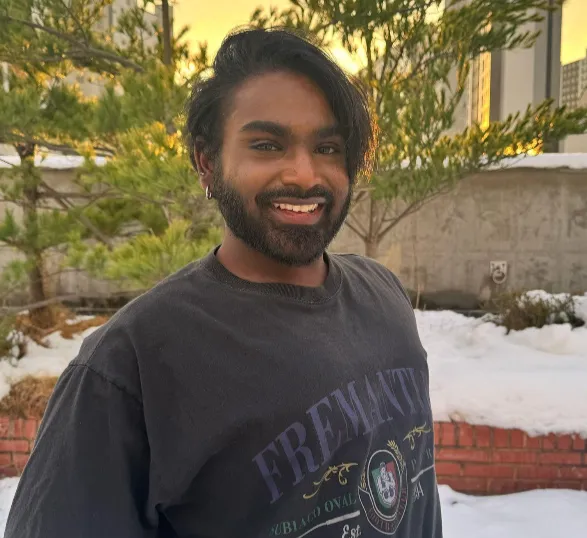
Kyle Pillay.
Image: Supplied
South African teachers are increasingly relocating to South Korea in search of better pay, safety, and career growth. While they enjoy the benefits of a safer environment and improved working conditions, they also face challenges like cultural differences and homesickness.
After a recent scare involving a former Durban teacher, who could be reached by her South African family after phone was stolen in Seoul, we speak to teachers about their real experiences abroad.
Last week, Reaction Unit South Africa (RUSA) put out an alert after a Durban family were unable to make contact with their daughter who is teaching in South Korea.
RUSA head, Prem Balram, said her family was concerned for her safety after unknown males had answered her phone during a wellness check.
However, she was later found safe and told her family that her phone had been stolen.
Their daughter had relocated to Itaewon in Seoul from Pietermaritzburg in June to teach English at Chungdam School in South Korea.
Following this incident, South African teachers in South Korea, spoke to the POST about their experiences abroad.
Kyle Pillay, 28, formerly of Tongaat, moved to South Korea, in 2022. He lives in Bucheon and teaches at Francis Parker Collegiate.
“I moved because I wanted to be independent and safe. Coming from an Indian home, I was always sheltered. Sometimes the best way to get independent is to leave the country.
“I love Korea and I have learned so much about myself here. South Korea is a lot safer and the pay as a teacher is better than in South Africa. The other perks included a free apartment and medical insurance,” he said.
However, this was not the first time Pillay had gone to South Korea.
“I tried to work here in 2020, but my mom passed away three months in and I went home. It was just a bad experience for me.
“But I felt a spiritual need to come back and rewrite the memories that felt so wrong and bitter when she passed away. I did not want to associate her death with Korea anymore.”
While he was offered his old job back, at the cost of someone else’s position, the experience turned sour.
“That school ended up being the worst I ever worked for. My boss was awful. He robbed me of money, gave me a disgusting apartment full of roaches and someone else’s belongings.
“Despite the rough start, I pushed through. I got my independence. I am the head teacher now.”
However, Pillay cautioned there were cultural challenges in Korea.
“The first year is always the hardest. Not because of blatant racism, but because of cultural ignorance. Korea is such a homogeneous country, they just are not used to seeing foreigners, especially dark-skinned ones.
Pillay said he kept in touch with his family and friends as much as he could.
“I speak to my family once or twice a month, and they are okay with that. They do worry but they know that I am a responsible human being and that this is a very safe country. Our Indian parents always worry too much,” he said.

Preann Govender.
Image: Supplied
Preann Govender, 25, moved to South Korea in 2024 to teach English.
“One of the main reasons I decided to leave South Africa was that the company I was working for was experiencing financial difficulties and had to downsize. I took that as an opportunity to make a change. I chose South Korea because I had family who lived here for two years, so I was somewhat already familiar with the country. When I started applying, Korea felt like the perfect place to begin my teaching journey.
“I applied through the EPIK program while I was still living in South Africa. The process took a few months. Once I was accepted, I just had to wait for my documents to be finalized. So far, it has been really good! I have not faced many difficult challenges, and overall, it has been an enjoyable and smooth experience.”
Last year she lived in a rural area, but this year she moved to one of the biggest cities in her province.
“A typical day as an English teacher can vary depending on the school. Last year, I taught at two schools, but this year I teach at three schools: two travel schools and one main school.
I usually have about five lessons a day, all in the morning. The rest of the day is spent preparing lessons and planning for the next day.
“One of the things I enjoy most about living in Korea is how safe it feels. I really appreciate being able to walk around the city or travel on my own without worrying too much about safety. But the biggest challenge has been the language barrier. While many people speak some English, not being fluent in Korean sometimes makes communication and everyday activities a little tricky,” she said.
Govender said she regularly kept in contact with her family.
“I call my parents almost every day and chat to my extended family about once a week. I check in with my friends at least once a week.
“With social media and texting, it is very easy to stay in touch. I try not to go more than a week without catching up with someone. There will always be a sense of worry for my family since I am far from home, but I think they feel reassured knowing that I can take care of myself and I am in a very safe country. It also helps them that I have a good support system here.
“I am planning to stay in Korea for another year. I could see myself living here longer, but I also want to travel more and maybe try living in a different country in the near future,” said Govender.
Jamie Trevor Moodley moved to South Korea for better opportunities.
“I moved due to the lack of government teaching posts in South Africa. I always planned on going abroad. The process was very easy. I have loved teaching in Korea. It is much better than teaching in South Africa. The schools, children and conditions are much better than schools back home. Everything is safe and convenient but there is definitely a language barrier. My town has about five South African teachers in it and we all live within 5 km of each other.
“I keep in touch with my family through social media and messaging apps. It is not easy for my family but they understand that job prospects are better abroad. I plan to move to another country eventually. The market and visa restrictions will determine where I move. Preferably an English speaking country,” said Moodley.
Clifford Smith, co-owner of Gold Key Education, a teacher placement agency, one of the oldest in South Africa, said South Korea was very safe.
“South Korea is among the safest countries in the world and from the 3000 teachers that we placed there over the years, we had no issues. However, we encourage our teachers to follow basic common sense.
“You are safe with Koreans but always be around people you know, especially those who are foreigners like yourself. Always keep in touch with your family, there is free wifi everywhere in Korea so there is no excuse for you not to keep in contact. Teachers take their phones from South Africa so it is easier to keep in touch.
“They also always have a co-teacher. We encourage them to share their co-teachers number with their family as well as all the friends they make along the way. This way, if your family cannot get a hold of you, they can phone your friends.
“Finally, it is best that you apply through an agency, because if one of our teachers has an issue we go there to help. The health care system in Korea is also great and since the teachers go on an E2 Visa, they have medical aid included, they will always be seen to and safe,” said Smith.