

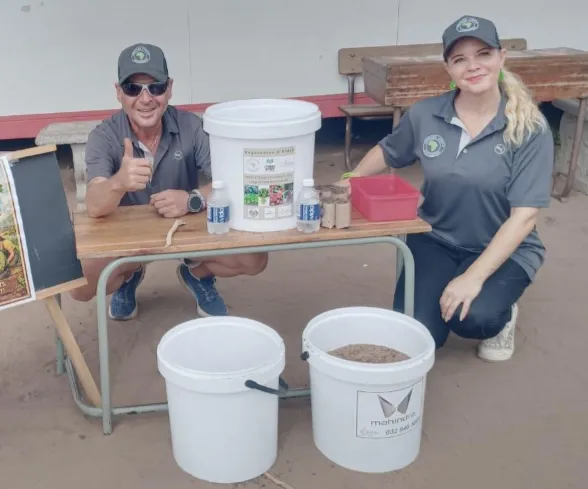
Eduard Louw and Justine Theunissen of the Restore Africa Foundation.
Image: Supplied
A community-driven project aimed at teaching primary school children how to grow their own vegetables is gaining momentum on the KwaZulu-Natal North Coast. Volunteers hope the skills they pass on will empower a new generation to become more self-sufficient.
The Veggies4Kids programme, run under the Restore Africa Foundation, is currently working with schools in the KwaDukuza and eThekwini areas, teaching children innovative ways to cultivate fresh produce using limited space and water.
Founder Eduard Louw, a Ballito-based small business owner, said the initiative was born out of the relief efforts following the devastating Tongaat tornado in June 2024.
“I started the initiative. I am a small business owner that had a calling to help our neighbours in Tongaat after the tornado hit on June 3, 2024,” said Louw.
After the disaster, Louw joined the Tongaat Disaster Management team to assist with the recovery effort.
“I became part of the Tongaat Disaster Management team to deal with the aftermath. I was the only private individual in the group that was made up of professional disaster management organizations like COGTA, Red Cross etc,” he said.
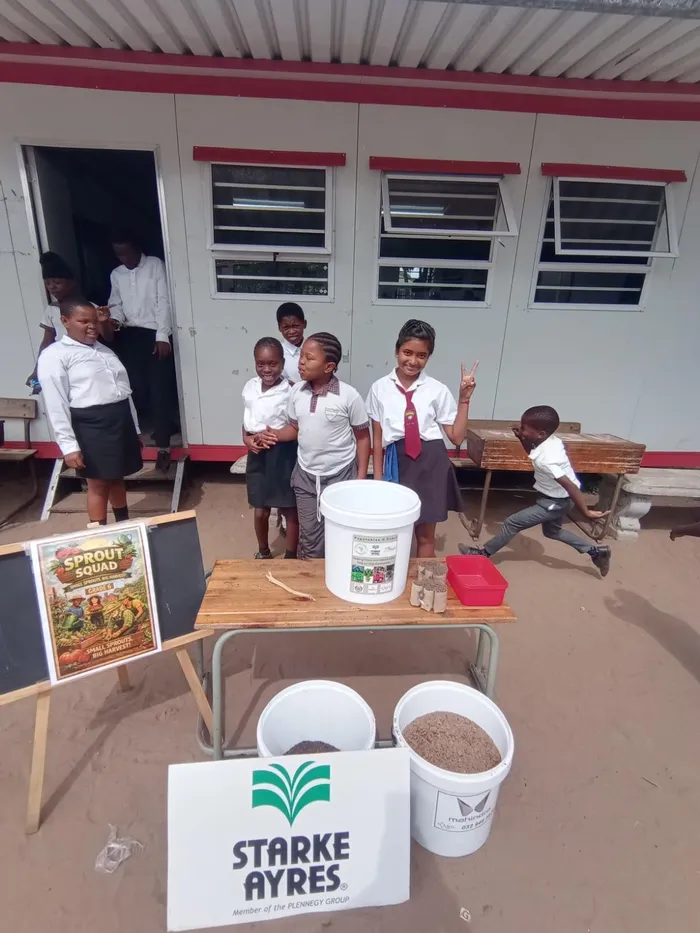
The pupils of Sandfields Primary School learning from the initiative.
Image: Supplied
During this time, Louw began working with Early Childhood Development centres in the area and helped rebuild Qoqisizwe Crèche in Magwaveni.
“It was there that I realized how special these children are and how much they need our help as children are all of our responsibilities,” he said.
The Veggies4Kids initiative focuses on practical learning, introducing pupils to creative ways of growing vegetables using simple materials such as buckets and recycled toilet rolls.
“Veggies4Kids is an initiative to teach primary school children innovative ways of cultivating fresh produce with limited space and water utilizing the bucket system. The aim is to teach children and do skills development in our primary schools,” said Louw.
Volunteers visit schools with the permission of the KZN Department of Education and school principals, hosting planting days where pupils get hands-on experience.
“We go to the schools and arrange for a Friday morning with full authority of DOE and the principal at the school for a fun day of planting seedlings in a bucket that we provide as well as teach the children on how to grow seedlings using toilet rolls. It is also recycling education,” he explained.
The programme uses a peer-learning model where selected pupils are trained first and then help teach their classmates.
“We teach a group of children we call Veggie Camps beforehand and they in turn teach their classmates and take responsibility for ensuring that all the children participate in the training,” said Louw.
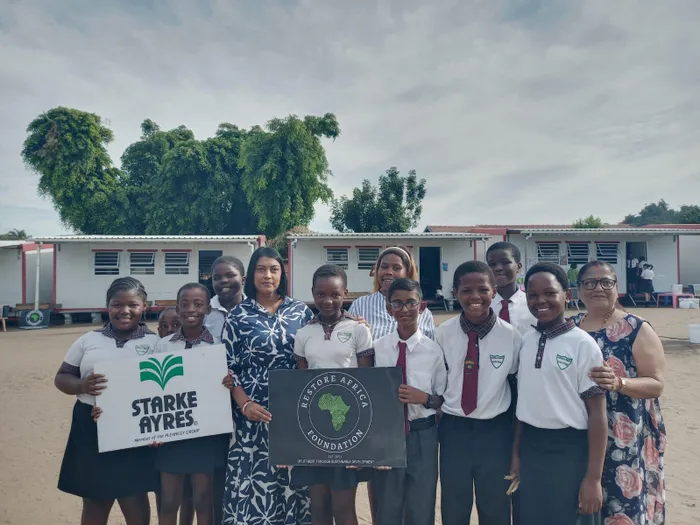
Teachers and pupils of Sandfields Primary School.
Image: Supplied
The volunteer-driven programme is still in its early stages but has already worked with several schools and plans to expand further.
“We are aiming to do a school a month and this is our fourth school with Golden Steps Special Needs School in April,” Louw said.
He noted that some schools already have space for gardens, and the organisation assists them in establishing vegetable plots.
“Some schools do and we are assisting those who have space to install vegetable gardens. We are pushing for more veggie clubs at schools,” he said.
Louw said the programme aims to instil independence and practical life skills in learners.
“That you can be less dependent on others to help you. That you can live from the labor of your hands,” he said.
The initiative grew out of volunteer groups formed in the aftermath of the tornado.
“We started as a volunteer group called Operation Clean Tongaat, then Operation Restore Tongaat as the disaster was over,” said Louw.
As the recovery work shifted towards rebuilding communities, the team formalised their work.
“Restore Africa Foundation was established in March 2025 as our MOU with all the disaster organizations concluded as the next phase started, rebuilding. We had to either stop or become a fully-fledged non-profit organization and so we did appoint a board of directors and registered a Non Profit Company in the name of Restore Africa Foundation,” he said.
Although the programme relies heavily on volunteers and limited resources, Louw said the response from children has been overwhelmingly positive.
“They have so much fun and are very invested and involved in the process,” he said.
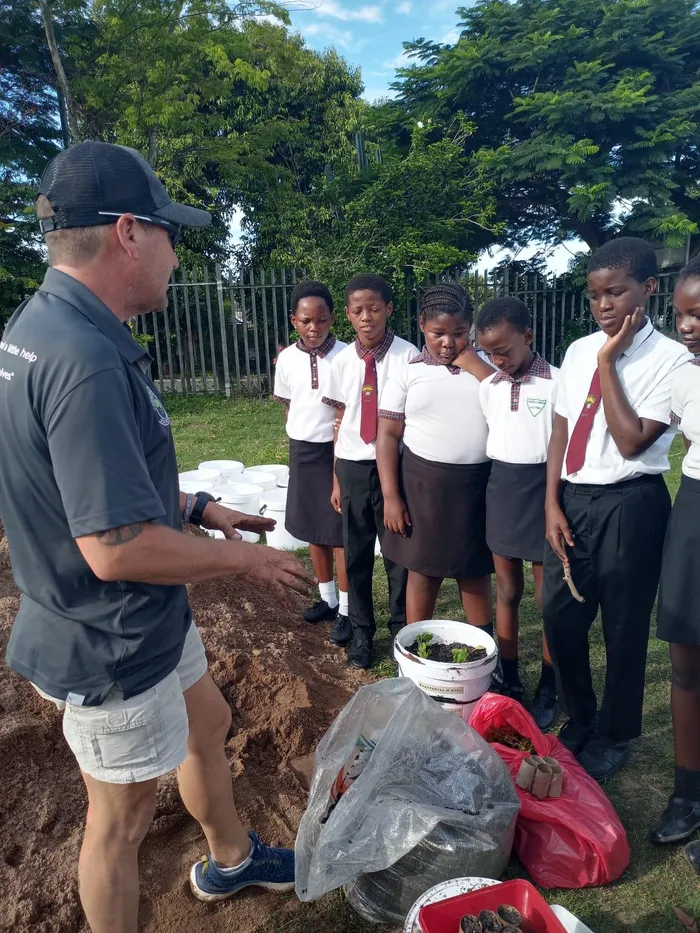
Eduard Louw teaching the pupils of Sandfields Primary School how to plant.
Image: Supplied
With sponsorship support, the foundation has committed to working with at least 12 schools and hopes to expand even further.
“The Department of Education has given Restore Africa Foundation access to 132 schools to roll this initiative out to,” Louw said.
Ultimately, Louw believes empowering children is key to building stronger communities.
“Our goal is to help those who need a little help to help themselves, starting with the future building blocks of our nation, our children. No kids, no future,” he said.