

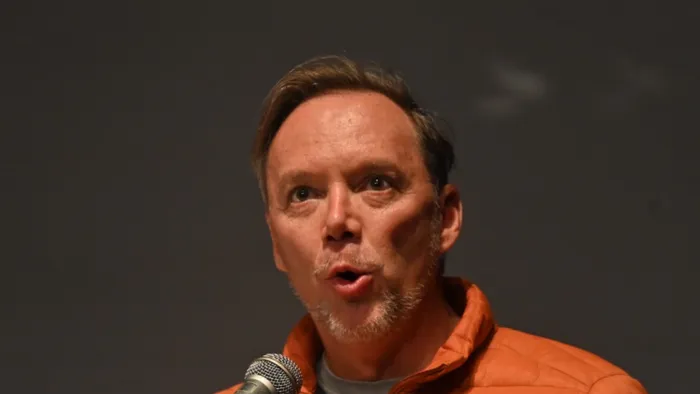
GOOD member of the Western Cape Provincial Parliament, Brett Herron.
Image: Ayanda Ndamane/Independent Newspapers
Brett Herron, Good Party secretary-general
For decades, the short stretch of the N2 freeway across the Cape Flats and past the airport has been known as the “Hell Run” due to incidents of stoning and attacks on passing motorists. Of course, the term “Hell Run” also symbolises the decline in living standards and economic well-being the further you travel from Table Mountain. Both ANC and DA-led City of Cape Town governments have proposed solutions… The one thought was that the answer lay in developing proper housing for shack dwellers. The other can’t be bothered with building houses; it wants to build a security wall.
In the early 2000s, when the ANC led all three spheres of government, Cape Town implemented its most ambitious public housing project, the N2 Gateway. The aim of the project was to transform informal settlements along the freeway into model communities, with overflow homes developed in Delft.
Although mired in delays, cost overruns, and difficulties associated with asking large shack dweller communities to leave “their” relatively favourably located land, to which only some would return, its intention was good. It would provide dignified homes for people living on the freeway verges, improve Cape Town’s “look” for tourists travelling from the airport to the city, accelerate housing delivery, and improve motorist safety.But when the DA took control of the City of Cape Town, it chose the N2 Gateway as a key battleground. It crudely racialised the project to make the point that the ANC was building more homes for African than Coloured residents. The fact that most of the residents of informal settlements along the freeway were African was conveniently ignored.
Dissatisfaction fanned by the DA ultimately led to the biggest home invasion in South African history when a DA Councillor encouraged Coloured residents to occupy half-finished homes to prevent them from being handed to Africans in Delft. The home invaders were forcibly removed, lived on the street until Blikkiesdorp was ready to receive them.
By this point, the original intention of the N2 Gateway, to clear the freeway verges of informal settlements, with knock-on safety for motorists, was all but forgotten. While a few informal settlements were developed – at Joe Slovo, bordering Langa, and New Rest, near the airport – the bulk of the intended work was abandoned. The Hell Run survived another day.
The DA could have been constructive; it chose to be destructive. In hindsight, it’s clear to see that those sections that were developed along the freeway have met their goals, including the safety of motorists.Fear not, however. The DA has a new plan that doesn’t involve the hassle of developing housing at all: An impenetrable security wall! Last week, the mayor – in a jolly social media post – said long-suffering informal settlement residents were itching, not for decent homes, but to live behind a wall.
Apartheid spatial planners used barriers like freeways and industrial areas to separate racialised neighbourhoods. Mayor Hill-Lewis’ planners use more direct methods; they build walls.The Mayor’s TikTok post sounded as if it were scripted by Hans Frank, the Nazi leader in Poland. Frank, too, argued that the rationale for constructing walled ghettoes for unwanted citizens was not to imprison them, but for their own “safety”.
The people living in shacks along the freeway need decent homes; Hill-Lewis’ proposition that what they need is a security wall is disgraceful.
Weekend Argus