

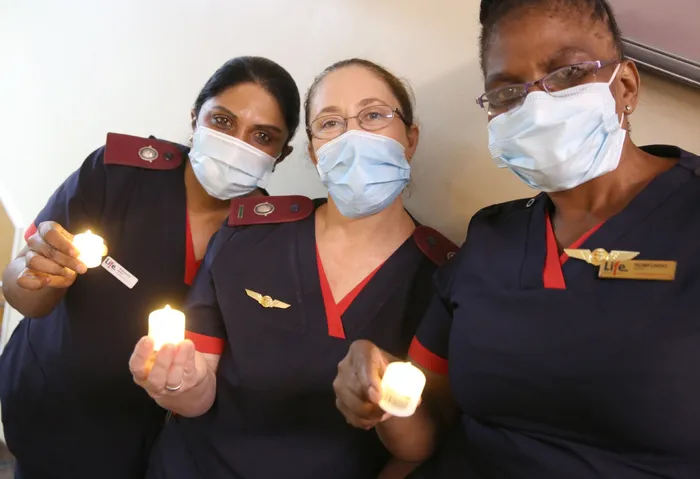
Katherine Naidu, Jill Berry and Nomfundo Gasa are some of the nurses who went over and beyond during the Covid pandemic.These nurses were awarded a certificate by the Minister of Health Dr Zweli Mkhize at Entabeni Hospital.
Image: Zanele Zulu/ Independent Newspapers
Dr Phillipa Haine, Prof Bronwyne Coetzee, and Prof Ashraf Kagee
At the height of the COVID-19 pandemic, nurses across South Africa worked under high pressure, faced risk of infection, and witnessed their patients dying in large numbers. Many were required to manage not only the demands of patient care, but also the psychological strain associated with prolonged exposure to suffering, uncertainty, and loss. For some, these experiences have persisted well beyond the pandemic.
As South Africa marks International Nurses Day on 12 May under the theme “Our Nurses. Our Future. Empowered Nurses Save Lives,” it is important to reflect not only on the contributions of nurses during the pandemic, but also on its enduring impact on their mental health. Although public attention has largely shifted away from COVID-19, emerging evidence suggests that its psychological effects among healthcare workers, particularly nurses, remain substantial. Importantly, this pattern is not unique to the pandemic. Even outside of large-scale public health crises, international and local research consistently shows that nurses experience higher levels of psychological distress than many other healthcare workers.
Their distress is due to the demanding nature of their work and the relationship-centred nature of nursing, characterised by sustained contact with patients, frequent exposure to suffering, and high levels of responsibility, often within under-resourced environments. In our recent study conducted among 264 nurses in the Western Cape following the pandemic, we identified high levels of psychological distress, including serious symptoms of anxiety, depression, and post-traumatic stress. Notably, more than half of nurses screened positive for serious depressive symptoms, while approximately half reported severe symptoms of anxiety. In addition, roughly one in four nurses reported severe symptoms of post-traumatic stress, and a large proportion reported patterns of alcohol use consistent with dependence.
These findings suggest that the psychological consequences of the pandemic continue to influence both the personal wellbeing of nurses and their ability to do their work. The high rate of alcohol dependence is an indication of harmful coping in response to prolonged psychological strain, with potential implications for long-term wellbeing, workforce sustainability, and patient care. Importantly, our findings also indicate that the psychological impact of the pandemic was not the same for everyone. For example, there was a strong link between heightened fear of COVID-19 and increased depressive symptoms, while social support and “sense of coherence”– an individual’s sense that their environment is understandable, manageable, and meaningful – emerged as key protective factors.
Nurses with a stronger sense of coherence appeared better able to cope with the psychological demands of the pandemic, while those with a weaker sense of coherence were more likely to experience mental health difficulties. This distinction is important as it shifts the focus from exposure to stressful experiences alone to include the psychological resources that nurses have to manage these experiences. However, psychological resilience and the ability to cope are influenced not only by personal resources, but also by broader organisational and systemic conditions.
While the pandemic did not create the structural pressures faced by nurses within our healthcare system, it certainly played a role in amplifying long-standing challenges. Chronic understaffing, constrained resources, high patient volumes, and limited access to psychological support were already well documented prior to the pandemic. These systemic pressures persist. South Africa continues to face shortages of healthcare professionals, with nurses frequently required to work under demanding conditions that place ongoing strain on their wellbeing.
In this context, the mental health of nurses is not merely an individual concern, but a matter of health system sustainability. Failure to adequately address these challenges has implications that extend beyond the wellbeing of nurses themselves. Substantial evidence shows links between and burnout, reduced quality of care, increased absenteeism, and staff turnover and mental health problems among healthcare workers. Within an already constrained healthcare system, such outcomes may further compromise service delivery and patient care. Given these considerations, some issues warrant attention. First, the mental health of nurses should be recognised as integral to the effective functioning of the healthcare system. It should not be treated as a secondary issue, but rather as a core component of workforce planning and health system strengthening.
Second, healthcare institutions should prioritise sustained and structured mental health support. Such support can include ensuring access to confidential psychological services, implementing routine screening for distress, and fostering organisational cultures that encourage nurses to seek help without stigmatising them. Third, greater attention should be given to strengthening social support structures within healthcare settings, as well as fostering a sense of meaning and manageability in nurses’ work. These factors may act as buffers against psychological distress. Finally, and critically, these efforts must be accompanied by structural interventions. Improvements in staffing levels, workload management, and resource allocation are essential.
Without addressing these underlying conditions, individual-level interventions are unlikely to have a meaningful or lasting impact. This year’s International Nurses Day theme calls for action. Empowering nurses requires more than acknowledgement; it requires meaningful investment in the conditions that support their wellbeing and their ability to do their work. The long-term resilience of South Africa’s healthcare system depends, in no small part, on the wellbeing and sustainability of its nursing workforce. Supporting nurses’ psychological wellbeing is therefore not only a professional responsibility, but a broader societal imperative.
*Haine, Coetzee, and Kagee are affiliated with theDepartment of Psychology at Stellenbosch University.