

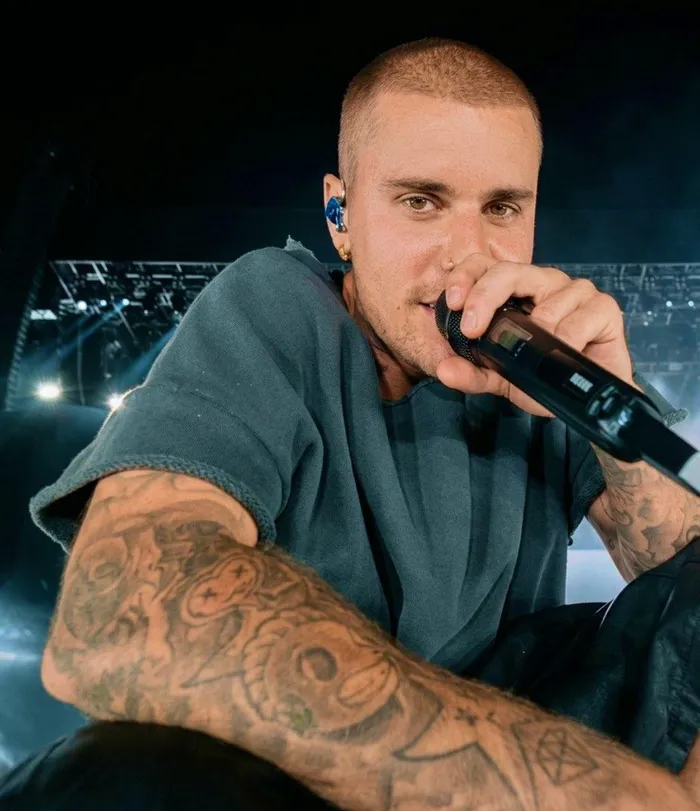
Justin Bieber is the talk of the music world following his epic Coachella 2026 performances.
Image: Instagram
Over the past two weekends, I have been musically transported into my teenage years and early 20s during Justin Bieber’s Coachella 2026 performances.
As a childhood Belieber, the Canadian superstar’s tracks from his monumental discography have been the soundtrack to some of my favourite life moments. From university days to early epic road trips, celebrations with loved ones and other unforgettable experiences, the Biebs and his songs have always featured.
From “Baby” to “Changes”, “Sorry”, “Love Yourself” and “Daisies”, there is a song from the 32-year-old’s catalogue for every single occasion. Even for those quiet, introspective moments, “Purpose” - a quiet, piano-driven ballad - can be a deeply personal, reflective and vulnerable listening experience.
These songs hit harder when you take into account the weight of Bieber’s very public journey - one that has unfolded in real time alongside his music. Catapulted to global fame as a teenager, his early years were marked by intense pressure, run-ins with the law and a sense of disconnection from self.
His on-and-off relationship with Selena Gomez became a cultural fixation, reflecting both the highs of young love and the complications of growing up under constant scrutiny.
As he matured, Bieber began speaking more openly about mental health struggles, substance use and the darker realities of child stardom.
Broader allegations of sexual abuse within the industry - while not always directly linked to him - added a sobering layer to his story, highlighting the vulnerability of young artists in powerful systems.
This reframed him as more than a pop star, but someone shaped by an often unforgiving environment.
In recent years, his turn to faith has defined a new chapter. Grounded by his marriage to Hailey Bieber, he has leaned into themes of healing, accountability and redemption, both personally and musically.
The sale of his catalogue marked another shift - a sign of both financial foresight and reclaiming control over his legacy.
Listening now, his music carries not just nostalgia, but the imprint of everything he has navigated and overcome.
And this is the exact energy that the Biebs brought to Coachella 2026 in California, a nostalgic and deeply vulnerable journey for his fans who, like me, have grown up to his hits.
On Weekend 1 of Coachella, on Saturday, April 11, Bieber didn’t just headline - he reportedly became one of the highest-paid artists in the festival’s history, earning around $10 million for his two-weekend run.
His set also drove a major surge in global attention, with streaming of his catalogue jumping significantly in the hours and days after his performance.
The impact wasn’t just financial or symbolic - it translated directly into cultural momentum, with his Coachella appearance dominating online clips and becoming one of the most talked-about performances of the weekend, reinforcing his continued pull as a global pop force.
The magic on stage, as his voice echoed through the festival to cheering, sobbing fans, was undeniable as he delivered a sprawling, career-spanning set that blended newer material with early-era nostalgia and his YouTube beginnings.
His setlist ran through more than 30 tracks, opening with newer releases including “All I Can Take,” “Daisies,” “Go Baby”, “Butterflies” and “Walking Away.”
With Hailey swooning in the audience alongside Kylie Jenner, while other A-list stars such as Kim Kardashian, Lewis Hamilton and Katy Perry also watched on, Bieber opted for a minimalist look and stage design and instead let his music do the talking.
He also brought out The Kid LAROI as the duo performed “Stay”, as the production subtly shifted into a “YouTube-era” aesthetic, stripping away modern staging in favour of raw, nostalgic visuals and simplified lighting.
Clips and visuals evoked his earliest discovery years, with a more lo-fi, home-video feel that nodded to his original YouTube covers.
The effect was intentional: it reframed the stadium-scale moment back to a teenage bedroom dream, grounding the spectacle in where it all began.
The crowd erupted as the internet collectively lost its mind when Bieber performed songs like “Favorite Girl”, “Baby”, “Beauty and a Beat” and “Never Say Never” from his early career.
The reminiscing continued as he sang acoustic covers such as Chris Brown’s “With You” and Ne-Yo’s “So Sick”, alongside home-recorded clips that originally introduced him to the internet, serving as a reminder of the voice that existed long before the global pop machine took over.
One of the most powerful moments of the performance saw him singing alongside his childhood self, displayed on the big screens in old YouTube clips - a moment that resonated deeply with fans who understood his journey.
Then, to all of us Beliebers’ delight, Bieber returned with a bang to headline Weekend 2 on Saturday, April 18, delivering a tighter, more assured version of Weekend 1, but also noticeably more relaxed.
His interactions with fans felt looser and more organic, with moments of playfulness and ease that contrasted the more emotionally charged tone of his first performance.
There was also a viral, unscripted edge to the weekend, most notably when Hailey was seen encouraging - and quite literally nudging - Billie Eilish toward the stage during a crowd moment, adding a layer of spontaneity that quickly took on a life of its own online.
If Weekend 1 felt like a return, Weekend 2 felt like release - less about proving something, and more about enjoying it, both for him and the audience watching it unfold.
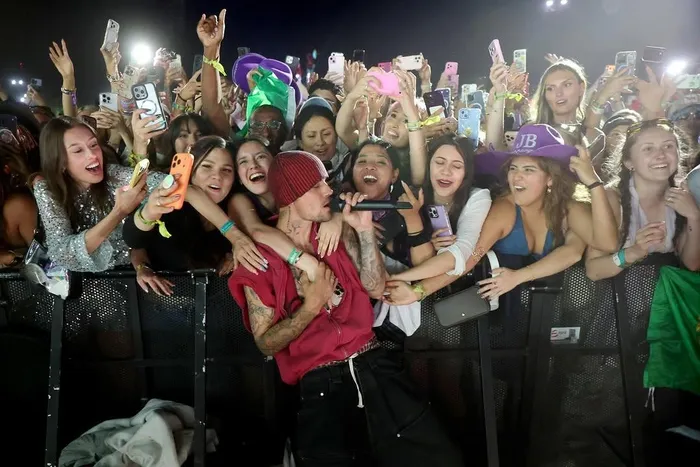
Justin Bieber with fans during Coachella Weekend 2.
Image: Instagram.
And maybe that’s what made these performances feel so different - not just the scale, the hits or even the history being made, but the quiet sense of alignment between who Bieber was then and who he is now.
There was no attempt to erase the past or overly polish it for the stage. Instead, he leaned into it, allowing the imperfections, the growth and the distance travelled to exist in the same space as the music that first introduced him to the world.
For those of us who grew up alongside him, it wasn’t just a performance - it was a full-circle moment.
A reminder that behind the headlines, the highs and the very public lows, the music has always been the constant.
And at Coachella 2026, it felt like everything - the nostalgia, the vulnerability, the evolution - finally met in one place, in real time.