

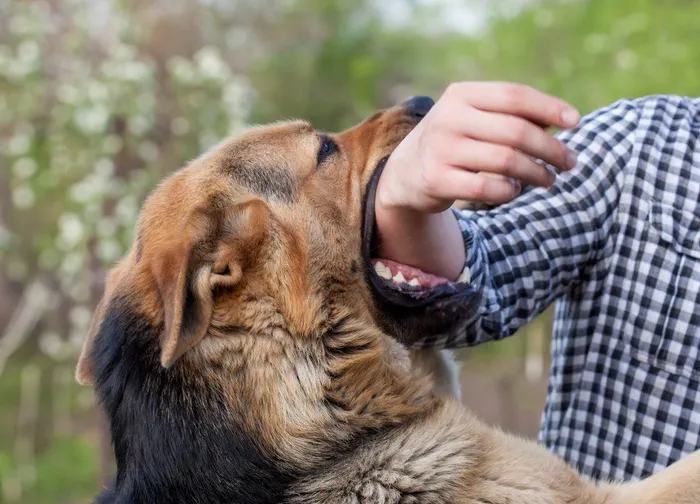
South Africa recorded a high number of rabies cases in humans and animals between 2021 and 2023, with domestic dogs identified as the main source of transmission, according to the NICD.
Image: Supplied
South Africa recorded a high number of rabies cases in humans and animals between 2021 and 2023, with domestic dogs identified as the main source of transmission, according to a surveillance overview from the National Institute for Communicable Diseases (NICD).
The report, published in the Public Health Bulletin of South Africa(PHBSA), uses what it calls a “One Health approach”, combining human and animal data to track rabies trends in the country.
The NICD said the study focuses on how rabies spreads in both people and animals, and where outbreaks have been recorded.
“In line with this objective, the study focuses on human and animal rabies, as well as the spatio-temporal patterns of human and dog rabies.”
According to the report, surveillance data showed “a high number of human rabies cases during 2021–2023.”
The Eastern Cape was highlighted as a key hotspot, with Nelson Mandela Bay experiencing a major outbreak in 2021 and 2022.
“Metropolitan municipalities in the Eastern Cape province (EC) have historically reported a few cases, while Nelson Mandela Bay (NMB) experienced an unprecedented outbreak in 2021 and 2022.”
In Buffalo City Metropolitan, the report recorded “seven human cases across the surveillance period...”
The NICD noted a shift in where cases were reported, saying that outbreaks were no longer limited to rural areas.
“Previously, human cases were primarily reported from rural municipalities, but in 2021–2022, urban municipalities such as NMB and Buffalo City began reporting cases.”
It also said no dog rabies cases had been confirmed in Nelson Mandela Bay for several years before the outbreak.
“No dog rabies cases had been confirmed in NMB in the eight years prior to this outbreak.”
Dogs were identified as the main source of infection in most cases.
“Domestic dogs were the most frequently affected species ... and were linked to 75% of human cases.”
The report stressed that controlling rabies in dogs is key to preventing human infections.
“Dogs remain the principal source of human rabies transmission worldwide; therefore, preventing human rabies could be effectively achieved through the control of the disease in dog populations.”
In Gauteng, an outbreak was reported mainly in Mogale City in 2021, involving wildlife and one dog case in 2022.
“In Gauteng province, the study reports an outbreak mainly in Mogale City – which primarily occurred in 2021 – involving eight wildlife cases (jackals and honey badgers) and one dog case (2022).”
The NICD said cases varied widely across the country and over time, with urban areas showing higher numbers partly due to better detection.
“The distribution of human and dog rabies cases varied markedly across municipalities and over time.”
“Urban municipalities reported disproportionately high numbers of human and domestic dog cases, reflecting both true transmission foci and better access to diagnostic facilities.”
It also warned that gaps in reporting still exist.
“Some areas recorded human cases without corresponding animal reports, suggesting gaps in animal surveillance and under-reporting.”
The report concluded that better coordination between human and animal health systems is critical.
“Cross-sectoral linkage mapping confirmed that human exposures occur predominantly in localities with high dog rabies incidence, reinforcing the critical role of integrated One Health surveillance for timely outbreak detection and targeted interventions.”