

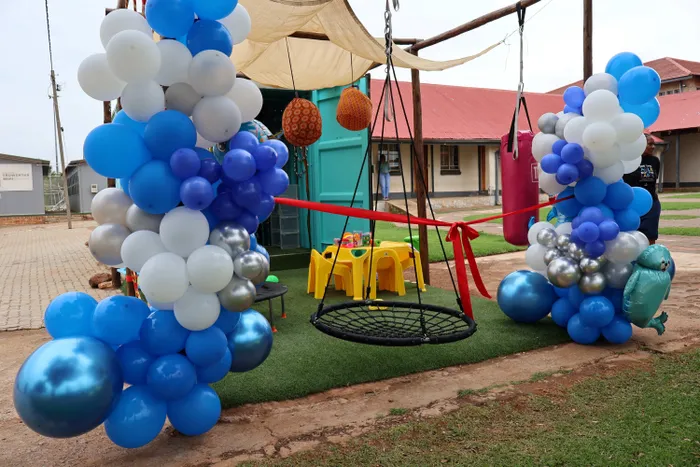
The innovative sensory space at the Arekopaneng Centre was built from a repurposed shipping container and recycled materials.
Image: Supplied
A therapeutic space typically reserved for private clinics, specialist therapy centres and elite schools has been launched in one of Gauteng’s most underserved communities.
Leading non-profit Afrika Tikkun has launched a unique and fully equipped therapeutic sensory facility at its Arekopaneng Centre, developed in partnership with Sensory-Space.
Built from a repurposed shipping container and incorporating recycled materials, the space reflects a deliberate shift away from traditional, high-cost models towards one that is accessible, adaptable and owned by the community it serves.
As part of Afrika Tikkun’s commitment to creating impact, innovation and inclusion, this project designed through co-creation and the empowerment of the community at its core: engaging parents, caregivers and community members in both the design and build, while equipping them with the knowledge and skills to sustain its impact.
“Bringing a therapeutic sensory facility into impoverished communities where children don’t have access to these spaces is a first. Our work with Sensory-Space demonstrates how inequality can be addressed through partnerships, ensuring the community is engaged and educated and that impact is sustainable and lasting,” said Lana Roy, Programme Lead: 360 Disability Inclusion, Afrika Tikkun.
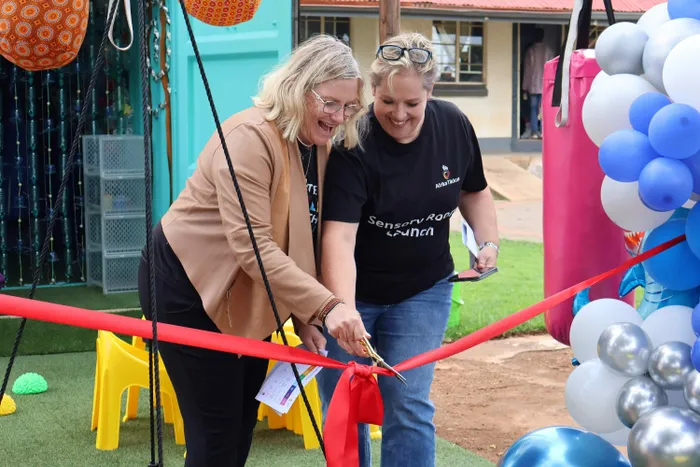
Lana Roy, Afrika Tikkun Programme Lead for 360 Disability Inclusion (left), and Dr Dee Blackie (right) officially open the new sensory facility at Orange Farm.
Image: Supplied
World Health Organization statistics indicate that South Africa has over a million children facing disability, neurodiversity and mental health challenges, yet the country has just over 1,000 psychiatrists and around 8,000 psychologists to support diagnosis. Teachers, social workers, community workers, and parents need to be empowered with practical, accessible knowledge to support these children early and effectively at community level.
Why Sensory Integration Matters Sensory integration affects everyone. It shapes how we experience the world, regulate our emotions and engage with those around us, regardless of age, background or ability.
Tegan White, Disability Inclusion Project Lead for Inclusive Education at Afrika Tikkun, said the ability to regulate sensory input and access appropriate spaces helps children make sense of their environment and supports their development. This has a remarkable impact on wellbeing, learning and the ability to engage positively with the world, but is often out of reach in underserved communities.
“These spaces help children reduce stress, improve self-regulation, build focus and develop the motor and cognitive skills that underpin all learning,” she said.
These are not nice-to-haves; they are clinical outcomes, backed by research and increasingly recognised by occupational therapists and developmental specialists worldwide.
Who the Facility Serves The Arekopaneng facility caters to children and adults who are neurodiverse, including those on the autism spectrum, as well as individuals living with ADHD, anxiety, trauma and other developmental or emotional challenges.
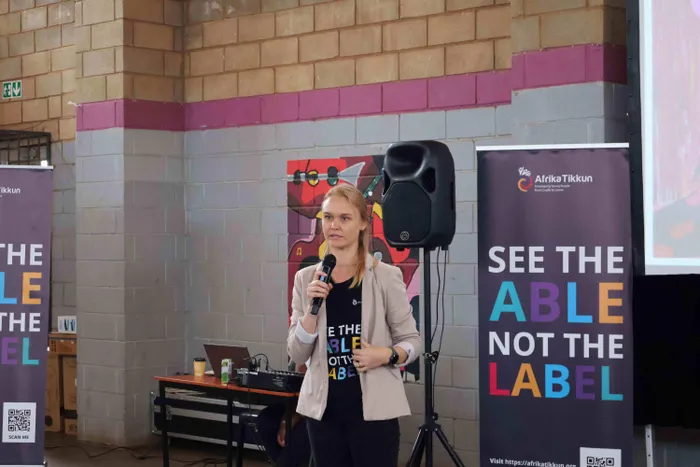
Tegan White, Disability Inclusion Project Lead for Inclusive Education at Afrika Tikkun.
Image: Supplied
Dr Dee Blackie, founder of Sensory-Space and a specialist in neurodiversity is a key partner in this project. She said the need for accessible interventions is urgent. Sensory-Space worked with the community to understand how the space could be a catalyst for driving inclusion across all childhood segments within the Orange Farm community.
“Our use of recycled materials to create these spaces is not only cost-effective and accessible, but also educates children and parents about the environment and how this impacts on their world is crucial in empowering them to manage their sensory needs.”
Blackie said many sensory environments are functional therapeutic spaces that focus primarily on the external sensory system. However, the space at Orange Farm is strategically designed to link external sensory systems, with internal interoceptive systems, and then illustrate their relevance to mental health drivers or areas of disconnection.
“The space is designed to be an adventure for all participants. It’s not just about therapy, it is about curiosity, learning imagination and testing your sensory abilities. Play is the best way to learn,” she explained.
Built With the Community Beyond access, the project focused on community ownership and empowerment. It was built by the community, for the community. Workshops were held to create sensory tools from recycled materials with parents, particularly mothers of children with disabilities, helping to build the elements within the space.
Parents say the impact is already being felt beyond the children. “Sometimes I use it myself when I feel stressed. It helps me to relax and reset,” said a parent, Pamela Duba.
A Blueprint for Scale Afrika Tikkun intends the Orange Farm site to serve as a working model for wider rollout. The facility was deliberately designed to be practical and replicable.
“Our long-term hope is to use this project as a model that can be scaled across more schools and communities,” White said. “Ultimately, we want environments like this to become standard in all schools, not a rarity.”
The initiative forms part of Afrika Tikkun’s unique Cradle-to-Career model, which centres on holistic development. “We don’t only look at the top children and get them to succeed; we look at the child holistically,” Roy said. “Our goal is to show what real inclusion looks like, where a child in a wheelchair, or a child who is neurodiverse, is so integrated that you don’t even notice the difference. You only see ability.”