

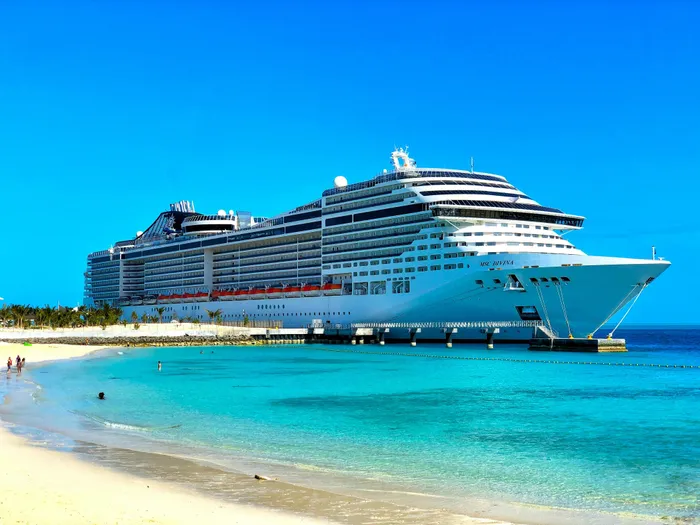
Due to gopolitical instability in the Middle East, MSC Cruises has cancelled its Persian Gulf sailings and rerouted to the Caribbean.
Image: Unsplash
MSC Cruises has cancelled its entire Middle East winter 2026–2027 programme, citing ongoing geopolitical instability in the region.
The cruise line confirmed that its flagship vessel, MSC World Europa, will no longer sail from Gulf ports and will instead be redeployed to the Caribbean.
The decision follows escalating tensions in the Middle East, despite a temporary ceasefire agreed between the United States and Iran on April 7.
While the truce raised hopes that the Strait of Hormuz could reopen, MSC Cruises opted for a cautious approach, prioritising passenger safety and operational stability.
The cancelled sailings were scheduled to run between November 2026 and April 2027, with departures from key cruise hubs including Dubai, Abu Dhabi, and Doha.
However, the broader regional instability - triggered by airstrikes on Iran in February and subsequent retaliatory actions across neighbouring countries - has disrupted travel and trade routes.
The conflict also resulted in intermittent airspace closures, threats to maritime security, and increased oil prices, all of which have impacted the tourism sector.
MSC Cruises stated that the cancellation reflects more than a logistical adjustment. Key factors include:
The cruise provider also noted that post-pandemic travel behaviour has shifted significantly, with tourists placing greater emphasis on safety and predictability.
Even minor risks can lead to reduced bookings and lower overall demand.
As a result, the Persian Gulf - once a fast-growing winter cruise destination - is losing ground to more stable regions.
MSC Cruises stated that it was reviewing its global strategy and strengthening its presence in the Caribbean.
As a result, MSC World Europa will now operate in the Caribbean, offering 7 and 14-night itineraries from:
The cruises will include stops in popular destinations such as Saint Lucia, Grenada, Antigua, Dominica and Saint Maarten.
This “winter sun” market is known for its strong demand, high occupancy rates and consistent profitability.
The redeployment also forms part of MSC Cruises’ broader fleet optimisation strategy.
By shifting MSC World Europa to a high-demand region, the company aims to:
Meanwhile, another vessel, MSC Seaview, will be repositioned to South America, with planned itineraries in Brazil and Argentina.
Customers who had already booked Middle East cruises will be offered flexible options, including:
MSC Cruises confirmed that affected passengers and travel partners are being contacted directly with detailed guidance.
The company emphasised that the move ensures travellers can still enjoy a premium winter cruise experience in a safer, more stable environment, while maintaining the high standards associated with MSC World Europa.